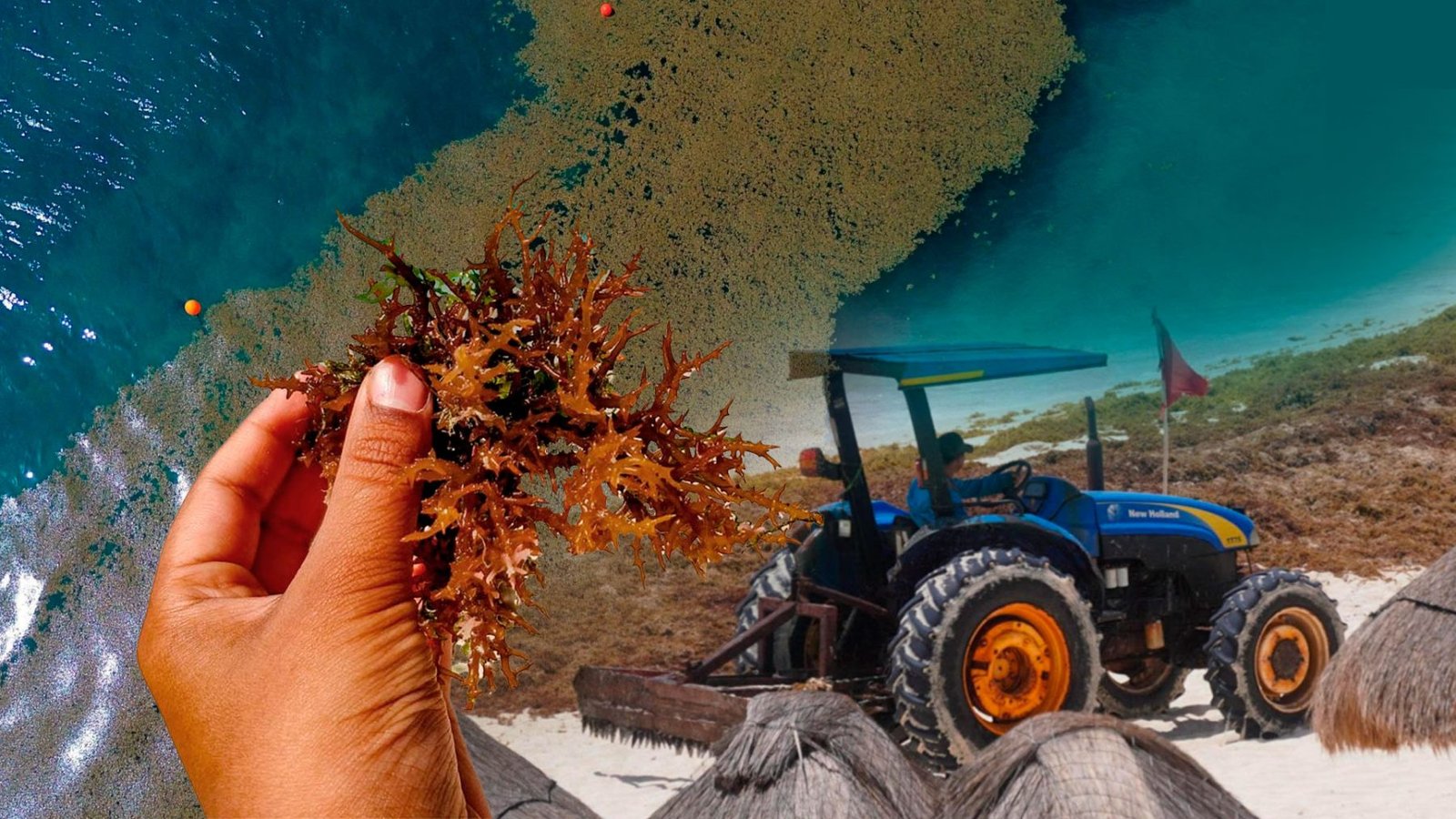
Playa del Carmen, Quintana Roo — The Mexican Caribbean faces an unprecedented sargassum threat in 2026, with experts and environmental authorities anticipating a record influx of the seaweed that could severely impact tourism, public health, and coastal ecosystems in Quintana Roo.
The crisis extends beyond environmental concerns, affecting the regional economy and daily life for residents and visitors along popular destinations like Cancún, Playa del Carmen, Tulum, and Cozumel.
Coordinated Response in Quintana Roo
Quintana Roo has activated its Sargassum Attention Strategy, coordinating with the Mexican Navy and the Secretariat of Environment and Natural Resources (SEMARNAT) to combat the massive arrival. Authorities have collected 178.01 tons of sargassum so far in 2026 from key municipalities using a deployment that includes:
- 16 surface units (one ocean vessel, 11 coastal vessels, four amphibious sargassum collectors)
- 16 support boats
- 9,500 meters of containment barriers, with an additional 6,000 meters planned
Officials temporarily remove barriers during cold fronts for maintenance before repositioning them. Frequent interagency meetings with Federal Maritime-Terrestrial Zone directors, SEMARNAT personnel, and business and civil representatives help adjust collection protocols and arrival alerts.
Environmental and Economic Impacts
Sargassum accumulation and decomposition on coasts reduce oxygen in the water, directly harming coral reefs, seagrass beds, and marine species. As it breaks down, the seaweed releases hydrogen sulfide gas, causing respiratory irritation and unpleasant odors that reinforce health concerns.
Satellite images from May 2025 showed a record biomass of 38 million tons floating between Africa and the Caribbean, according to data from the University of South Florida and NASA. This figure surpassed 2022 records and confirmed the worsening problem.
The tourism sector, the region’s economic engine, faces additional challenges: spring bookings could suffer without efficient sargassum management. Cleanup and containment costs reach millions of dollars, while water activities and visitor experiences are compromised.
Scientific and Social Collaboration
The issue originates in the Great Atlantic Sargassum Belt, a continuous macroalgae strip extending from Africa to the Caribbean since 2011. While sargassum in open ocean benefits ecosystems by providing habitat for turtles, fish, and birds, its massive coastal arrival disrupts ecological balance.
Institutional response relies on collaboration between the Mexican Navy, SEMARNAT, the state government, and civil society. In 2025, collection reached 92,783 tons—an unprecedented amount. Technical meetings with the State Environmental Monitoring Center and the Gulf and Caribbean Sea Oceanographic Institute have improved bulletin issuance and satellite biomass tracking.
Preventive actions and equipment maintenance remain essential for deployment during adverse weather conditions. Continued strategies, based on public-private cooperation, aim to keep Mexican Caribbean beaches clean and mitigate an environmental crisis that projections suggest could peak in 2026.
Discover more from Riviera Maya News & Events
Subscribe to get the latest posts sent to your email.