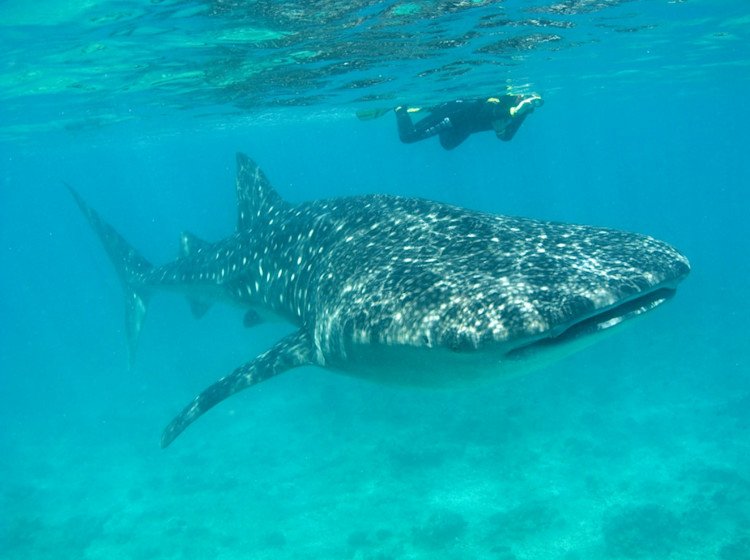
Cancún, Quintana Roo — Quintana Roo’s whale shark season closed with an unusually strong showing, as survey teams counted between 200 and 400 of the animals during trips between Isla Contoy and the Isla Mujeres Marine Park, according to specialists who took part in the sightings.
The season opened in May and ended on Thursday, Sept. 17. Yiret García, a marine biologist and federally licensed guide on the tours, said the number of whale sharks observed this year was higher than in recent seasons, a trend that also came with a significant presence of manta rays.
García said the region had not seen a similar concentration of whale sharks since at least 2021. But the rise in sightings coincided with heavy tourism activity, as large numbers of boats joined the observation tours.
Crowded Waters Raise Concerns
On some days, around 20 boats have gathered at sites where only a single whale shark is present, García said. Under those conditions, she considers swimming inadvisable. When more animals are in the area, up to two entries into the water can be allowed, depending on local conditions.
The heavy boat traffic can also change the animals’ behavior. Whale sharks tend to become more elusive when few of them are present and too many boats circle nearby, she said. Propeller injuries are another problem, with some wounds likely caused by tour boats and others by larger vessels as the sharks move through open water.
García stressed the need to reduce tourism overexposure and to strengthen awareness among everyone taking part in the tours. She also said visitors should learn about whale shark behavior and characteristics before setting out, so that sightings are conducted responsibly and the species is better protected.
More Environment
- Mara Lezama Unveils Quintana Roo Sustainable Tourism Master Plan Through 2050
- Semarnat Denies Permit for Secrets Moxché Coastal Project in Playa del Carmen
- Cozumel Beach Club Injury: New Reports Identify Worker, but Crocodile Link Remains Unconfirmed
- Unicaribe Students Mark One Year Monitoring Sian Ka’an Biosphere Reserve
- Laura Beristain Returns to Politics With Environmental Banner in Playa del Carmen