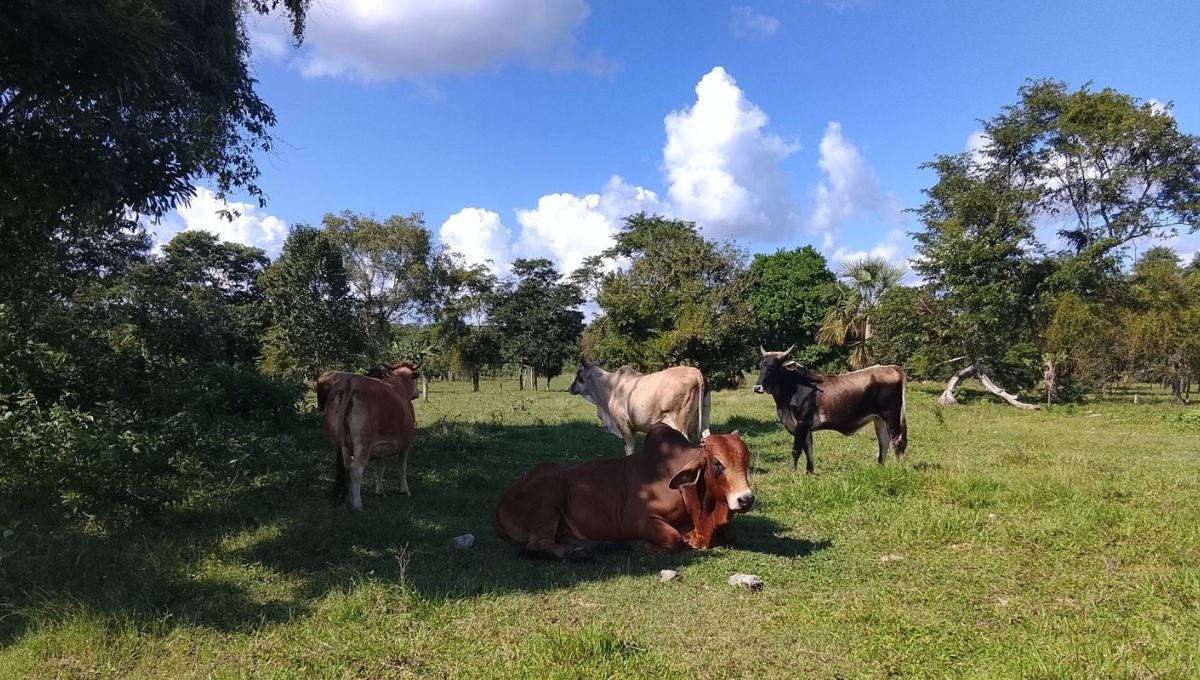
Chetumal, Quintana Roo — Quintana Roo has accumulated more than 300 cases of screwworm myiasis, according to the latest cumulative case report from the Ministry of Agriculture, as reported by the head of the Secretariat of Agricultural, Rural, and Fisheries Development (Sedarpe), Jorge Aguilar Osorio. This represents an increase of more than 100 cases so far in December, with the most affected municipalities continuing to be Othón P. Blanco and Bacalar.
According to information from epidemiological week 47, at the beginning of December, cumulative cases stood at 259. However, the most recent record indicates that the current total is 327 cases of screwworm myiasis, which primarily affects the livestock herd in the southern zone, where the largest number of cattle are concentrated.
Regarding this, cases continue to spread, as in Quintana Roo, sterile flies have not yet been released to combat the flies that carry the worm, meaning the infestation continues to occur. However, livestock producers have learned to combat it effectively, so they themselves treat the cases they detect, meaning the cumulative numbers could be higher than those officially reported.
In this sense, livestock leader Carlos Rodríguez had already explained that all livestock producers usually carry their container of Negasun to immediately address any detected outbreak and prevent the myiasis from spreading in the infected animal.
Nevertheless, despite it being an infestation that remains controlled, livestock producers continue to wait for the Federation to release sterile flies so that cases gradually decrease, as this is a problem that affects the entire livestock sector of the state, given that it is a disease difficult to eradicate, so it will take time to disappear.
It should be mentioned that, unofficially, it is presumed that there have been 3 cases of screwworm myiasis in the entity. However, the Ministry of Health has not confirmed this information, so at the moment there are no official figures for human infection or cattle deaths from the disease.
Discover more from Riviera Maya News & Events
Subscribe to get the latest posts sent to your email.