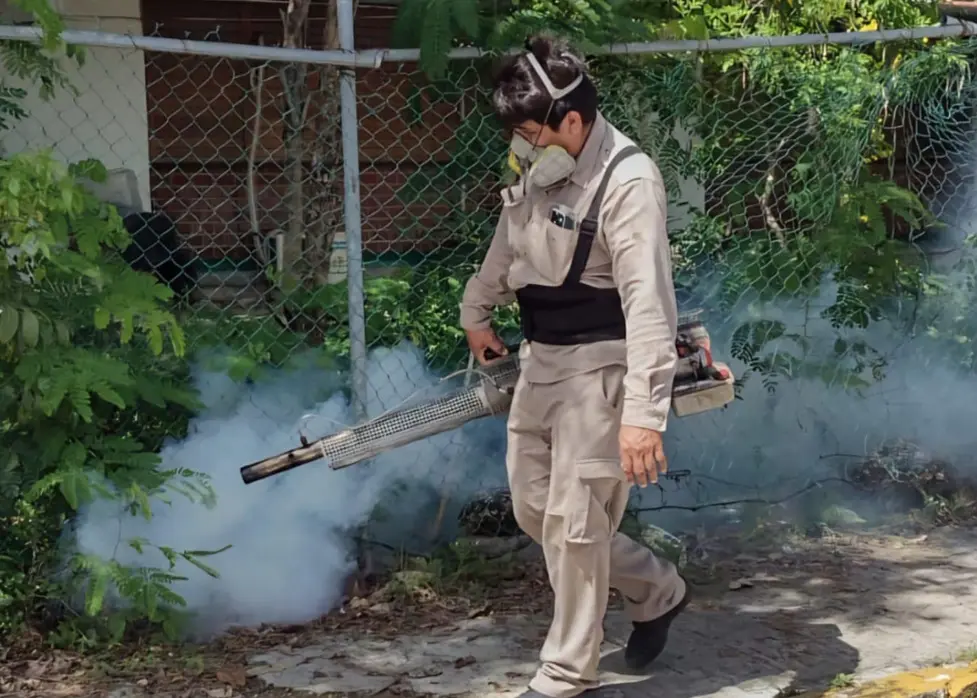
CHETUMAL, QR. – The Mexican Ministry of Health (SSA) reported that Quintana Roo has recorded five cases of chikungunya, following five years without the presence of the disease. The state now occupies first place in infections nationwide. The federal agency issued a warning about the risk of increased cases at the national level.
The information comes from the Weekly Chikungunya Report 2025, issued on December 9 by the General Directorate of Epidemiology, with data up to week 48.
The SSA highlighted that only three states in the country have recorded autochthonous chikungunya cases, including Quintana Roo.
Chikungunya Case Numbers
- Quintana Roo: 5
- Chiapas: 1
- Yucatán: 1
In the case of Quintana Roo, according to SSA data, there had been no infections for five years, as the state had remained free of the disease since the last recorded case in April 2020.
Previously, in 2017, 11 autochthonous cases were recorded, while in 2018 and 2019 no cases of this vector-borne illness were reported.
The SSA noted that this year, 10 imported cases with travel history to Cuba have also been recorded in the country. Of the total, three correspond to Baja California; three to Nuevo León; two to Jalisco; and one to Mexico City.
The number of autochthonous cases in 2025 now totals seven in Mexico, equaling the number recorded in 2020. Since then, chikungunya cases had been declining: in 2021 there were four; in 2022, four; in 2023, two; and in 2024, zero.
Regarding imported chikungunya cases, only one was reported in 2024, and none had been recorded in the country since 2018.
Due to the accumulated number of infections in 2025, the federal agency issued a warning on December 10 to all states in the country about the risk of increased chikungunya cases in Mexico, “due to the wide distribution of the vectors Aedes aegypti and Aedes albopictus across much of the national territory, which are responsible for the infections,” it emphasized.
The Mexican Ministry of Health states that chikungunya fever is a viral disease transmitted to humans through the bite of infected mosquitoes of the Aedes aegypti and Aedes albopictus species. The former is the same mosquito species that transmits dengue.
The first chikungunya case occurred in Tanzania in 1952. Since then, it has spread to countries in Asia and Africa. In the Americas, it was detected in December 2013.
The first case in Mexico was identified in late 2014 in the state of Chiapas, while in Quintana Roo the first autochthonous infection occurred on August 9, 2015.
Symptoms
Symptoms appear four to eight days after the bite of an infected mosquito, though they can vary from two to 12 days. The disease is characterized by sudden fever, intense joint pain, joint inflammation, muscle pain, headache, nausea, fatigue, and rash. Many symptoms are similar to those of dengue; however, chikungunya does not cause bleeding and rarely leads to death, unlike severe dengue.
Preventive measures are those applicable against any type of mosquito or vector: use of repellent, wearing clothing that covers limbs, using mosquito nets in homes, and maintaining cleanliness of homes and yards, primarily by eliminating containers that can accumulate water.
Discover more from Riviera Maya News & Events
Subscribe to get the latest posts sent to your email.