
Puerto Morelos, Quintana Roo — Researchers have recorded about 40 species of prehistoric animals in the caves and cenotes of Quintana Roo, 15 of which have gone completely extinct, said Jerónimo Avilés Olguín, a paleontologist at the Museum of the Desert and scientific director of the Cenotes Prehistóricos Zapote park on the Ruta de los Cenotes in Puerto Morelos.
The find is scientifically significant because the peninsula’s flooded caverns act as a natural archive that allows researchers to reconstruct the geological evolution, fauna and human presence in the region over the past 70,000 years, according to the specialist.
Avilés Olguín said one of the most important discoveries at Cenotes Zapote is a giant sloth identified as Chibalbaonyx oviceps, dated to 10,600 years ago through carbon-14 analysis. The specimen, a juvenile estimated at 2.50 meters tall, bears cut marks that suggest possible human intervention to obtain meat, tendons, skin and fat.
The paleontologist said the peninsula’s geological history began when it was submerged under the sea, a stage represented by fossils such as megalodon teeth millions of years old. During the late Pleistocene, large animals such as giant sloths and saber-toothed tigers used the caves as shelter, and some died inside.
Since the 1980s, cave divers have explored the peninsula’s flooded caves and found numerous bone remains of large animals, expanding knowledge of the prehistoric fauna of Quintana Roo and Yucatán. Species such as jaguars, deer and peccaries survive today, while giant sloths went extinct about 10,000 years ago.
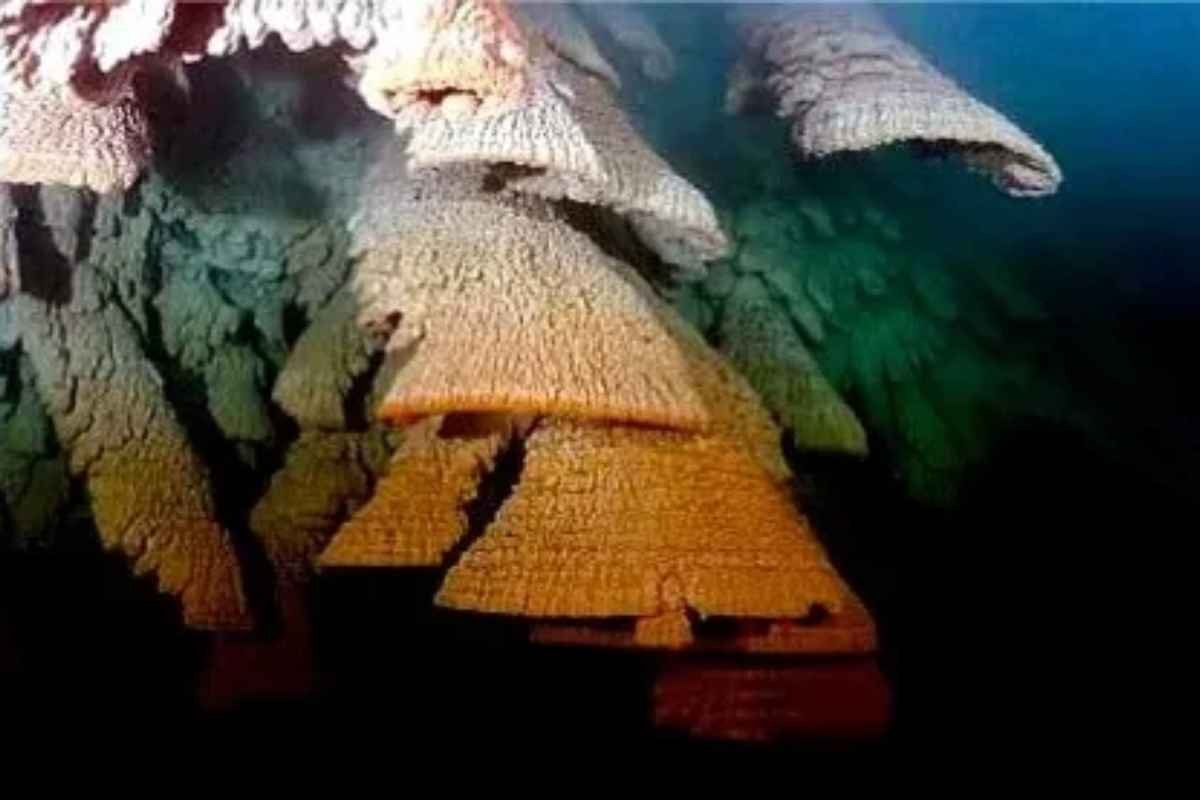
The area also holds the so-called campanas, underwater rock formations documented so far in only six cenotes worldwide, all on the Puerto Morelos route. Avilés Olguín explained that their formation requires a halocline, where fresh and salt water meet, as well as a sulfur layer involving bacteria and archaea.
Cenotes Zapote has recorded specimens up to four meters long and four meters wide, as well as tiny structures known as baby campanas, aged between 20 and 200 years despite being located 30 meters deep. The specialist said scientific knowledge about these formations and the region’s prehistoric fauna is still far from complete.
More Environment
- Playa del Carmen Hit by Flash Flooding as 52mm of Rain Falls in 90 Minutes
- Quintana Roo Approves Three International Conservation Projects
- Residents Report Wastewater Trucks Dumping Sewage Near Cancún Housing Complex
- Environmentalist Warns UX Arena in Tulum Could Harm Jungle and Aquifer
- Playa del Carmen Officials Accuse CFE of Ignoring Damage to Urban Infrastructure
More Puerto Morelos
- Puerto Morelos Installs Committee to Protect Public Beaches and Blue Flag Sites
- Profepa Shuts Down Construction at Laguna Nichupté and Holbox Over Mangrove Damage
- Puerto Morelos and Dreams Sapphire Hotel Sign Agreement to Protect Children and Teens
- Puerto Morelos Residents to Vote on Priority Public Works Projects
- Puerto Morelos Council Approves 2027 Budget of More Than 872 Million Pesos