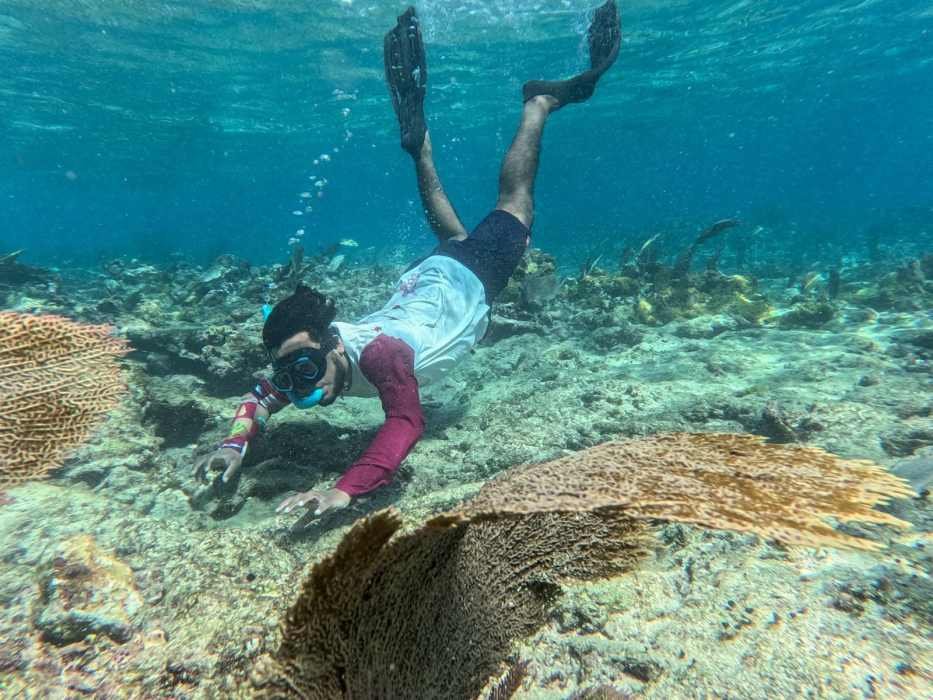
Playa del Carmen, Quintana Roo — Shallow coral reefs between Playa 88 and Punta Esmeralda in Playa del Carmen remain in good health, officials confirmed after recent monitoring dives.
Irving Lili Madrigal, director of the Federal Maritime-Terrestrial Zone (Zofemat), said the reefs are currently healthy, with new corals emerging and growing. “We are giving them close follow-up,” Madrigal explained.
The monitoring work, which began last year and continues in 2026, focuses on the area locally known as Francisco I. Madero (Panchito). The procedure involves controlled dives with GoPro-type cameras to document coral growth, the presence of debris, the emergence of new polyps, and overall reef conditions.
Data is recorded every six months and sent to the Mexican Navy (Semar), the authority responsible for direct intervention.
Madrigal emphasized that Zofemat personnel are not authorized to touch or clean the coral. “We only monitor and report,” he stated. During inspections, minor trash has been detected in the surrounding area, which can be removed without affecting the reef structure.
The official reiterated that the main threat remains irresponsible human activity. Recommendations include avoiding littering in the sea, refraining from using polluting sunscreens, not stepping on or touching coral, and maintaining awareness during diving activities. “Fortunately, the diving community has shown good disposition,” Madrigal noted.
Playa del Carmen is part of the Mesoamerican Barrier Reef System, the world’s second-largest after Australia’s Great Barrier Reef. According to recent reports from the Global Coral Reef Monitoring Network, the Caribbean has lost about 48% of its hard coral cover since 1980 due to climate change, bleaching, and human pressure.
In Quintana Roo, reefs not only support biodiversity but also reduce coastal erosion, function as a natural barrier against storms, sustain tourism activities like diving and snorkeling, and directly impact the local economy.
While current monitoring indicates stability, the follow-up will continue. “We are recording how much they grow in six months or a year. It is constant work,” Madrigal concluded.
Discover more from Riviera Maya News & Events
Subscribe to get the latest posts sent to your email.