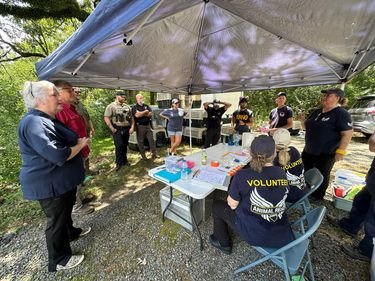
Quintana Roo, Mexico — A group of false tourists landed in Cancún in February 2022, claiming to be on vacation while secretly embarking on a clandestine mission to rescue dogs from a shelter threatened by organized crime. The operation, dubbed “Crossing Lines,” was executed by the Animal Rescue Corps (ARC), an international animal rescue organization specializing in large-scale extractions.
The team, posing as tourists, lied to immigration agents about their purpose, collected their luggage, and entered Mexico undetected. They bypassed the hotel zone and drove into Quintana Roo’s working-class neighborhoods, where the glamour of five-star suites gives way to modest homes marked by salt spray.
The journey was tense as they traversed territory controlled by criminal groups. If any plaza boss discovered their presence, the infiltrators risked being murdered in a region where bodies are hidden in cenotes. The vehicle finally stopped at an undisclosed house, whose location and description remain confidential for security reasons.
Upon arrival, the team immediately began their operation after ensuring they were not followed. They accounted for the dogs—including Chaparro, Jade, and Chalupa—checked that they had eaten and rested sufficiently, and reviewed plans and calendars to transport the animals from the threatened shelter to Yucatán and then to the United States.
The Extortion of a Dog Shelter by Organized Crime
In early 2022, the manager of a dog shelter near Playa del Carmen, Mexico—referred to as Laura for safety—received an anonymous call. The current plaza boss demanded a monthly payment equal to the donations the shelter received every 30 days in exchange for “protection.” This was the everyday extortion fee in the Mexican Caribbean.
Laura knew the callers were not joking. Two years prior, a series of businesses had been burned down or shot up in disputes over tourist areas in Quintana Roo. The Sinaloa Cartel and the Jalisco New Generation Cartel led this war and needed cash. After squeezing large hotels and restaurant chains, even village clinics and dog shelters were forced to pay.
The threatened shelter calculated that paying the cartel was impossible. Like most shelters, it survives on donations, meaning it is not self-sustaining and lacks stable income. If a donor fails to contribute—which happens often—funds can drop considerably, and priorities shift: first, food for the dogs, then medication, then everything else. In some upcoming month, they likely could not meet the extortion payment on time.
If donors learned their money would end up in a plaza boss’s pocket, they would stop contributing, and the shelter would close immediately. Ceasing payments was not an option either; the shelter would have to shut down, leaving the dogs adrift. Closing a stationery store or tortilla shop due to extortion is different from closing a space on which vulnerable lives depend. No one was willing to close, but this argument mattered little when explained in a second phone call with the plaza boss.
A week later, the cartel pressured for payment by shooting at the shelter’s facade. Another call tightened the screws on the owners and volunteers: if they did not pay, the cartel would kill one dog per day, one by one until they were all annihilated. Then, with no lives to care for, they would be forced to sell the land.
Specialized Rescuers Skilled in Large-Scale Extractions
Fortunately, the shelter manager had a high-level contact in the United States: an unlikely friendship between a Mexican adoption activist fighting for animal rights and a federal prosecutor in New York known for being a critical voice against corruption within the U.S. Drug Enforcement Administration (DEA).
Laura contacted attorney Bonnie Klapper, who, due to her work in New York, had become an expert at exploiting cartel weaknesses. Upon hearing about unscrupulous cartels and defenseless dogs, Klapper began working on a chain of favors that would save Tomás, Tita, Rambo, and others.
First, she contacted the Animal Rescue Corps, an association specializing in large-scale rescues and dog shelters in crisis. They are the leading experts in emergency extractions, operating in the United States and worldwide during hurricanes, earthquakes, and even tsunamis. They also design and execute operations to save dogs from overcrowding and abandonment and are no strangers to organized crime, with one of their most successful jobs being Operation Broken Chains, a 2012 infiltration of a criminal group dedicated to dogfighting in Nashville, Tennessee.
The ARC team prepared a group of false tourists to enter Mexico discreetly, fearing that authorities might alert the cartel that Americans were coming to remove the dogs. The extractors were prepared like DEA agents for a drug raid: they had operation manuals, emergency contact numbers, plans, and routes.
Funding the mission was the next step. Flights, vehicles, lodging, food—everything needed for a successful overseas mission—was covered by the Bissell Pet Foundation, which paid all expenses with contributions from its donors.
With funds, equipment, and enough rescuers, Operation Crossing Lines began. When the false tourists arrived, the first part of the plan commenced: removing the dogs from the threatened facilities without anyone noticing. If any lookout warned the plaza boss that the shelter was preparing not to pay, not only would the animals be at risk, but Mexican activists could be killed, as could the Americans.
A mistake could not only unleash a massacre but also create a diplomatic mess with the administration of President Joe Biden.
Other Attacks and Extortion of Animal Shelters in Mexico
Thanks to darkness and the precision of the volunteers, about 70 dogs successfully left the threatened shelter, which closed its doors after bidding farewell to the last animal, awaiting better times to continue its work.
Some dogs went with Mexican volunteers who had already arranged their transfer to other shelters or foster families. But 20 dogs could not be placed in a safe location: the larger breeds, breeds people mistakenly believe are aggressive by nature—like pit bulls—or the older ones. For them, there was a special plan, as if it were a Hollywood movie.
These 20 dogs were given Gabapentin, an anticonvulsant and analgesic medication to calm nerves and anxiety, as they needed to be transported at high speed to the nearest safest entity: Yucatán. Once there, the driver could step on the accelerator without worrying that a chorus of barks would give them away.
None of the Animal Rescue Corps members knew it yet, but in the coming years, extortion and attacks on animal shelters would become increasingly frequent news in Mexico’s “war on drugs.” In July 2025, the Pergatuzoo Animal Shelter in Villa Nicolás Romero, State of Mexico, alerted that its existence was endangered by extortion and direct threats from the Jalisco New Generation Cartel.
The shelter, which still cares for 2,000 animals of various species—including dogs—denounced on social media that hitmen presenting themselves as the troops of Nemesio Oseguera Cervantes demanded monthly payments of 50,000 pesos to let them operate. Otherwise, they would burn everything down again.
That same year, 2025, the Ostok Sanctuary in Culiacán, Sinaloa, closed its doors due to the war between Los Chapitos and La Mayiza, unleashed after the betrayal and handover to the United States of Ismael “El Mayo” Zambada. Shocked by armed attacks, constant death threats, and a lack of essential supplies to keep their 700 animals alive, they had to announce their closure.
More stories have accumulated over time: from the struggle of Pay de Limón, a mixed-breed dog recovering in a shelter in Mexico City from extreme torture by Los Zetas, who used him to train future hitmen, to death threats against canine units of the extinct Federal Police for their incorruptible work in detecting narcotics, weapons, and bodies.
A Model of Secret Strategy for Rescuing Animals
Upon arriving in Yucatán, the group began the second part of the plan: surviving bureaucracy. The activists from the United States were sure there was no corner in Mexico where the 20 dogs would be safe. They needed to get them out of the country, which required obtaining documents as quickly as possible. Every day in Yucatán, they thought, was a day at risk for the animals.
Finally, after weeks of waiting, the 20 dogs that could not be sheltered in Mexico left by air for the United States in carriers donated by people who had never seen them. The plane made a stop in Florida and then in Tennessee. Eight dogs arrived at the East End shelter on Long Island, four at the Southampton Animal Shelter Foundation (SASF), and the others at undeclared shelters where families soon signed up to apply for adoption.
“The evacuation was logistically difficult and involved obtaining health certificates for the dogs, renting a cargo plane, obtaining export and import permits, and finding a place where the dogs could go once they were in the United States,” said SASF Executive Director Pat Deshong.
Only after those 20 dogs were completely safe did ARC publish a video on YouTube on March 31, 2022, showing their donors what the group does with their resources: there was the public version of Operation Crossing Lines. The international rescue. Thousands of dollars well invested in saving dogs from cartels that now sleep in homes with families that love them.
“At the time this video was made, we could not tell you the whole shocking story for security reasons, but now we can: the sanctuary and its residents were under serious threat from drug cartel members. The cartel was trying to extort money from the sanctuary, threatening to kill all the animals living on the property,” ARC said in a statement.
In that communication, they also summarized the words of Bonnie Klapper, the New York prosecutor who started the work in the United States: “They don’t just distribute drugs and weapons; there is extortion. They say, ‘Pay me or I’ll burn your business or kill your family.’ They said, ‘Either you pay us or we will kill your dogs.'”
Today, Operation Crossing Lines is considered a model of secret strategy for rescuing animals from the clutches of cartels. Work that is becoming increasingly common between security institutions and animal defense groups fighting extortion.
For now, the 20 large dogs from the threatened shelter—and the others—sleep peacefully. The pack of organized crime could not sink its teeth into them. This time, the good guys won the battle.
Discover more from Riviera Maya News & Events
Subscribe to get the latest posts sent to your email.