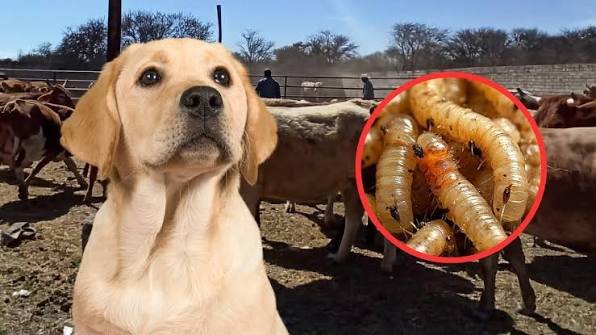
Mexico City — Travelers bringing pet dogs from the United States into Mexico will face a new veterinary-document requirement beginning Monday, August 3, as Mexican authorities respond to confirmed cases of New World screwworm in the United States.
Under the new rule, every pet dog traveling from the United States must be accompanied by a “New World Screwworm Inspection Certificate for Pet Dogs Moving from the United States to Mexico.” The document must be completed and signed by a USDA-accredited veterinarian no more than five days before the dog enters Mexico.
The requirement applies to pet dogs arriving from any U.S. state, not only states where screwworm cases have been detected. It also applies regardless of whether the animal travels by air or crosses a land border.
The certificate confirms that the veterinarian inspected the dog for wounds and signs of New World screwworm, a parasitic fly whose larvae infest open wounds and feed on living tissue. Infestations can cause serious injury and may be fatal if untreated.
The certificate is separate from the traditional international health certificate. Mexico does not currently require a general health certificate for pet dogs traveling from the United States, and the new canine screwworm certificate does not require separate USDA APHIS endorsement. It must, however, be issued by a veterinarian who holds current USDA accreditation.
The required form is available through the USDA Animal and Plant Health Inspection Service pet-travel page for Mexico.
Upon arrival, travelers must present their dog and documentation to personnel from Mexico’s National Service for Agrifood Health, Safety and Quality, known as SENASICA, at an Agricultural and Livestock Health Inspection Office.
SENASICA personnel will check the certificate and visually inspect the dog. The animal must show no signs of an infectious or contagious disease, external parasites, fresh wounds or wounds that are still healing.
If inspectors find ticks or other external parasites, the owner may be required to arrange treatment at their own expense. The dog may be held while samples are examined to determine whether the parasites are exotic to Mexico or covered by an official control program.
Carriers must also arrive clean. Disposable bedding, newspaper, sawdust, rags, toys and excess food may be removed and destroyed. Mexico permits only enough balanced pet food for the day of arrival.
The USDA notes that airline and shipping-company requirements are separate. A carrier may continue to demand vaccination records or a broader health certificate even when Mexican authorities do not.
Cats Are Not Affected By The New Rule
There is no new screwworm-document requirement for pet cats arriving in Mexico from the United States.
Cats do not need a health certificate or a New World screwworm certificate under current Mexican entry rules. They must still be presented to SENASICA for inspection upon arrival and should travel in a clean carrier.
Officials will check cats for signs of infectious disease, external parasites and fresh or healing wounds. Owners may face treatment or inspection costs if a problem is discovered.
Pet Birds Face More Extensive Requirements
Pet birds may resume travel from the United States to Mexico beginning August 3, but their documentation requirements are more extensive.
Every pet bird must carry a New World Screwworm Inspection Addendum completed and signed by a USDA-accredited veterinarian within five days before entry. The addendum is required in addition to Mexico’s Veterinary Health Certificate for Export of Pet Birds.
Unlike the dog certificate, the bird health certificate must receive USDA APHIS endorsement before travel. Digital APHIS signatures are accepted, but travelers must carry a printed copy. The bird’s container must also be sealed by the accredited veterinarian, and the seal number must appear on the certificate.
Bird restrictions related to highly pathogenic avian influenza remain in place. A pet bird’s eligibility may depend on the state and county from which it originates or through which it travels.
Mexico continues to prohibit the importation of commercial songbirds, ornamental birds and raptors from the United States. Pet birds are permitted only when they meet the new certificate, inspection and other health requirements.
Pet and commercial ferrets remain prohibited, along with several livestock and zoological categories. USDA’s current notice also lists restrictions affecting cattle, equines, sheep, goats, certain swine and captive wild ruminants.
Returning To The United States Requires Different Documents
Travelers returning to the United States with a dog must comply with two separate sets of federal requirements.
Because Mexico is considered affected by New World screwworm, USDA APHIS requires a screwworm-freedom certificate issued after the dog is inspected within five days before departure for the United States. In Mexico, the certificate may be issued by a veterinarian trained and authorized to sign on behalf of an official government veterinarian. APHIS links to Mexico’s official directory of authorized veterinarians on its dog-import requirements page.
The Centers for Disease Control and Prevention separately requires every dog entering or returning to the United States to:
- Appear healthy upon arrival.
- Be at least six months old.
- Have a microchip readable by a universal scanner.
- Be accompanied by a completed CDC Dog Import Form receipt.
For dogs that have traveled only within the United States, Mexico and Canada during the previous six months, the CDC says the import-form receipt is the only CDC document required. A separate veterinary health certificate is not required by the CDC in that situation, although the USDA screwworm certificate is still necessary because it addresses a different animal-health risk.
Costs Will Vary
Neither Mexico nor the USDA has set a price for the new dog certificate. Veterinary clinics establish their own examination and document-preparation fees, and prices may vary considerably.
The cost may be higher when travelers need urgent appointments, additional treatments, airline paperwork or other health documents. Bird owners may also pay a federal APHIS endorsement fee in addition to the veterinarian’s charges.
Travelers should confirm that their veterinarian is USDA-accredited before scheduling the examination and should make clear that they need Mexico’s specific New World Screwworm certificate. A routine vaccination record or general letter from a veterinarian will not satisfy the new requirement.
More Government
- Cancún Orders Removal of Grounded Boats From Nichupté Lagoon
- Cancún Mayor Ana Paty Peralta Says She Will Finish Her Term and Skip ‘Gino’ Segura’s Campaign
- DHS Fentanyl Trafficking Investigations Fall 24% as Focus Shifts to Immigration Enforcement
- Unpaid Municipal Debt Worsens Garbage Crisis on Holbox
- Trump Urges Mexico to Prosecute Officials Who Help Drug Cartels