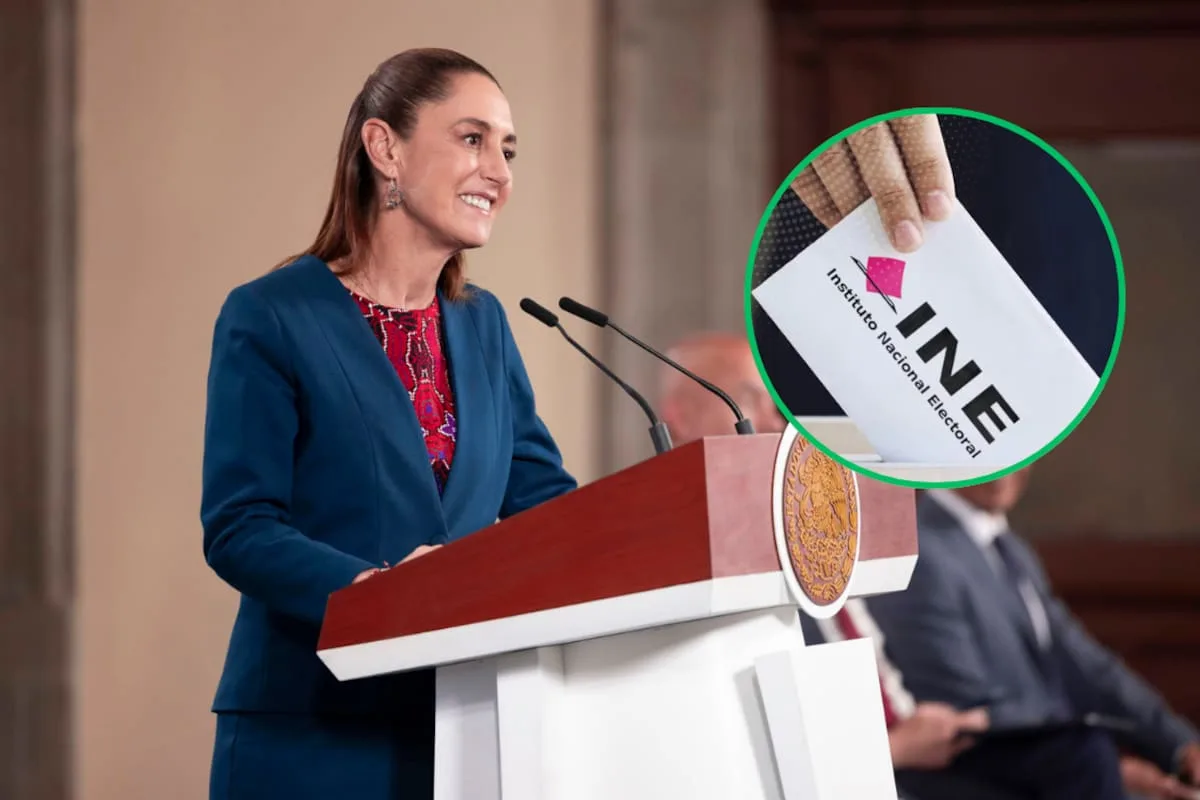
Mexico City — Following the rejection of a constitutional electoral reform in the Chamber of Deputies, legislators from the ruling Morena party convened at the National Palace with President Claudia Sheinbaum to review the legislative agenda and assess a potential "Plan B."
The information was confirmed by Ricardo Monreal, the Morena coordinator in the Chamber of Deputies, upon his arrival at the meeting. According to reports, the legislator explained that the meeting's aim is to analyze the results of the vote and review the scenarios that could emerge in Congress in the coming days.
Purpose of the National Palace Meeting
According to Ricardo Monreal, the gathering seeks to make up for a meeting that could not be held the previous month, which was intended to review the technical agenda of Congress with President Claudia Sheinbaum.
"We are going to reschedule that meeting that could not be held last month to review the technical agenda with President Claudia Sheinbaum," he said. He confirmed that the recent legislative results following the rejected electoral reform and the possible paths forward would also be analyzed.
"Obviously we will review yesterday’s legislative results and next week’s scenarios regarding other legislative plans," Monreal stated.
Evaluating a Potential "Plan B"
When questioned about the possibility of a "Plan B," Ricardo Monreal responded, "The President probably already announced it a few days ago, and she has always been consistent and coherent."
Although he did not detail the content of that possible plan, he indicated that the following could be evaluated:
- Reforms to secondary laws.
- Constitutional reforms in matters other than the rejected electoral initiative.
- Other legislative adjustments outside the scope of the rejected reform.
"They will be secondary laws; there may be constitutional ones if they deal with other matters, but it would be assumed that they are secondary laws or constitutional issues that are not in the rejected reform," he said.
Attendees and Timing
In addition to Ricardo Monreal, the following people attended the meeting at the National Palace:
- Senator Ignacio Mier, from the Morena party.
- Manuel Velasco, coordinator of the PVEM (Green Party) in the Senate.
The meeting took place after 7:00 p.m. and its purpose was to review the legislative agenda after the rejection of the electoral reform in the Chamber of Deputies.
Implications of the Reform's Rejection
The rejection of the electoral reform implies that the constitutional initiative did not obtain the necessary votes for its approval in the Chamber of Deputies. As it was a constitutional amendment, it required a qualified majority. Its rejection forces the legislative majority to explore other avenues if it wishes to implement electoral reforms.
Alternatives could include:
- Amendments to secondary laws.
- Initiatives in different areas.
- Adjustments within the current legal framework.
Legislative Scenarios Moving Forward
Following the rejection of the electoral reform, Congress could face several scenarios:
- Maintain the current regulatory framework without changes.
- Promote partial reforms through secondary laws.
- Present new constitutional proposals in other areas.
- Reconfigure political agreements for future elections.
The analysis of these scenarios was part of the meeting at the National Palace.
Political Context and Next Steps
The rejected electoral reform was part of the legislative agenda promoted by President Claudia Sheinbaum. Its rejection represents a significant moment in the legislative process. The decision to review alternative routes indicates that the parliamentary group will evaluate options within the current constitutional framework.
In the coming days, Morena and its allies are expected to define their legislative strategy following the rejected electoral reform. Technical and political analysis will determine whether adjustments to secondary laws or new initiatives in other areas are chosen.
The Green Party (PVEM) has publicly rejected President Sheinbaum's electoral reform, warning, "We don't want a single peso taken from the INE [National Electoral Institute]." It accuses the reform of being unequal in funding and calls for a rethinking of the proposal for the 2027 elections.
Discover more from Riviera Maya News & Events
Subscribe to get the latest posts sent to your email.