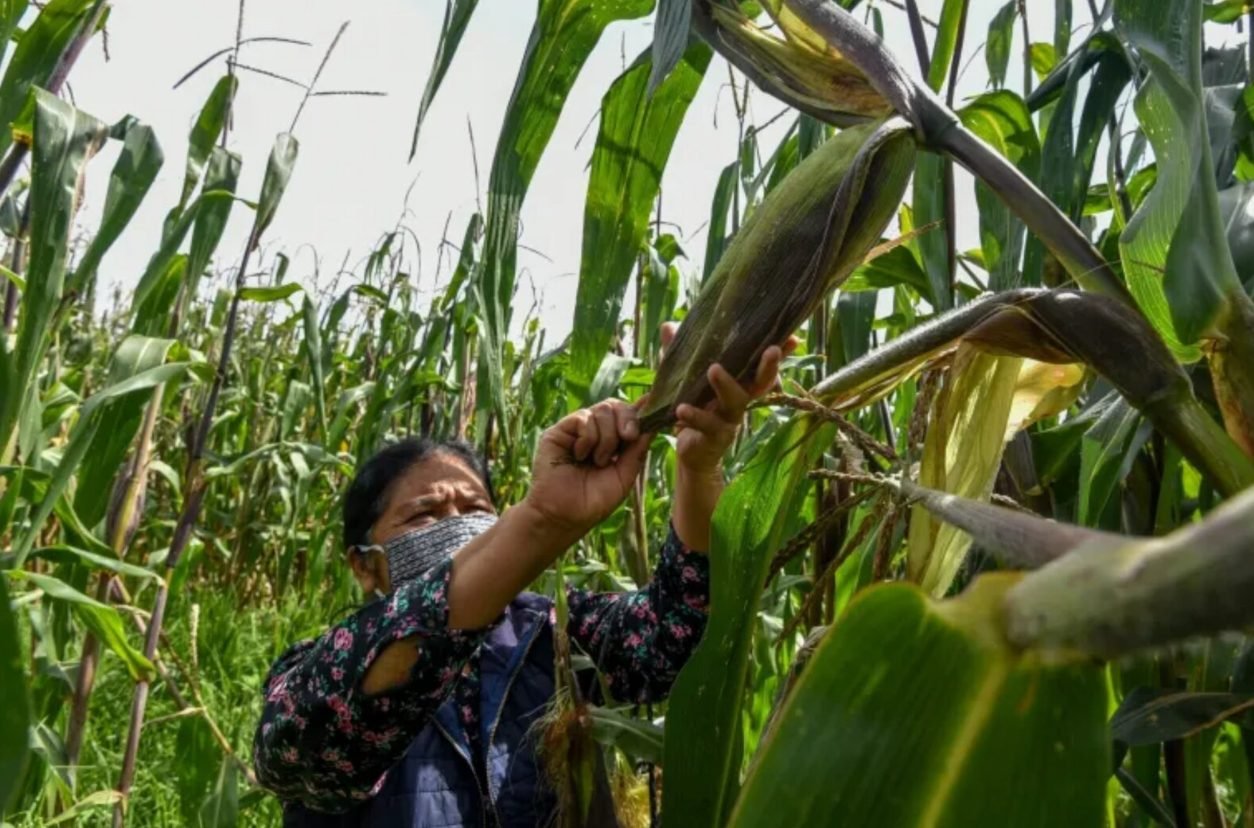
Mexico City — The war in the Middle East has sent nitrogen fertilizer prices soaring by over 40%, threatening to drive up food costs in Mexico and exacerbate a profitability crisis for farmers already grappling with climate change and low commodity prices.
About one-third of global fertilizer trade passes through the Strait of Hormuz to reach agricultural producers worldwide. Since the conflict escalated, prices for fertilizers like urea have surged more than 40%.
Fernando Cruz, managing partner at Grupo Consultor de Mercados Agrícolas, told Expansión that Mexican farmers, from small-scale to large operations, face these rising costs amid a growing profitability squeeze.
He added that worsening climate conditions over the past three years caused a historic drop in national grain production, including corn. Other factors compound the challenge: global grain output rebounded, lowering prices for Mexican producers who also earn fewer dollars from exports due to the strong peso.
In this scenario, the war between the United States, Israel, and Iran has driven up fertilizer prices. Shipments through the Strait of Hormuz fell 97% on March 7 compared to February averages, signaling potential global supply pressures.
According to Cruz, Mexico imports about 75% of its nitrogen fertilizer needs; in 2025, this amounted to 3.8 to 4 million tons, mainly from Russia and China, but also from war-affected countries like Oman (around 341,000 tons).
That external dependence leaves Mexican agriculture particularly vulnerable. “Currently, almost 75% of fertilizers are imported, making this sector very sensitive to external events,” warned Marco Cancino, an economist and public finance specialist. He added that current public programs are insufficient and farmers “are not prepared” for a prolonged price shock.
Cruz detailed that the war’s consequences arrive at a critical time for farmers in the Bajío and central Mexico, as the spring-summer planting cycle begins. This cycle typically yields 17 to 19 million tons of corn by harvest. While some farmers have started sowing, ships carrying fertilizer from the Persian Gulf take about 60 days to reach Mexico, meaning disruption effects could hit in April and May. He noted that fertilizers can account for up to one-third of production costs for corn and wheat.
Although Mexico has a government program supporting farmers with fertilizers, it distributes just 1 million tons targeted at small-scale subsistence or local-market producers. Medium and large producers whose crops go to wholesale markets are excluded.
This situation, Cruz warned, could create inflationary pressures that complicate the Bank of Mexico’s task and even jeopardize economic growth. Cancino echoed that risk: if the conflict drags on, the impact “will soon reflect in consumer prices” for products in the inflation measurement basket.
And not just because ships transporting containers of food and other mass-consumption goods already charge a war risk premium, directly affecting final prices.
Global Hunger Could Worsen
Globally, the UN World Food Program warned this situation could worsen food access crises for millions. “If the Middle East conflict continues until June, another 45 million people could fall into acute food insecurity due to rising prices,” said WFP Deputy Executive Director Carl Skau at a press conference in Geneva this week.
“If prolonged, rising energy prices will drive broader inflation,” stated Julie Kozack, chief spokesperson for the IMF, during a press conference. Food prices are another concern. “Fertilizer transport has been disrupted, and this, combined with general transport disruptions, raises the risk of food price increases,” she said in information compiled by AFP.
Discover more from Riviera Maya News & Events
Subscribe to get the latest posts sent to your email.