Mexico City — Mexico’s Finance Ministry (SHCP) on Friday officially added gas stations and toll booths to a plan to transition toward exclusive digital payments, as part of the implementation of the Digital Economy Law for Digital and Electronic Payments.
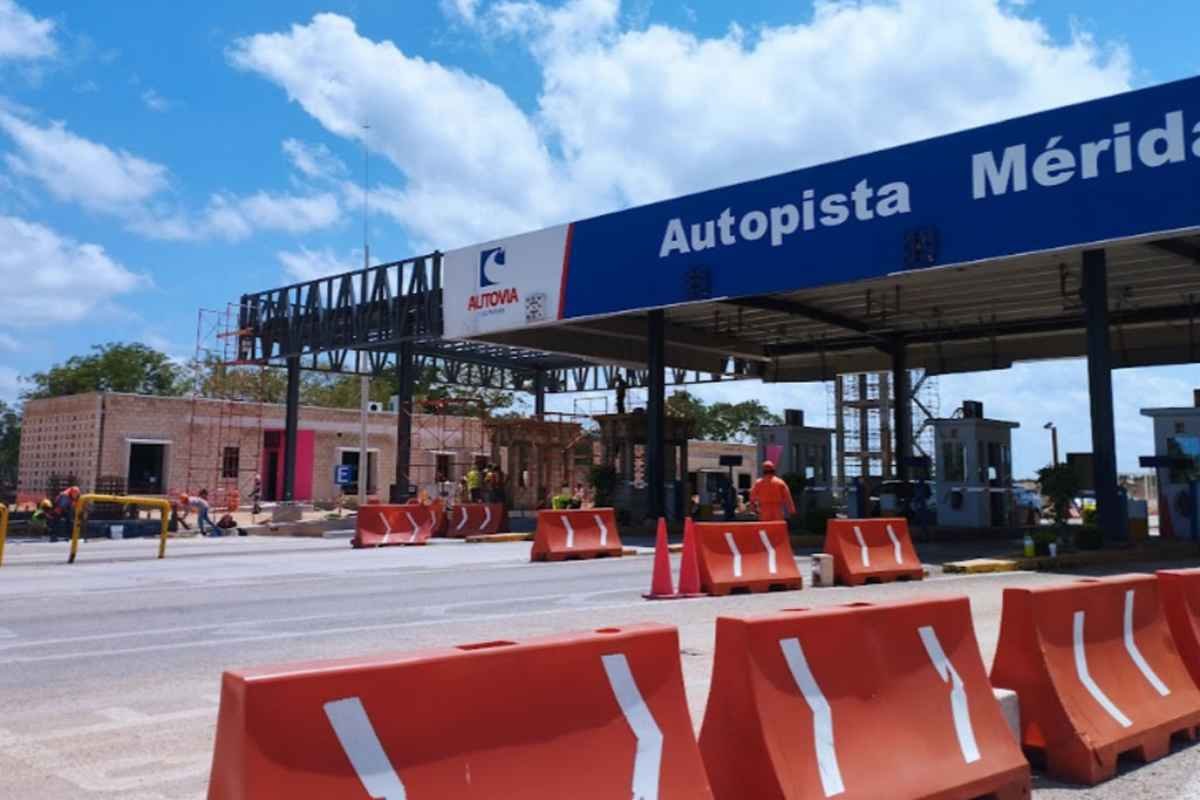
According to the Official Gazette of the Federation (DOF), the sale of gasoline and diesel to the public and the collection of tolls on highways will be the first activities where cash can be gradually replaced by bank cards, transfers, and other electronic instruments.
The measure does not mean cash will immediately disappear at these establishments, as specific rules and deadlines for implementation still need to be established.
Hacienda aims to curb irregularities in fuel sales
For gas stations, Hacienda justified the measure as part of a strategy to strengthen oversight of commercial operations and detect possible irregularities in the distribution and sale of fuels, including so-called fiscal huachicol (fuel smuggling).
The ministry believes that electronic transaction records will make it easier to verify the legality of operations and complement existing tax control mechanisms.
For toll booths, the federal government argued that cash payments cause congestion and lengthen wait times for drivers.
The agreement published by Hacienda cites studies from the Mexican Institute of Transportation showing that some toll plazas have vehicle queues exceeding 800 meters.
While lanes that combine manual and electronic toll collection can handle between 600 and 700 light vehicles per hour, those that operate exclusively with electronic tolling can process between 900 and 1,200 vehicles in the same period.
When will cash no longer be accepted?
The agreement, signed by Finance Secretary Édgar Abraham Amador Zamora, will apply nationwide and will be mandatory for concessionaires, permit holders, and other service providers in the specified activities.
The authorities responsible for regulating both sectors will have 15 business days to publish the corresponding administrative provisions.
Among the aspects they must define are:
- The deadlines for gradually eliminating cash payments.
- The technical and operational requirements for payment systems.
- The obligations of establishments and concessionaires.
- The mechanisms for handling contingencies.
- The electronic instruments that must be accepted.
The legislation recognizes debit and credit cards, electronic transfers, QR codes, near-field communication (NFC) devices, and electronic toll systems as payment methods.
In extraordinary situations that prevent electronic systems from functioning, cash or check payments will be allowed.
Proposal announced by Sheinbaum in Cancún
The elimination of cash at gas stations and toll booths was proposed by President Claudia Sheinbaum Pardo during the Banking Convention held in March in Cancún, Quintana Roo.
Later, in April, the federal government announced an agreement with banking institutions and voucher-issuing companies to reduce fees associated with electronic payments at service stations.
Since then, the president has maintained that digitalizing transactions will improve transparency and reduce the costs associated with handling cash.
However, during a press conference on April 27, Sheinbaum acknowledged that limited connectivity in rural communities is one of the issues that must be addressed to avoid affecting consumers.
The challenge: eliminating cash in a country that depends on it
One of the main challenges of the new legislation will be ensuring that the technological transition does not end up excluding sectors of the population that rely on cash for their daily activities.
According to the National Institute of Statistics and Geography (Inegi), cash remains the predominant payment method among Mexicans.
Banamex specialists have warned that the success of the Digital Economy Law will depend on reducing the gap between access to financial services and their daily use, especially among informal workers, small businesses, and residents of regions with connectivity difficulties.
The measure also raises questions about service for consumers without bank accounts, financial fees, transaction security, and alternatives available in the event of technological failures.
Additionally, there is a need to establish mechanisms that guarantee access to essential services, such as fuel supply, regardless of users’ economic or technological conditions.
For now, although Hacienda has officially designated the first two economic activities that will move toward eliminating cash, there is still no definitive date for gas stations and toll booths in Mexico to stop accepting bills and coins.
More Economy
- Maya Women in Tulum Protest Six-Month Delay in State Welfare Payments
- Cancun Taxi Union to Elect New Leader After Violent Clashes
- Riviera Maya Real Estate Sector Seeks New Investment After Tough Year
- Cozumel Nears 5 Million Cruise Passengers, Set for Record 2026
- Winter Tourism Set to Bring Relief to Mexican Caribbean, With Canada Playing Key Role