Unprecedented Extraditions Mark New Phase in Bilateral Security Cooperation
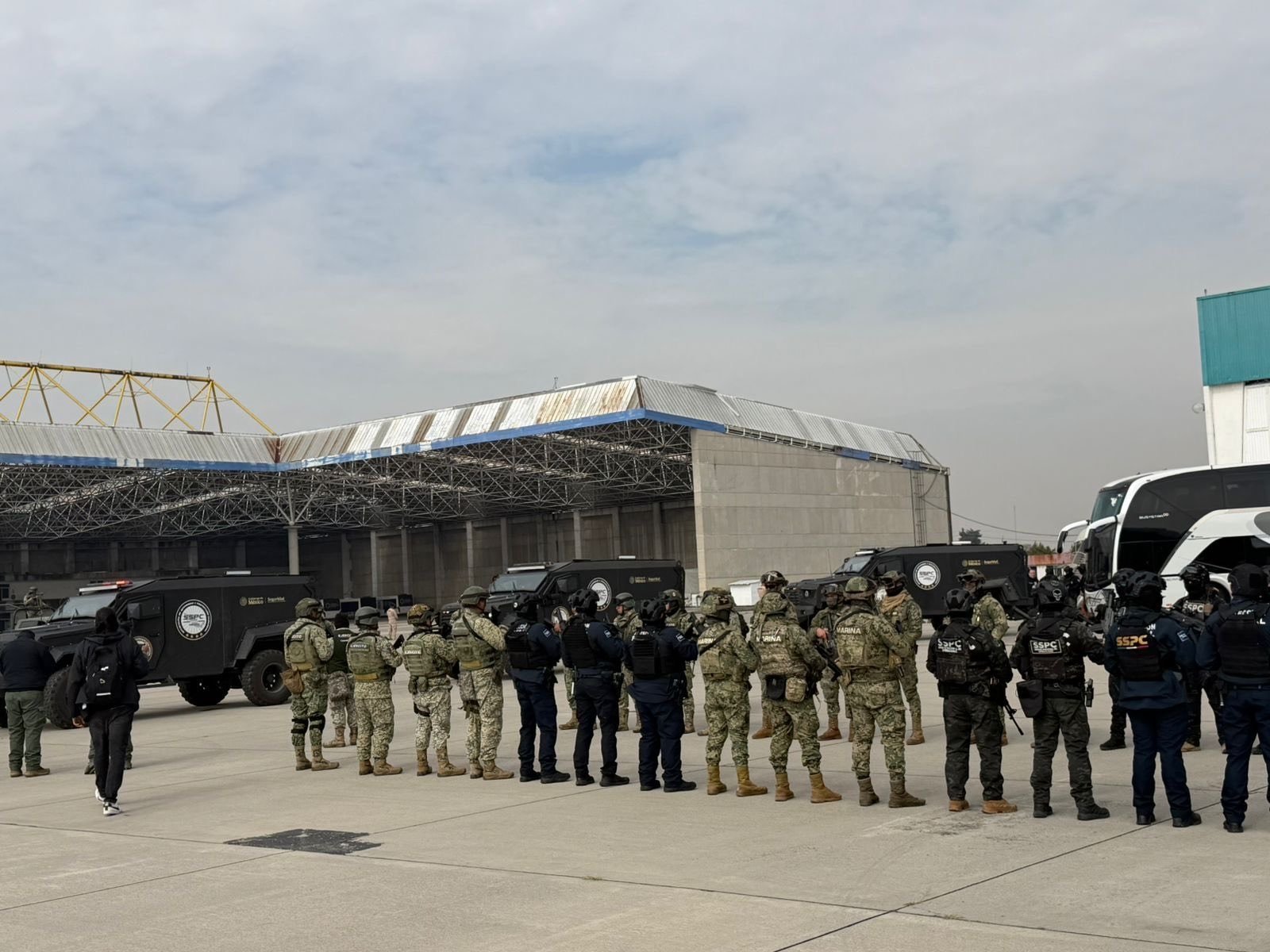
The expulsion of 37 operatives of criminal organizations to the United States, carried out this week by Mexico’s Security Cabinet, marks a new turning point in bilateral security cooperation. The transfer was executed in accordance with the National Security Law and under binational collaboration mechanisms, with the explicit commitment—at the request of the U.S. Department of Justice—not to request the death penalty.
The detainees were sent to Washington, Houston, New York, Pennsylvania, San Antonio, and San Diego aboard seven aircraft of the Armed Forces. With this operation, a total of 92 high-impact criminals have been handed over to U.S. authorities during the current administration, a figure unprecedented in such a short period and confirming a structural change in the Mexico-United States relationship.
The immediate precedent was the first transfer, carried out at the end of December, of 55 high-profile individuals deprived of liberty, also at the request of the U.S. government and under the same legal and national security cooperation mechanisms. Both operations were conducted with military custody, direct coordination with the Department of Justice, and formal diplomatic guarantees to legally unblock the handovers. As anticipated in this column last week, Mexico opened the door to deeper cooperation in locating, detaining, and handing over priority targets for Washington, not as an isolated political gesture but as part of a reconfiguration of the shared security agenda.
High-Impact Operations Intensify
In parallel, Secretary of Security Omar García Harfuch has intensified high-impact operations. In the last four days, Alejandro “N,” one of the 10 most wanted fugitives by the FBI, with a red notice and a $250,000 reward, was detained. He was sought by authorities in North Carolina for first-degree homicide, armed robbery, kidnapping, and other serious crimes. In Playa del Carmen, in an action coordinated with Interpol, the Navy, Defense, and the Attorney General’s Office, Otmane Khalladi was captured. He was sought in the United States for electronic fraud and money laundering and entered the country with false identity. In Badiraguato, Sinaloa, federal forces detained Iván Valerio “N,” alias “Mantecas,” identified as the head of a faction linked to the Beltrán Leyva group. To these cases are added recent announcements of dismantling criminal gangs, securing weaponry, and dismantling drug laboratories, which are part of a strategy to showcase results to our U.S. partner.
Washington’s Perception and Diplomatic Recognition
The perception in Washington accompanies this dynamic. Ambassador Ronald Johnson has publicly recognized operational cooperation with Mexico and has linked these results with the reduction of fentanyl trafficking and the strengthening of border security. In his messages, he has emphasized that this coordination occurs under the direct leadership of both presidents, elevating the security issue to a strategic level within the bilateral relationship. The diplomatic recognition is political validation of the new collaboration scheme and a signal that information and intelligence flows are functioning with greater depth than in recent years.
Behind these movements exists sustained pressure from the United States to accelerate results. Direct calls between Sheinbaum, Trump, and their secretaries, repeated offers of military support, public warnings about the expansion of criminal networks, alerts from the Department of Transportation about Mexican airspace, and demands to prioritize the capture of targets sought by U.S. agencies are part of the same pressure package toward Mexico.
Future Targets: From Narcos to Accomplices
For the moment, what matters most to the United States are criminal organizations and high-profile drug traffickers; however, what officials of the Trump administration have conveyed to Mexico’s cabinet is that, in a second phase, they also want their accomplices: officials, politicians, and businesspeople.
The United States already has in custody central figures of organized crime such as Ismael “El Mayo” Zambada, Joaquín “El Chapo” Guzmán, two of his sons, Rafael Caro Quintero, and dozens of operatives who can provide information about institutional protection schemes. The value of these profiles allows for the reconstruction of complete networks, identification of complicities, and opening of broader investigation lines.
In this context, a visit to Mexico by FBI Director Kash Patel is scheduled for the coming weeks as part of strengthening operational channels and intelligence exchange between both countries. And it is not ruled out that Claudia Sheinbaum’s state visit to Washington could be brought forward and occur before the celebration of the Soccer World Cup and the renegotiation of the USMCA, scheduled for mid-year, in an attempt to align security, trade, and migration agendas in a single negotiation package. Cooperation has entered a phase of greater exposure, and the President aligns her pieces to play them as best as possible, although almost always defensively.
Discover more from Riviera Maya News & Events
Subscribe to get the latest posts sent to your email.