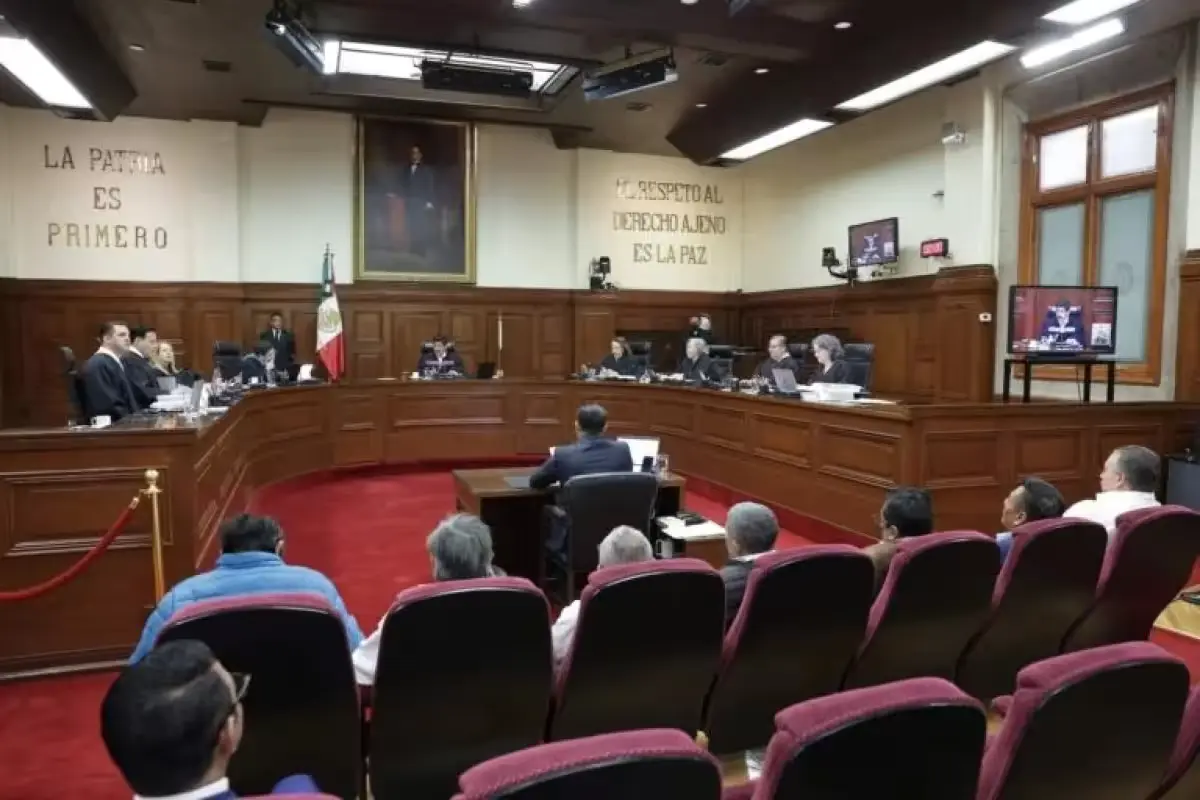
Quintana Roo, Mexico — Mexico’s Supreme Court has invalidated key provisions of Quintana Roo’s anti-corruption legislation that granted the state’s specialized prosecutor sweeping surveillance powers, ruling they violated constitutional rights.
The Supreme Court of Justice of the Nation (SCJN) struck down articles in the Organic Law of the Specialized Prosecutor’s Office for Combating Corruption that allowed the agency to request interception of private communications and real-time geolocation tracking of citizens. The court determined these powers were excessive and infringed on fundamental rights.
The National Human Rights Commission (CNDH) brought the constitutional challenge, arguing the local legislation granted the anti-corruption prosecutor authority beyond its competence and violated individuals’ privacy, intimacy, and legal security.
The court specifically invalidated Article 11, Section XXXIII; Article 17, Section A, Subsection XXX; Article 23, Section XIII (regarding private communication interception and real-time geolocation); and Articles 43, 44, and 45 of Decree 085 published January 10, 2025. The court also ruled the state legislature lacked authority to regulate enforcement measures, a matter reserved for the federal Congress.
“It’s a blow to the arrogance of a legislature that believes it has absolute power,” commented a litigating attorney who requested anonymity. “The Anti-Corruption Prosecutor wanted to spy and impose fines without real judicial oversight. The Court put a stop to them, but this reveals the law was created more for control than genuinely combating corruption.”
Local residents and activists expressed skepticism about the agency’s effectiveness following the ruling. “What good is an Anti-Corruption Prosecutor if you take away its tools? The serious issue is that the legislature keeps trying to overstep, and the SCJN has to keep correcting them again and again,” said María Elena Torres, a community activist from Supermanzana 97.
This marks another setback for Quintana Roo’s state legislature from the Supreme Court. In recent months, the court has invalidated various local provisions, including reforms affecting participation rights of children and adolescents with disabilities, origin requirements for public offices, and other norms deemed unconstitutional.
“Every time the legislature approves something that sounds like control or favoritism, the SCJN strikes it down. That speaks poorly of the legislative quality we have in Quintana Roo,” criticized Pedro Gutiérrez, a resident of Region 236.
The ruling forces the state legislature to adjust the law according to constitutional standards. Meanwhile, the Specialized Prosecutor’s Office for Combating Corruption now operates with reduced investigative authority, raising questions about its actual capacity to address corruption in a state where this issue remains a primary citizen complaint.
Civil society organizations and consulted attorneys demand the legislature stop attempting to grant excessive powers to local institutions and focus on legislating with constitutional rigor. “This isn’t about weakening the anti-corruption fight, it’s about conducting it with adherence to the Constitution and without violating rights,” stated a litigator.
Discover more from Riviera Maya News & Events
Subscribe to get the latest posts sent to your email.