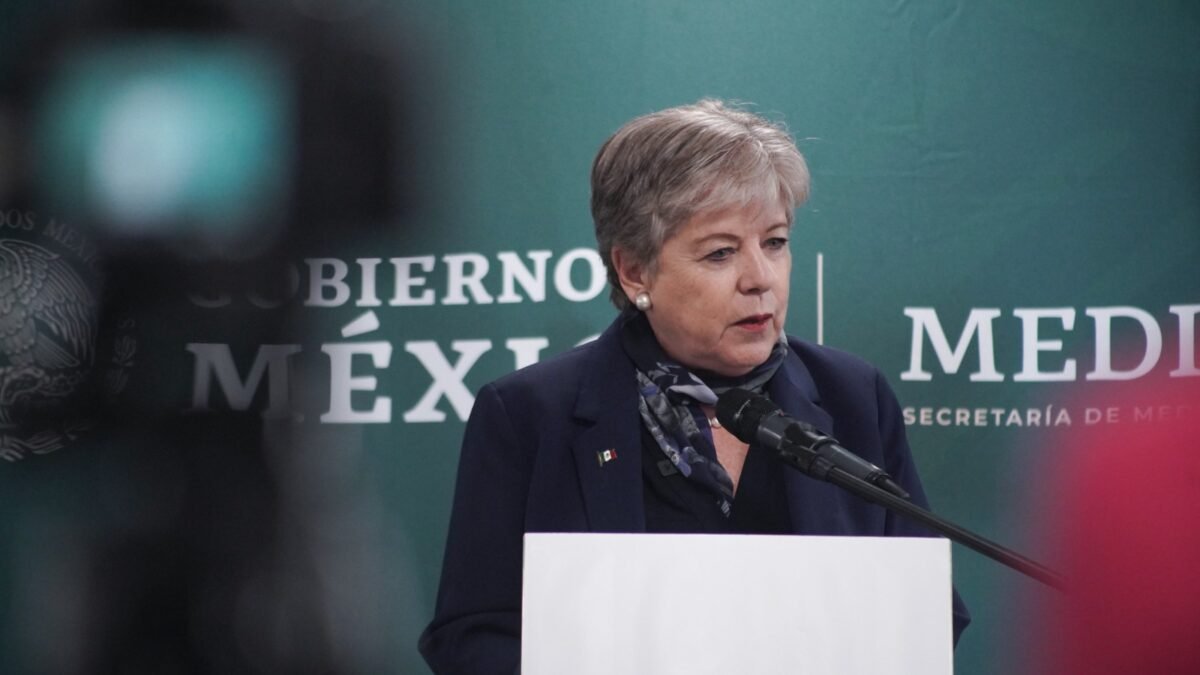
Mexico City — The Ministry of Environment and Natural Resources has denied that the Mexican government confiscated assets belonging to the company Vulcan Materials, contradicting claims made this week by members of the United States Congress.
In a statement, the ministry asserted that Vulcan Materials' properties in Quintana Roo, which include a maritime terminal, remain the company's property. "There is no expropriation or confiscation of Vulcan Materials' assets in Mexico," the ministry stated.
The ministry clarified that the measures taken are related to environmental regulations. "The measures adopted correspond to the restriction of extractive activities derived from the declaration of the 'Felipe Carrillo Puerto' Protected Natural Area, in accordance with the Mexican legal framework."
This denial follows action taken by the United States House of Representatives last Thursday. The House approved sanctions against ships that use ports considered "confiscated" in the Americas. The measure was adopted under the Defend American Property Abroad Act and is seen as a direct response to what Vulcan Materials describes as an expropriation of its facilities in the municipality of Solidaridad. Those facilities, which include a quarry and a port, were affected during the administration of President Andrés Manuel López Obrador.
The federal government decreed the creation of the Felipe Carrillo Puerto Flora and Fauna Protection Area in September 2024. The protected area encompasses land where the company Calizas Industriales del Carmen, a subsidiary of Vulcan Materials, operates, thereby prohibiting the extraction of materials.
Addressing the potential impact of the U.S. legislation, the ministry stated, "Since it is not a confiscation and the maritime terminal continues to be owned by the company, and since an open dialogue is maintained with the company, this case would not fall under the assumption of the proposed US legislation referred to."
The ministry concluded by defending the government's actions, saying, "The actions of the Mexican State do not constitute an expropriation, do not violate international agreements, nor do they imply a closure to dialogue. Mexico is a country open to investment, but also a country that enforces its environmental legal framework."
Discover more from Riviera Maya News & Events
Subscribe to get the latest posts sent to your email.