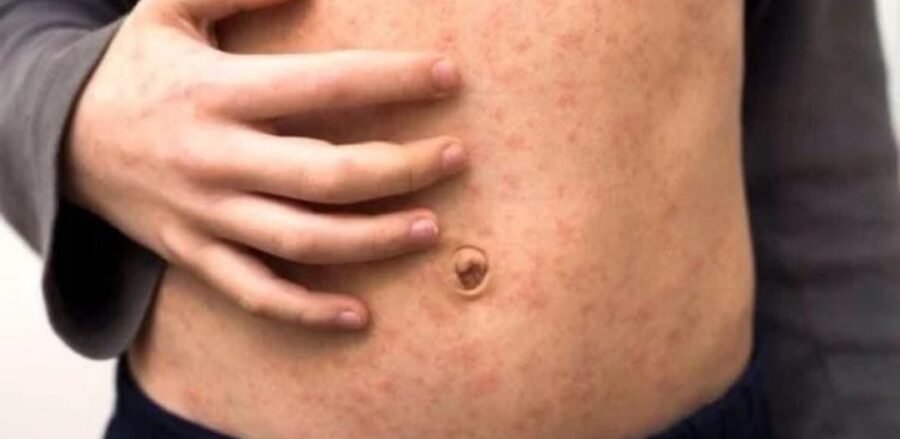
Mexico City — Mexican health officials reported 28 deaths from measles with one more case pending confirmation, as President Claudia Sheinbaum called for calm and urged the public to get vaccinated.
Health Secretary David Kershenobich said the current rate stands at 6.7 cases per 100,000 people, indicating that vaccination efforts are working. Without these measures, he warned, millions could be infected since one person with measles can spread it to 18 others.
“We’re confident we’ll control the outbreak, just as we did in Chihuahua,” Sheinbaum said during her morning briefing.
Early measles symptoms resemble flu with fever, general malaise, and runny nose. Health officials advise seeking medical attention to manage symptoms and avoiding antibiotics unless prescribed. Self-medication is strongly discouraged.
The federal government has 28 million vaccine doses available for Mexico’s 133 million residents, though officials note much of the population is already vaccinated. During non-outbreak periods, the country typically maintains about six million doses.
Most measles cases are treatable with symptom management medications, with antibiotics needed only in specific situations.
“Vaccination is the only way to control measles. It’s the most important measure to contain this outbreak,” Kershenobich emphasized.
He noted that among 133 million Mexicans, there have been 9,074 total cases between 2025 and 2026, and vaccination can control and stop transmission.
The first measles outbreak occurred in Chihuahua in February 2025, but Kershenobich said transmission there “is now controlled thanks to vaccination.”
Seven states account for 85% of measles cases in 2026, all with rates above 100,000 inhabitants: Jalisco, Colima, Chiapas, Sinaloa, Nayarit, Tabasco, and Mexico City.
“We have vaccines, and we’ve clearly identified where outbreaks are occurring to intensify our campaign,” Kershenobich added. “Most of Mexico’s population is already immunized.”
Sheinbaum explained the vaccination strategy: “First, unvaccinated children from six months to 12 years should get their first dose at health centers. Those who received their first dose more than six months ago should get vaccinated again. Those who already have both doses needn’t worry.”
She added that in states with major outbreaks, vaccination will extend to youth aged 13 and older.
Discover more from Riviera Maya News & Events
Subscribe to get the latest posts sent to your email.