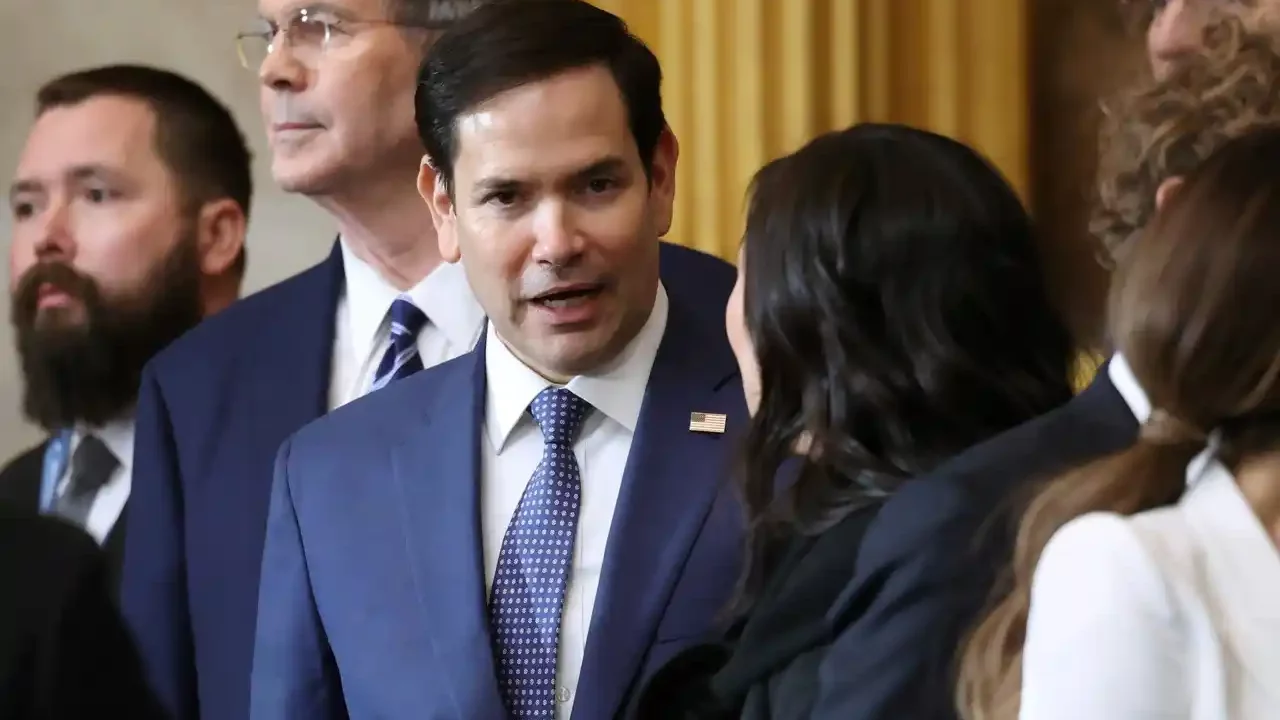
Washington, D.C. — A recent meeting in Washington hosted by U.S. Secretary of State Marco Rubio has revealed insights into his growing influence within the Trump administration and his broader political ambitions, with significant implications for Venezuela, Cuba, and Mexico.
Last Wednesday, Rubio convened over 50 representatives from various countries to launch an agreement on rare earth minerals. Initially expected to include only about a dozen nations, the meeting expanded dramatically after high-level calls, underscoring Rubio’s clout. During the gathering, when an attendee suggested creating a multilateral framework to align objectives, Rubio intervened to clarify the White House’s stance. He stated that for the current administration, the issue is a matter of security, and security matters will never be multilateral, asserting that behind every international assembly, from the UN to the WTO, Beijing’s influence is assumed.
Vice President JD Vance, who delivered the main speech, was present but has reportedly lost initiative, according to attendees. His plan to annex Greenland has stalled, and his image is tied to the migrant crisis that shook Minneapolis, which has drawn criticism from within the Republican Party.
Rubio’s internal strength is projecting outward. While the Washington meeting focused on rare earths, in Caracas, Venezuelan businessmen Alex Saab and Raúl Gorrin, both associated with the Chavista regime, were detained. Among envoys at the meeting, an underground thesis circulated: Gorrin’s downfall will be Rubio’s key tool to condition the Venezuelan opposition as the current tutelage process enters a democratic phase. Gorrin is believed to have economic ties with much of the opposition to the regime, with the exception of María Corina Machado. Information on Gorrin is seen as a mechanism to organize the electoral framework that, in Rubio’s bet, should succeed Chavismo.
Cuba is another target for the secretary. The State Department is preparing a series of humanitarian aid shipments this week, involving both the United States and Mexico. The message delivered to Mexico’s National Palace on Friday was clear: “This will be the last humanitarian aid package the Cuban government receives in its current format.” The assistance also carries a political calculation, as Rubio aims to ensure Cuban society does not view the U.S. as a facilitator of the humanitarian disaster. The goal is to heighten discontent with the regime without undermining Rubio’s chances of overseeing a change in leadership, similar to the approach in Caracas. According to sources in the Foreign Ministry, the message is crystal clear: there will be some support with food and medicine, but no more oil unless it comes from the United States as part of a political transition scheme.
In a series of communications in Mexico City between Cuban and U.S. officials this week, an offer emerged of a safe conduct for the Castro leadership to leave the island. Viewed through the Venezuelan mirror, time is running out: in mid-December, according to the Miami Herald, Nicolás Maduro was offered a safe conduct to fly to Turkey. He rejected it and ended up in a cell in New York.
The imperial ambition, anchored in the defense and security of the hemisphere, also poses a challenge for Mexico. In the National Palace, there is a belief that if the United States faces internal turbulence in November, similar to the Minneapolis situation, Trump could postpone the midterm elections. This logic suggests that what happened in Minnesota was a controlled explosion. This possibility would become more real if the U.S. Supreme Court decides, as heard recently at the Davos forum, that Trump’s tariffs are only valid under the argument of national security. The message is sensitive because it would imply that, when it comes to that avatar, the White House has free rein for any type of adventure.
Fear of what may emanate from this state of exception promoted from Washington is accelerating movements by the ruling party in Mexico: recent changes in security strategy in Sinaloa and the arrests of mayors in the State of Mexico and Jalisco pave the way for a larger-scale strike that could also serve as a response to a recent New York Times article, which this week indicated that the government does not crack down on organized crime due to political sustainability concerns.
Venezuela, Cuba, and Mexico are the external scenarios through which Rubio seeks to build his presidential project, aiming to make Florida the epicenter of that national deployment and navigate Trump’s electoral lows: for the past four months, voting booths have only brought bad news for Republicans.
Discover more from Riviera Maya News & Events
Subscribe to get the latest posts sent to your email.