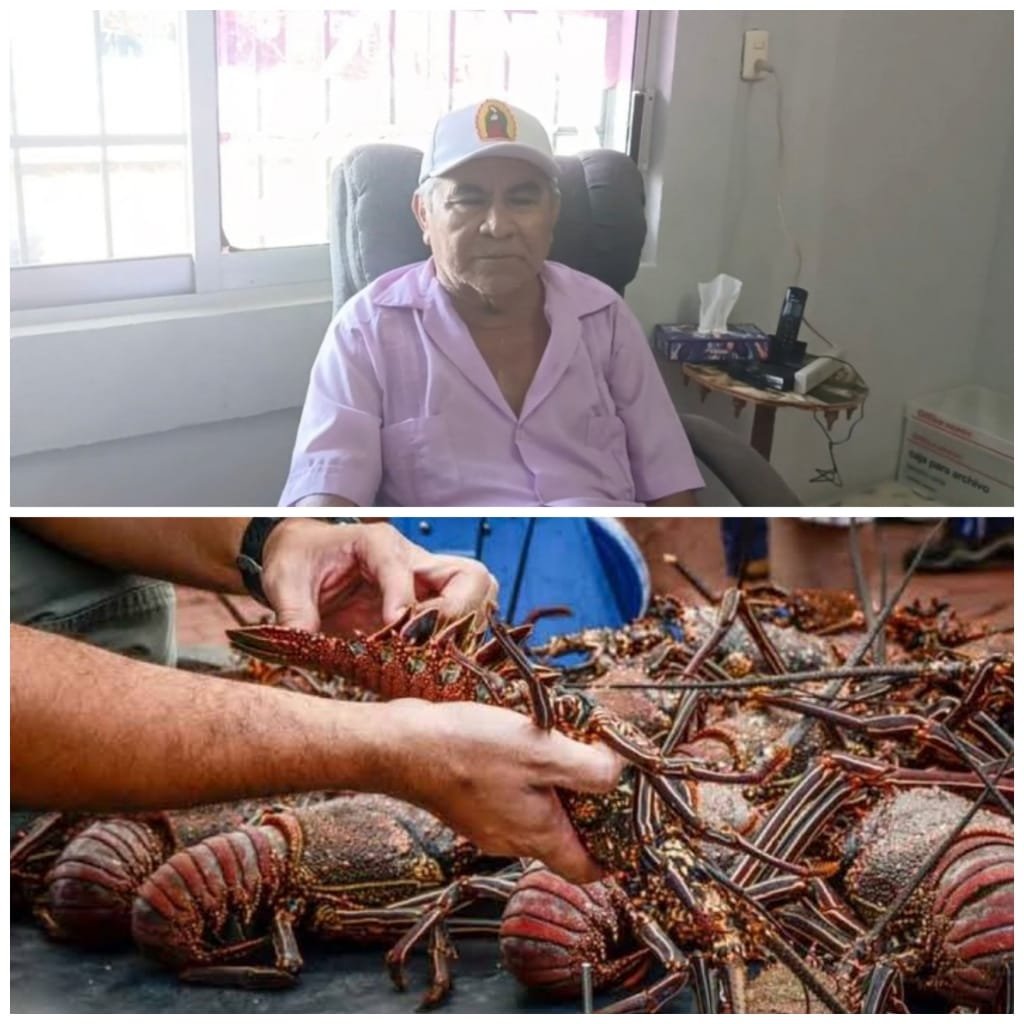
Isla Mujeres, Quintana Roo — The lobster fishing season in Quintana Roo recently concluded with what fishermen describe as a stable, regular production level, maintaining similar yields to last year, according to fishing sector representatives.
Baltazar Gómez Catzin, president of the Regional Federation of Fishing Industry Cooperative Societies in the state, reported that affiliated cooperatives captured approximately 600 metric tons of whole lobster and about 10 metric tons of lobster tail across Quintana Roo during the season.
In Isla Mujeres specifically, where five fishing cooperatives operate, production reached nearly 140 metric tons of whole lobster and roughly 3 metric tons of lobster tail, confirming the area’s importance as a primary extraction point for the crustacean in the Mexican Caribbean.
Fishing representatives consider this year’s results similar to the previous season, reflecting stable conditions for the local fishing industry, an activity that provides a significant income source for dozens of families directly dependent on catching and selling lobster.
Lobster fishing is one of the most valuable activities in Quintana Roo’s fishing sector due to the crustacean’s high commercial value in national and international markets, especially in tourist destinations like Cancún, Isla Mujeres, and the Riviera Maya, where demand remains constant in restaurants and consumption centers.
However, the season’s closure has renewed concerns among fishermen about the need to strictly respect the fishing ban periods, established to allow the species’ reproduction and conservation.
The fishing leader issued a particular call to fishermen in the state’s northern zone to protect lobster during the months when capture is prohibited, noting that this species represents a long-term livelihood source for fishing communities.
He warned that catching egg-bearing lobsters, juveniles, or females during the ban could accelerate population decline, which would ultimately affect production and income for those who depend on this activity.
He recalled that similar situations occurred in the past with other species, like shrimp in the northern zone, where overexploitation drastically reduced production.
Therefore, he insisted that lobster must be considered one of the main assets of the Mexican Caribbean’s fishing sector, making its conservation essential to ensure the economic continuity of cooperatives and communities that rely on the sea.
Discover more from Riviera Maya News & Events
Subscribe to get the latest posts sent to your email.