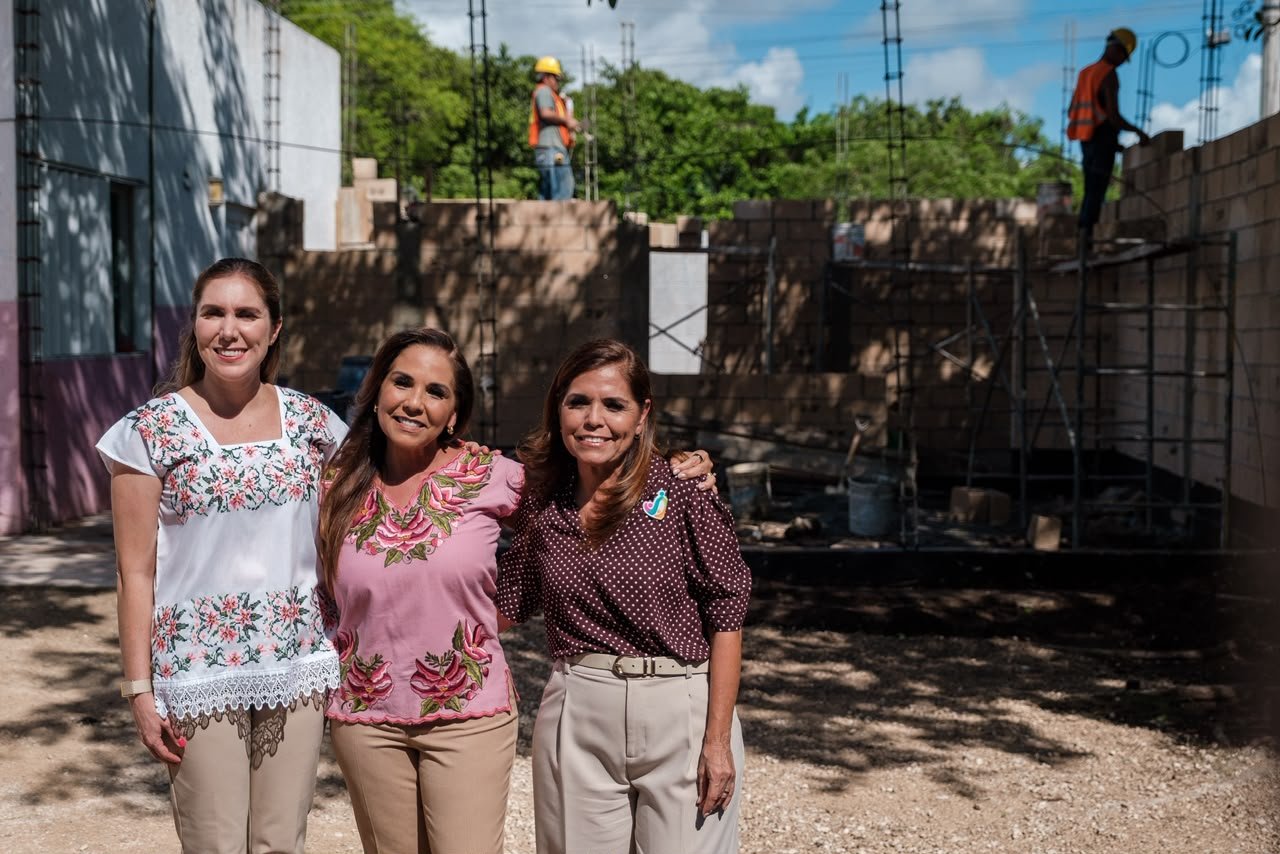
Isla Mujeres, Quintana Roo — Isla Mujeres will get its first Social Assistance Center (CAS), a facility that will provide specialized, round-the-clock care to children and adolescents seven days a week in the municipality’s mainland zone.
Governor Mara Lezama Espinosa and Verónica Lezama Espinosa, honorary president of the Quintana Roo DIF family services agency, launched construction and renovation work on the building. The project carries an investment of nearly 6 million pesos under an agreement between the national and state DIF agencies, supported by requests made to President Claudia Sheinbaum Pardo and national DIF director Rocío García Pérez.
The center will initially serve 26 minors, most of them from the mainland zone.
The new construction includes offices for the Prosecutor’s Office for the Protection of Children and Adolescents, an access gate, restrooms, a kitchen, a dining hall, a laundry room and a storage area. Crews will also renovate the psychology, social work, legal services, multipurpose, examination, dormitory, nutrition, nursing, maternal care, nursery and bathroom areas.
The Isla Mujeres municipal government will supply the equipment, including beds, bunk beds, stoves, refrigerators, air conditioners, furniture, utensils and computers.
Mayor Atenea Gómez Ricalde said the municipality also drafted the construction plans and that the work is expected to be finished in December.
“The goal is to strengthen the protection and restoration of the rights of girls, boys and adolescents in vulnerable conditions,” Lezama said at the groundbreaking.
More Community
- Yucatán Congress Repeals HIV ‘Danger of Contagion’ Crime
- López Obrador Reappears With Video Message as Sheinbaum Marks Two Years
- Mexican Navy Rescues 12 People Adrift 120 Kilometers Off Isla Mujeres
- Playa del Carmen Unveils Recycled-Plastic Lifeguard Tower at Playa 72
- Four Years After Decriminalization, Quintana Roo Feminists Say Abortion Access Still Falls Short