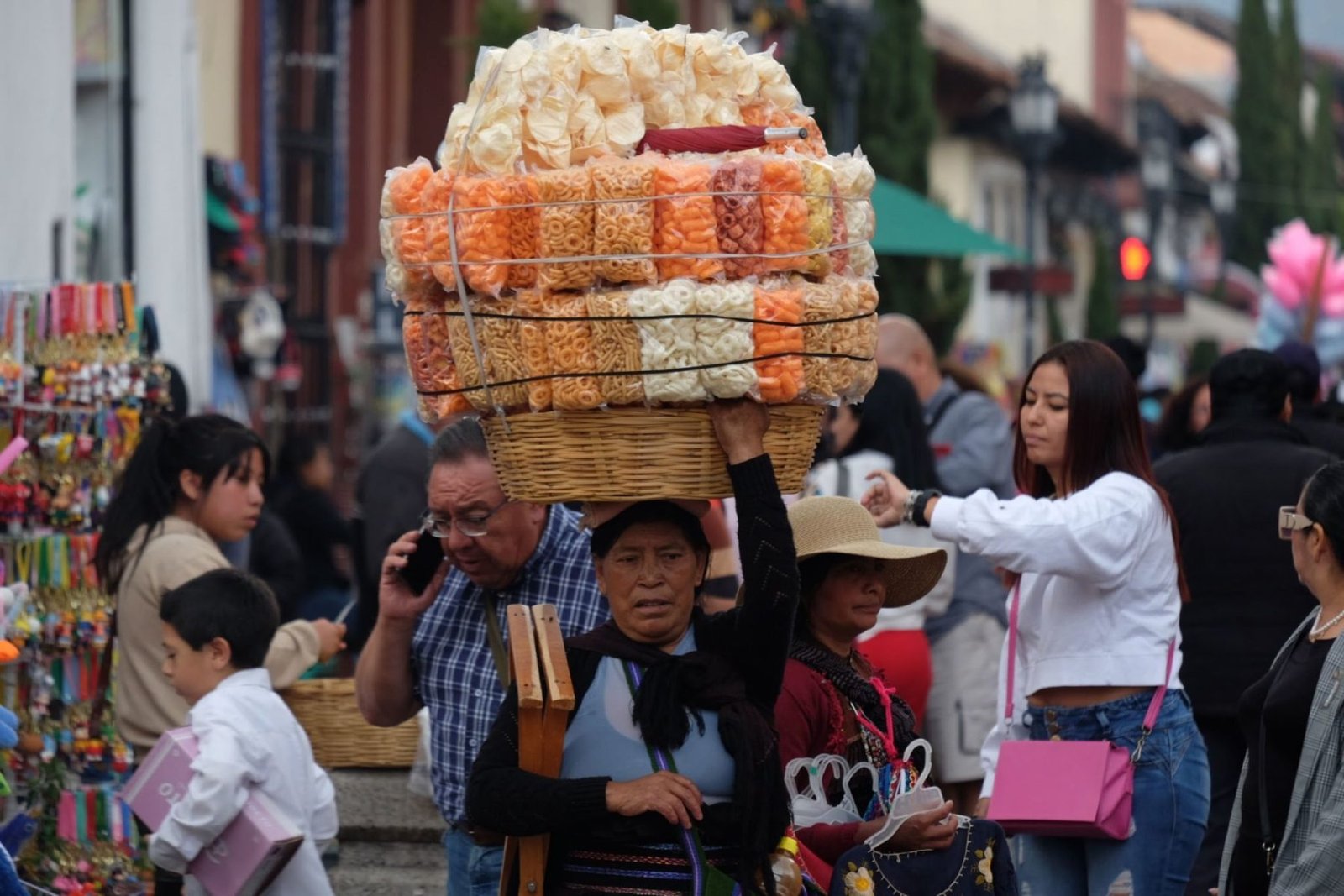
Mexico — During the first nine months of 2025, the informal sector of the economy has become the principal employer in Mexico, registering the third-highest job creation figure since the National Institute of Statistics and Geography (Inegi) began keeping records.
According to the National Occupation and Employment Survey (ENOE), conducted monthly by Inegi, job creation in the informal sector reached 1,235,214 in the accumulated total for 2025. This figure is only surpassed by the same period in 2021, with 1,655,556 jobs, and in 2011, with 1,409,646 jobs.
A Contrasting Labor Market
In contrast, 311,903 positions were lost in the formal sector.
Mexico's labor force, based on data from September 2025, consists of 60.3 million people. Of these, 27.2 million have formal employment, while 33.1 million work in the informal sector. This means that 54.9 percent of the country's workers do not enjoy any type of social protection, healthcare, formal contracts, or other benefits.
Of these 33 million informal workers, approximately 16.4 percent work in the agricultural sector; 6.8 percent are in paid domestic work; and 53 percent are in the informal sector as traditionally defined. From this total, 50.1 percent are salaried workers who, in theory, should receive benefits.
A Persistent Historical Trend
Historically, the number of formal jobs has been lower than the number of informal jobs, both in absolute and relative terms. However, since 2005, there has been a process of transition of the occupied population from informal employment towards formal employment.
The Social and Economic Implications
"Informal labor is one of the most important problems in Mexico because it has very relevant social and economic implications, since more than half of the occupied population has no rights," the report states.
Economic analysts agree that informality is the main enemy of productivity and growth, explaining economic stagnation and representing an immense problem. The labor market is deteriorating, leaving people vulnerable in a context with high levels of informality.
The data also reveals disparities based on gender and marital status. Occupied women are more likely to be in labor informality than men. Regarding marital status, labor formality is more common for married men, while labor informality is predominant among married women.
The Cyclical Nature of Informality
Studies by the International Monetary Fund (IMF) have highlighted that the response of unemployment to cyclical variations in output is weaker when levels of informality are higher. Furthermore, it has been observed that informality decreases during periods of strong growth and increases during periods of low growth.
This suggests that the possibility of moving in and out of the informal sector partly protects workers from the fluctuations of the economic cycle, which dampens the impact of the cycle on unemployment rates. For example, when an emerging market economy enters a recession, workers who otherwise would have been employed may find informal occupation.
Discover more from Riviera Maya News & Events
Subscribe to get the latest posts sent to your email.