PROGRESO, Yucatán — For fishing communities along Mexico’s Gulf and Caribbean coasts, the arrival of the grouper fishing ban — known locally as the veda del mero — often marks a quiet but profound shift. Typically scheduled from February 1 to March 31 each year, this legally mandated closure of the red and black grouper fishery has been moved forward once again in 2026 due to persistent northerly winds that have made offshore fishing unsafe and unproductive. Boats from the larger fleet are already tied up at the shelter port in Yucalpetén, returning with average catches of roughly one ton per vessel — a fraction of what commercial operations require to break even.
The grouper ban is more than just a seasonal pause in fishing. It reflects a complex intersection of ecological science, traditional livelihoods, regional economies, and national fisheries management — and its impacts are being felt from Yucatán to Quintana Roo.
Why the Veda Exists: Protecting Grouper Reproduction
At its core, the grouper fishing ban is a regulatory tool aimed at conserving marine populations. In Mexico, a veda de pesca — or fishing closure — is an official administrative act that temporarily prohibits the capture of one or more species in a specified time or area. These closures are established through federal norms and enforced by the National Commission of Aquaculture and Fisheries (CONAPESCA), under the Ministry of Agriculture and Rural Development.
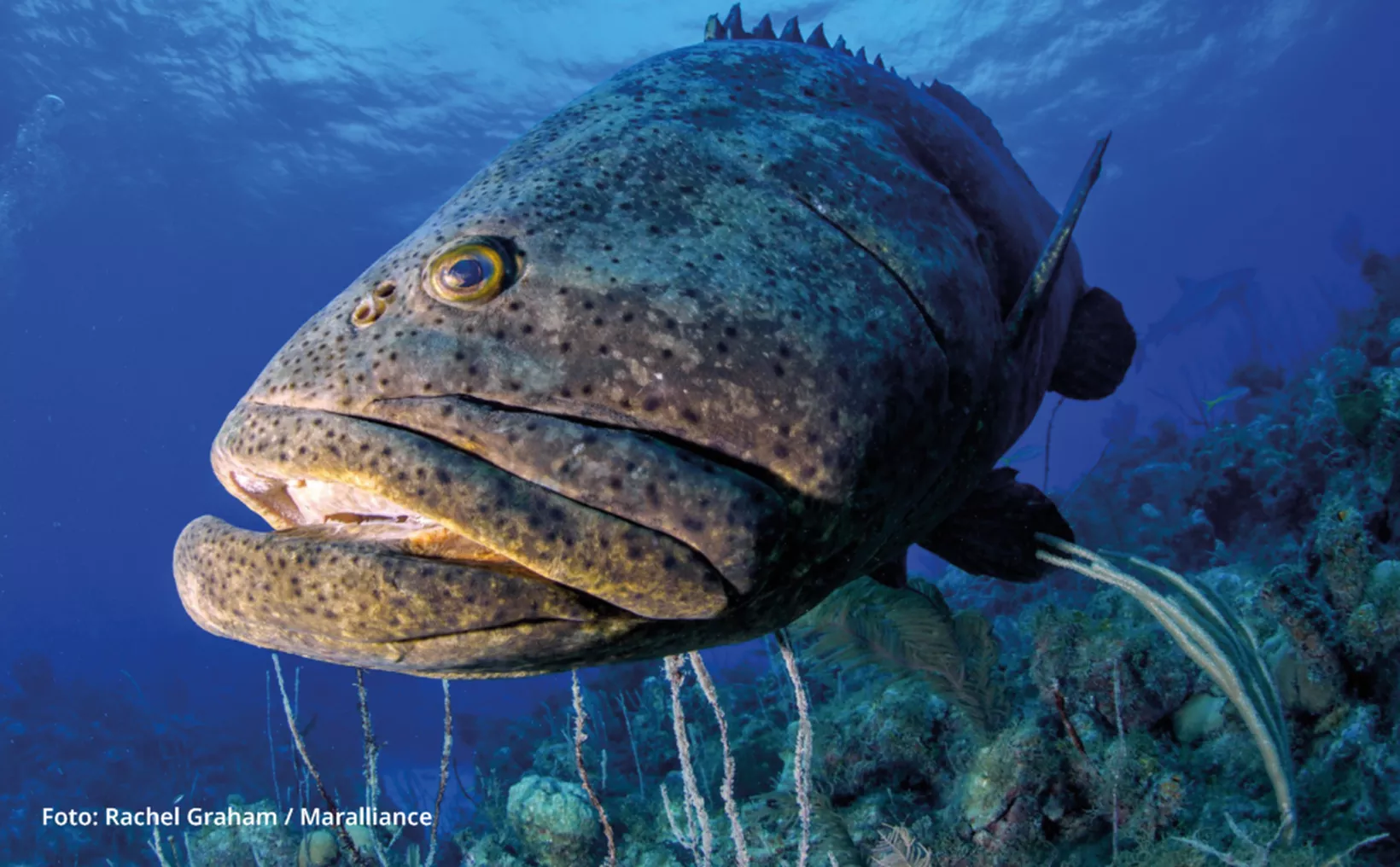
The biological rationale for the grouper ban is clear: grouper species such as red grouper (Epinephelus morio) and black grouper (Mycteroperca bonaci) are slow-growing, late-maturing fish that reproduce in seasonal spawning aggregations. Scientific research has shown that these fish often form dense groupings during their reproductive cycle, making them especially vulnerable to overfishing. If they are harvested during these critical periods, entire cohorts of fish can be depleted before they spawn, reducing future stock levels.
This vulnerability is precisely why authorities have long established closed seasons. According to an official agreement documented in the Diario Oficial de la Federación, Mexico has maintained an annual grouper closure from February 15 to March 15 for federal waters in the Gulf of Mexico and Caribbean — spanning the coasts of Campeche, Yucatán, and Quintana Roo. More recently, the closure was extended to a full two-month period covering February and March, reflecting growing concern about stock sustainability.
Economic Strain and Uncertainty for Fishing Communities
For fishermen and their families, the ban is a double-edged sword. While it aims to safeguard the long-term health of the fishery, in the short term it halts the most profitable seasonal harvest and leaves many without steady income.
According to local industry sources, the final leg of the 2025–26 grouper season has been difficult, largely due to unrelenting northerly winds that have kept boats idle. Line fishermen describe the situation as grim, with crews barely attempting to fish as they wait out the weather and the season’s final days.
Even when vessels can go to sea, the economics are precarious. Fishing for grouper is expensive: larger vessels typically carry 4 to 5 crew members, and operational costs — from fuel to provisions — can reach upward of $350,000 pesos per trip. A successful voyage must yield enough grouper to cover these expenses, and usually requires extended time at sea. In contrast, squid boats, which fish closer to shore and with larger crews of up to 22, can be more cost-efficient and less weather-dependent.
With grouper prices hovering around $220 pesos per kilogram for red grouper and between $260 and $280 pesos per kilogram for black grouper, many fishing expeditions in recent weeks have yielded little profit, underscoring the economic vulnerability of fishing operations as the veda approaches.
Social and Secondary Economic Impacts
The effects of the veda ripple well beyond the boats themselves. In Progreso, more than 500 vessels lay idle at the shelter port Yucalpetén as the season closes. Without the regular rhythm of departures and returns, ancillary services — from mechanics and engine suppliers to ice houses, net makers, and local eateries — see a corresponding dip in activity. The typical ebb of the season turns into a standstill, leaving entire local economies in a state of limbo.
Some fishermen have voiced concern about increased security risks during the ban. As boats sit unattended and community members seek other ways to make ends meet, the risk of thefts — from outboard motors to fishing gear — rises, compounding the financial stress.
Quintana Roo: Shared Ecology, Shared Management
Across the state line in Quintana Roo, the grouper ban also applies to federal waters of both the Gulf of Mexico and the Caribbean Sea. State communications from the Secretariat of Rural Development and Fisheries (SEDARPE) emphasize that all grouper species are protected during the closure period, and their capture is prohibited.
For coastal communities in Quintana Roo — from Mahahual and Majahual in the south to fishing villages around Banco Chinchorro — the closure is a familiar yet persistent challenge. The region’s marine ecosystems are interconnected, and red and black grouper do not recognize political boundaries, spawning and migrating across broad swaths of the continental shelf that encompass both Yucatán and Quintana Roo’s fishing zones.
The shared reliance on these fisheries — and the shared responsibility for sustainability — has increasingly encouraged regional coordination among fishing cooperatives, scientists, and government representatives to monitor stocks and adjust management measures as needed.
What Is at Stake if the Veda Is Not Respected
The purpose of the grouper fishing ban is to allow stocks time to reproduce and replenish. When fishing pressure continues during these closures, or when illegal harvests go unchecked, the risk to populations increases substantially.
Red and black grouper are considered vulnerable in many scientific assessments because of their life history traits: slow growth, late maturity, and the formation of predictable spawning aggregations. Overfishing during spawning can dramatically reduce populations, with long-term consequences for marine ecosystems and human livelihoods. Some independent studies suggest that grouper stocks in the Gulf of Mexico have experienced declines, prompting calls for more stringent closures and better enforcement mechanisms.
If the closure is not observed — whether due to economic desperation, weak enforcement, or intentional disregard — several negative outcomes could follow:
Ecological Consequences:
• Reduced spawning biomass and fewer juvenile fish entering adult populations.
• Altered predator–prey dynamics on coral reefs and shelf ecosystems, where groupers are important mid-level predators.
• Long-term decline of grouper stocks, reducing biodiversity and ecological resilience.
Economic Consequences:
• Collapse or significant reduction of commercial grouper fisheries.
• Loss of jobs and income for fishers and entire coastal value chains that depend on consistent harvests.
• Greater volatility in future seasons, with catches becoming more unpredictable and less profitable.
Social Consequences:
• Increased pressure on other fisheries or natural resources as fishermen seek alternative incomes.
• Strain on community cohesion and traditional fishing cultures as economic options dwindle.
• Potential increase in illegal, unreported, and unregulated (IUU) fishing as regulatory respect diminishes.
Balancing Conservation and Community Needs
Mexican authorities have periodically sought to soften the blow of closures with support measures. In past seasons, government programs have sponsored festivals, tourism promotions, and direct financial assistance to offset the economic impact of the veda for affected families. These initiatives encourage local tourism and raise public awareness about the importance of respecting seasonal closures.
Yet many in the fishing sector argue that more sustained, long-term support is needed — not just short-term relief during closure periods. They say investments in storage infrastructure, alternate fisheries training, and diversification of coastal economies could help reduce the year-to-year hardship.
Marine science suggests that responsible management, compliance with closure periods, and informed community participation are essential if grouper populations are to remain viable for future generations. The annual pause in fishing is not merely a traditional quiet season; it is a biologically grounded, legally mandated effort to sustain an important natural resource for the communities that depend on it and for the ecosystems it supports.
As fishermen in Progreso and beyond wait for the ban to lift — and for the season to resume in April — the question remains: can regulatory measures and community cooperation ensure both a thriving sea and a thriving coastal way of life? Only time and continued commitment to sustainable practices will tell.
Discover more from Riviera Maya News & Events
Subscribe to get the latest posts sent to your email.