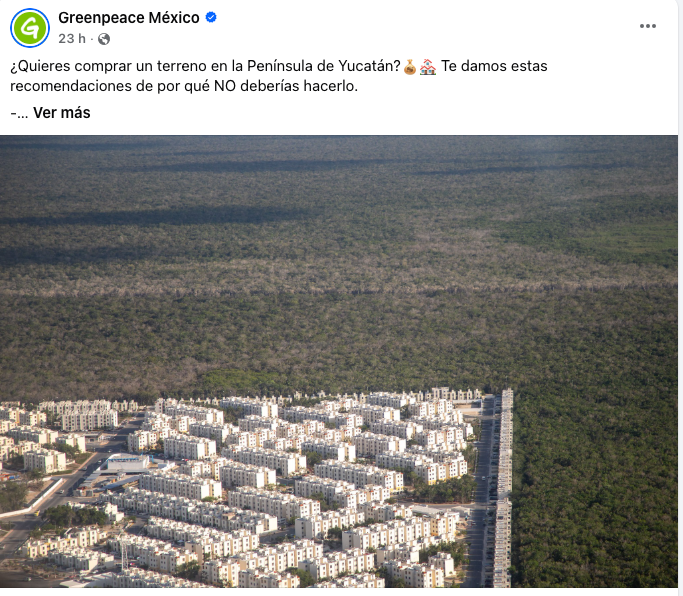
Yucatán — The alert is on the table and it doesn’t come from just any voice. Greenpeace has issued a direct call to citizens not to buy land in the Yucatán Peninsula, warning that the current real estate development model is generating serious and, in some cases, irreversible environmental impact on the Maya jungle, cenotes, and the underground water system that supplies the region.
Through a publication disseminated on social media, the environmental organization stated that acquiring land in Yucatán, under the scheme of accelerated urbanization that now dominates broad areas of the state, can have a very high environmental cost, by being part of a model that drives deforestation, soil and water pollution, as well as the destruction of key ecosystems.
One of the most serious allegations is backed by research from Cinvestav Mérida, which directly links wastewater from various real estate developments with the red tide recorded last August along the peninsula’s coasts. According to Greenpeace, this phenomenon is not an isolated or natural event, but rather the consequence of polluting discharges that end up affecting marine balance and fishing activity.
The organization warned that the Maya jungle is being razed to make way for subdivisions, gated communities, and residential complexes that sell a false idea of “luxury in nature,” while destroying the very ecosystems that allow life in the region. Felled trees, dried or contaminated cenotes, and displaced wildlife are part of the environmental toll left by this real estate expansion.
Greenpeace emphasized that continuing with this model of land speculation puts the future of the peninsula at risk, by causing accelerated loss of biodiversity, altering ecological balance, and deteriorating essential environmental services such as climate regulation, carbon capture, and protection of freshwater, a particularly vulnerable resource in a karst territory like Yucatán.
Additionally, the NGO alerted that this type of development adds to other environmental pressure factors, such as soil pollution from mega-farms, clandestine logging, and systematic destruction of cenotes, which function as the main water supply system in the region. All of this, they noted, occurs without comprehensive planning or effective controls that guarantee environmental protection.
“Before investing, think about what’s at stake,” warned Greenpeace, calling on citizens not to become part of a model that razes the jungle, pollutes water, and destroys the biodiversity of the Yucatán Peninsula. The message is clear: say no to massive real estate development that sacrifices natural heritage for immediate profits.
In a context where urban expansion advances faster than environmental regulation, Greenpeace’s warning reignites an uncomfortable but urgent debate: uncontrolled growth has consequences, and in Yucatán those consequences are already manifesting in the water, in the jungle, and in the sea.
Discover more from Riviera Maya News & Events
Subscribe to get the latest posts sent to your email.