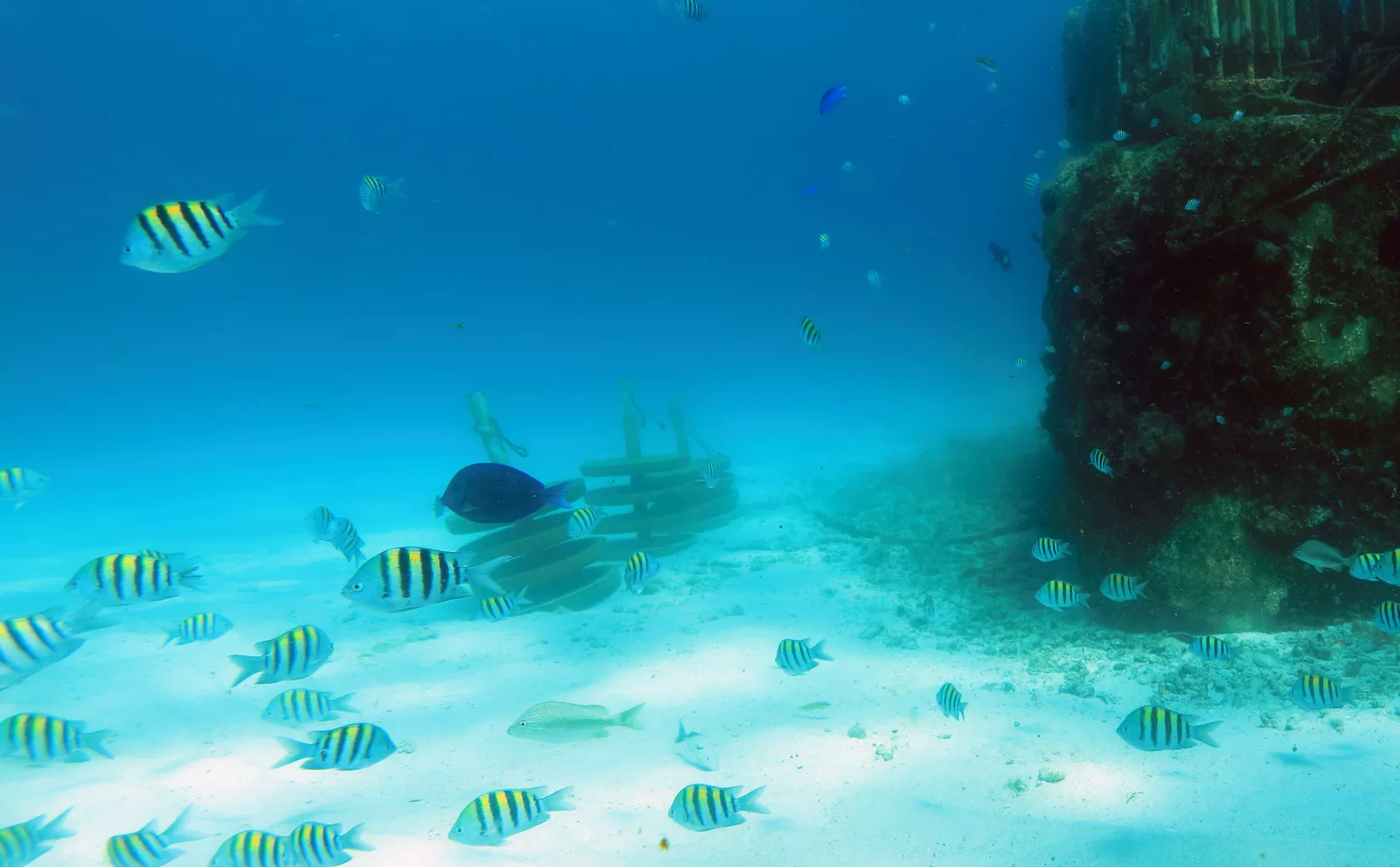
During the last 12 years, El Colegio de la Frontera Sur (Ecosur), in collaboration with institutions from Mexico, Belize, Guatemala, and Honduras, has recorded over seven thousand fish recruits in coral banks, which is essential for the reproduction of reef populations.
This monitoring effort is fundamental for understanding the persistence of marine populations in the Mesoamerican Reef, the largest reef system in the Americas, and is part of a program called Evaluación del Reclutamiento de Peces Arrecifales en el Sistema Arrecifal Mesoaméricano (Ecome).
Lourdes Vásquez Yeomans, a researcher at Ecosur, explained that the initiative focuses on counting fish larvae, classifying them by species, and allowing them to return to their habitat to reproduce populations. “We carry out the additive process by which new, strengthened larvae return to the coast to settle and colonize the reef, which is good news,” she said.
The cross-border monitoring is a task that scientists have adopted as “an art of sampling” using collectors.
“It is more economical and selective because it does not capture all surrounding species and does so with live specimens in a high percentage, allowing their registration and subsequent release,” she added.
She explained that from 2013 to this year, Ecome has covered a wide area of the Mexican coast with this type of monitoring, from the northern part of Quintana Roo in the Costa Occidental Isla Mujeres National Park, Punta Cancún, Punta Nizuc in Mexico, to the Barras Cuero y Salado Wildlife Refuge in Honduras, part of the Mesoamerican Reef System.
This monitoring has generated a robust database that offers a positive view of the reproductive health of the SAM, especially the Quintana Roo coast.
“From 2013 to 2025, they have recorded 7,489 recruits, representing 48 different families,” she highlighted.
The dominant families recorded are: jacks, pufferfish, as well as species of high commercial and ecological value such as snappers and parrotfish that nourish the marine biodiversity of the state.
“Ecome has proven to be a unique exercise in collaboration, involving personnel from Protected Natural Areas, students, technicians, and fishermen, all using the same methodology simultaneously,” she indicated.
The continuity of the monitoring is justified because it is crucial in a reef environment increasingly affected by stressors such as pollution (including plastics and microplastics), overfishing, the presence of invasive species (such as lionfish), and mainly, temperature changes due to climate change.
Discover more from Riviera Maya News & Events
Subscribe to get the latest posts sent to your email.