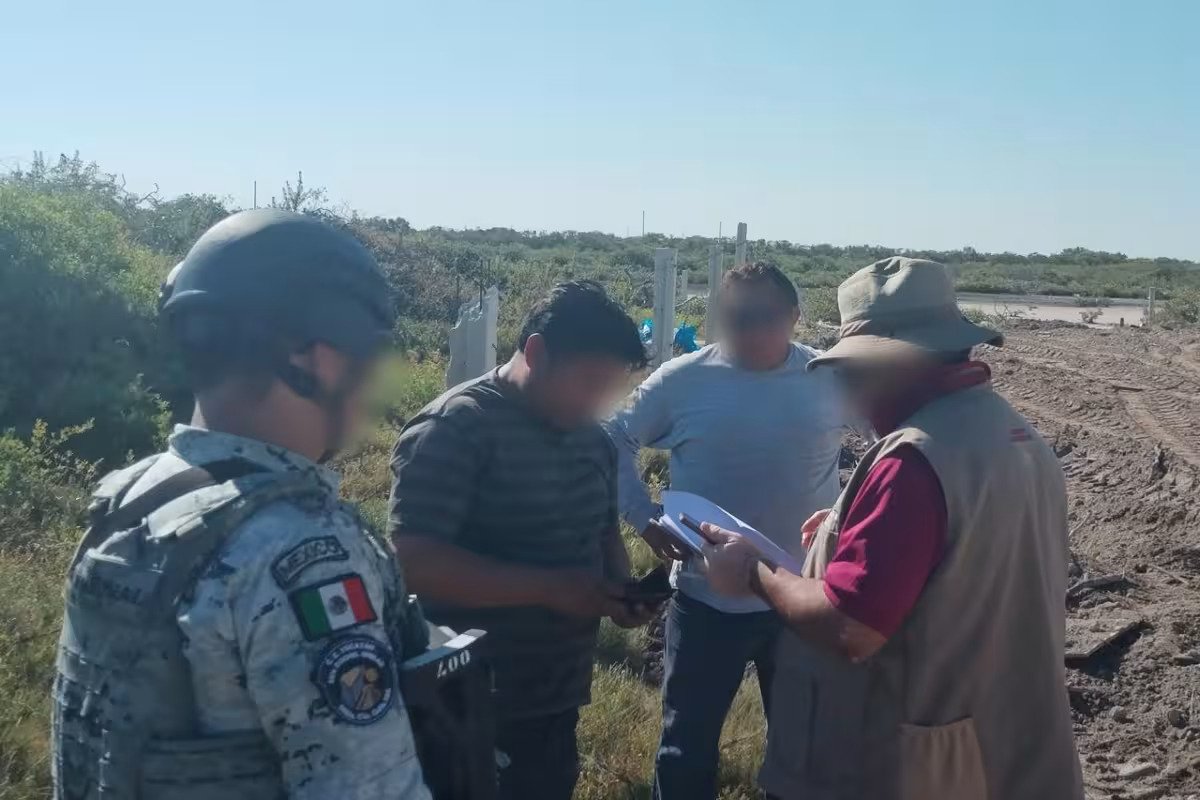
Chelem, Yucatan — Federal environmental inspectors discovered widespread illegal construction, land clearing, and unauthorized settlements during a major operation in a protected mangrove reserve on Mexico’s Yucatan coast.
The Federal Attorney for Environmental Protection, supported by the National Guard and state police, conducted inspections on February 10 in both eastern and western sections of Chelem, within the State Reserve of Swamps and Mangroves of the Northern Coast of Yucatan.
Significant Findings
In the area known as Chelem 1, inspectors found a 262-square-meter urban waste dump within the mangrove and verified that a fiberglass boat workshop had directly affected 400 square meters of vegetation.
The most serious violation occurred at a real estate development where workers had removed previous closure seals imposed by environmental authorities and continued construction work. At this site, inspectors documented the filling and modification of 10,012 square meters of swamp land.
Authorities reimposed a total temporary closure on the property and seized three pieces of equipment used in the work: a water tanker, a road grader, and a motor grader.
Irregular Settlements
The operation continued in Chelem 2, where inspectors using a drone identified areas with vegetation removal, road openings, and land demarcation—clear signs of irregular occupation.
In one 2,986-square-meter area, authorities removed makeshift structures built with wood, sheet metal, pipes, and plastic that were being used to establish settlements. They also dismantled rustic constructions that facilitated the expansion of new occupations.
The inspection covered a total of 4,465 square meters of mangrove where officials observed recent land clearing, filling, and houses under construction.
One particularly sensitive area was a 1,400-square-meter property where agricultural activities were taking place within the wetland. The site contained cattle, pigs, goats, sheep, and poultry. Authorities ordered the closure of the site to stop environmental deterioration.
Ecological Impact
The affected area contains all four mangrove species found in Mexico—red, black, white, and buttonwood—along with flora protected by current environmental regulations.
These ecosystems perform crucial functions: protecting the coast against hurricanes, preventing erosion, filtering pollutants, and serving as refuge for diverse species. Their alteration displaces wildlife, destroys nests, and disrupts ecological balance.
The municipality of Progreso lies within the designated Critical Forest Zone of the Northern Coast, where real estate expansion and land use changes have generated increasing damage to wetlands.
Federal authorities stated they will maintain surveillance and coordinate operations with other security agencies to stop illegal occupation and protect the mangroves.
Discover more from Riviera Maya News & Events
Subscribe to get the latest posts sent to your email.