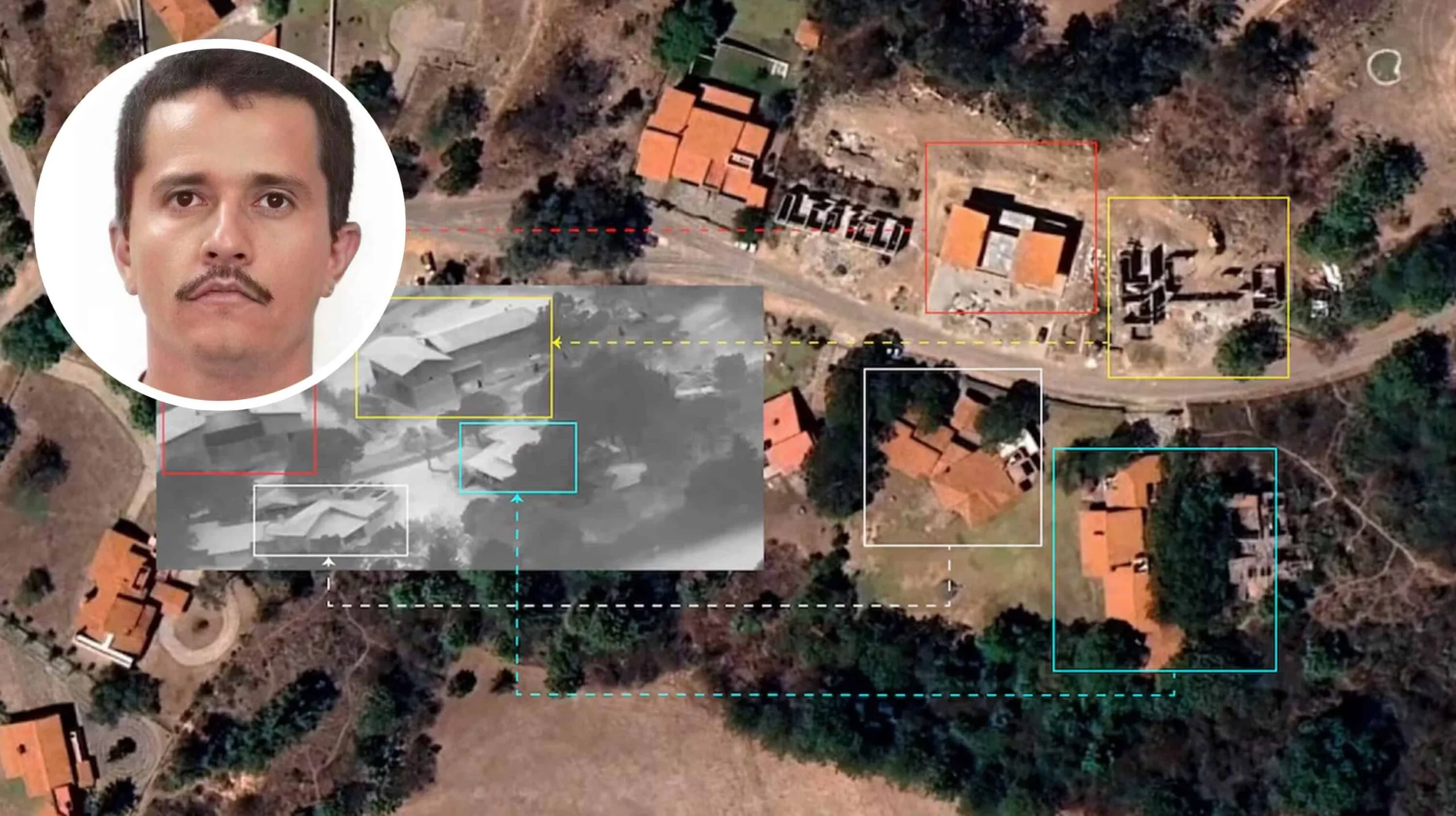
Tapalpa, Jalisco — The hideout where federal forces captured Nemesio Oseguera, known as El Mencho, leader of the Jalisco New Generation Cartel (CJNG) last Sunday, reveals a comfortable residential life rather than the desperate hiding place authorities had described. Located in a neighborhood of 43 houses in Tapalpa, 35 kilometers from the federal highway connecting Guadalajara to Colima, the property has sparked debate about the nature of his capture and the protection he may have enjoyed.
Journalists quickly descended on the location after the operation, leading to scrutiny of what authorities initially called a “luxury cabin.” Columnist Diego Petersen noted in El Informador that showing the criminal’s house to the press “not only feeds morbid curiosity but reinforces stereotypes of organized crime.”
The house itself was a rental property with small rooms, bare walls in the living room, and a kitchen described as messy and stocked with enough food to feed an army—literally, in this case. From another perspective, it did not resemble the temporary refuge of a fugitive constantly on the run, as Mexican officials had repeatedly claimed during their search across Jalisco, Michoacán, and other states. Instead, El Mencho’s hideout suggests the story of a retired capo sheltered by political and social permeability.
Reporter Francisco Santa Ana of N+ described the house as containing two large refrigerators typically used for freezing meat and fish, a fully equipped kitchen with abundant cleaning supplies and food, a cardio machine, a luxury washer and dryer, and large quantities of laundry soap. Juan Pablo Pérez Díaz of Grupo Fórmula added details: medicines for kidney disease—which Oseguera suffered from—ketchup, mustard, bread, cookies, water, soft drinks, coffee, and notably, inflatable toys like those used by children. Other accounts mentioned televisions, including one still in its box, ready to be connected.
The house did not appear to be a temporary stop. Santa Ana noted it sat atop a hill with a view of the access road, featuring a gate guarding the rear entrance, ample parking, and a basketball court. Its equipment and supplies suggested a permanent residence, located near a recently built hospital that treats kidney diseases in a community of just over 2,000 inhabitants—an area not known for that specific health issue but historically within the CJNG’s sanctuary perimeter.
This was not the opulent narco mansion often associated with cartel leaders, nor did it resemble the rudimentary hideouts used by older criminal bosses to avoid detection. When Joaquín “El Chapo” Guzmán was found after his second escape, he was in a small, rustic one-story cabin in El Limón, Tamazula municipality in the Durango mountains, a town with fewer than 65 residents. Accompanied only by a cook—a constant in his fugitive life—and her two daughters, he ran into the woods and tripped on barbed wire when discovered by the Mexican Navy with CIA assistance, which provided his coordinates as in El Mencho’s case.
Benjamín Arellano Félix, head of the once-powerful Tijuana Cartel, was arrested in 2002 in a house in a discreet subdivision on the Puebla-Cholula highway, undressed and alone without any guards. Humberto García Ábrego, who briefly tried to control the Gulf Cartel after his brother Juan’s capture, was detained in 1994 while driving an old Estaquitas truck, also alone, on a Puebla highway. Ismael “El Mayo” Zambada moved with extreme discretion, guarded by only two people. All sought to remain unnoticed.
El Mencho, based on what the public images show, was not truly hidden but also did not seem active. The pictures reveal a family environment that previous captured or killed capos avoided to protect their loved ones. They also indicate he had no fear of detection by authorities, as evidenced by the high electricity consumption at his house—a detail that could have raised suspicions if patterns had been monitored, as cartels and guerrillas learned from the experience of armed movements in Guatemala in the 1980s, which were dismantled after military advisors reviewed abnormal spikes in utility usage.
The images suggest a permeability that allowed El Mencho to reside in a sanctuary where the presence of an entire team attending to him raised no alarms or triggered any reports. How long Oseguera had been living there remains unclear, but it was evidently not a temporary safe house. He was living in a “pueblo mágico” whose population doubles on weekends with tourism, largely from Guadalajara.
Ultimately, the images of his house expose three things: the institutional and social protection that enabled this lifestyle, the possibility that he was no longer leading the CJNG—leaving its structure intact—and the most intriguing question of why the doors were opened to the house, which weakens the military action against El Mencho and casts doubt on the Mexican government’s intelligence information.
Discover more from Riviera Maya News & Events
Subscribe to get the latest posts sent to your email.