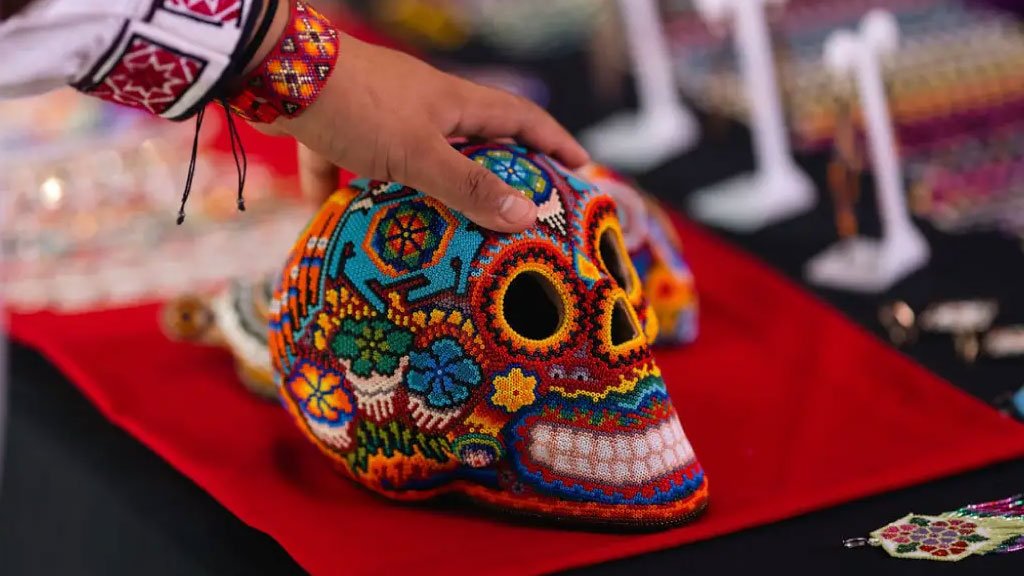
Playa del Carmen, Quintana Roo — Growing markets for Mexican handicrafts are changing how artisans deal with buyers and with their own working methods, from the adoption of digital tools to tax formalization, cultural promoter and activist Luz Valdez said.
Speaking at the third edition of the Feria de Arte Popular Mexicano (Mexican Folk Art Fair), held at the Hacienda de Xcaret, Valdez said one of the biggest benefits for artisans is access to a market unlike the ones they usually find in their home communities — particularly because buyers there are interested in purchasing pieces in larger quantities.
“Each fair has a different audience, so to speak, and the audience this fair has drawn seems to be working very well for artisans who want to sell larger quantities and in volume,” she said.
Sales as a driver of formalization
Valdez argued that processes that can seem foreign to craft work — registering with Mexico’s tax authority (SAT), issuing invoices or using digital tools — only make sense when there are buyers and sales to sustain them.
“In the end, people want artisans to adapt to new technologies or to SAT requirements and so on, and I always tell them: that will only happen if artisans see sales,” she said.
In her view, formalization cannot be presented as an obligation alone, but as part of a process that must come with commercial opportunities.
“What good does it do an artisan to be registered with the SAT, to issue invoices or do those things if they are not making sales or do not have the kind of client those sales require?” she asked.
She said events like the Xcaret fair create a concrete need for artisans to take those steps so they can serve buyers who require more structured business processes.
“These spaces also create the need for artisans to take those steps toward formalizing their work, and they manage to do it,” she said.
Direct sales versus middlemen
Another shift Valdez highlighted is the chance to reduce dependence on intermediaries and to put makers in direct contact with the people looking to buy their work.
She stressed that it matters for craft communities that the profits from their work reach the makers directly, pointing to middleman practices that she said have caused problems in various regions.
“It’s important for artisans to keep the earnings from their work directly,” she said.
Valdez also said buyers need to be able to identify reliable spaces where they can reach producers directly and build commercial relationships safely.
She described the process as gradual and closely tied to the possibility of improving sales: as artisans find new customers and markets, conditions improve for them to take on greater business responsibilities.
At the same time, she said technology is beginning to narrow the gap between producers and end consumers.
“Little by little the digital divide is also being bridged — we know it is still wide in this country — but bit by bit the internet is also helping artisans reach end buyers and manage to sell for themselves,” she said.
On the third edition of the fair, Valdez praised its organization and curation, saying the participation of master artisans and the diversity of the public have helped consolidate a commercial space that complements other markets available to the sector.
“Every year it gets even better. The curation seems impeccable to me. They brought in great masters,” she said.
The experience, she added, confirms that preserving craft work also depends on creating conditions for those who produce it to make a living from it, expand their markets and adapt to new commercial demands without setting aside the cultural value of their pieces.
More Business
- Riviera Maya Hotels Offer Free Nights When Sargassum Blocks the Beach
- Nayarit Overtakes Quintana Roo in Mexico Tourism Investment
- Quintana Roo Slips to Second Place in Mexico Tourism Investment
- Quintana Roo Real Estate Sector Pushes for Legal Reforms to Curb Fraud
- Two Hotel Workers Killed Near Kohunlich; Third Survives Beating
More Playa del Carmen
- Playa del Carmen Hosts Corn Fair to Celebrate Mexico’s Agricultural Heritage
- Federal Youth Program Enrolls 100 in Cancún and Playa del Carmen
- Playa del Carmen Reports Over 11,000 Permits and 46 Closures for Environmental Violations
- Burned-Out Taxi Found on Dirt Road in Playa del Carmen, Deepening Drivers’ Unease
- Judge Dismisses Amparo Petition by Animalandia Maya Defendants