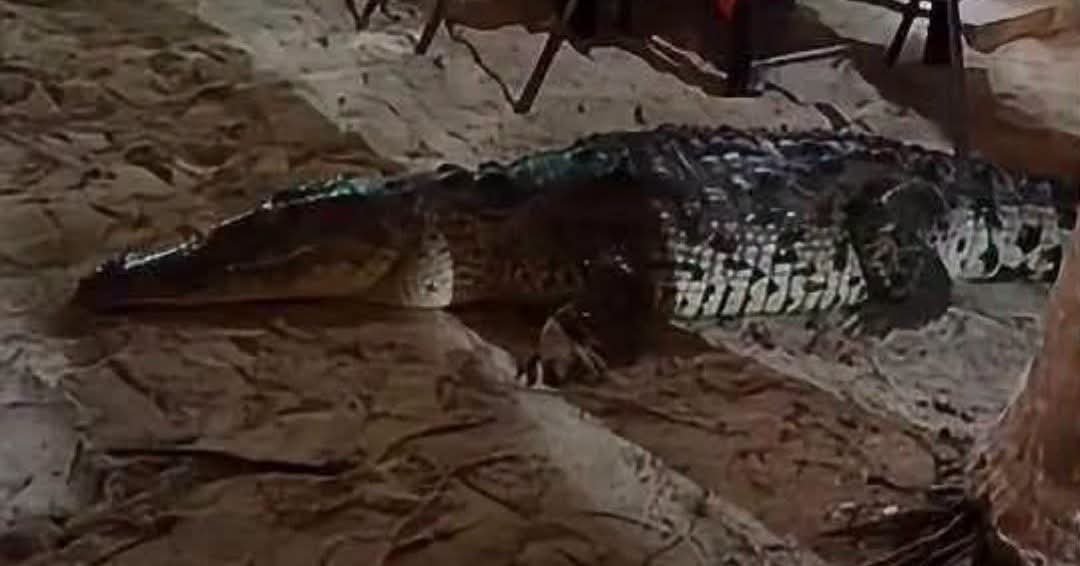
Cozumel, Quintana Roo — Following an alleged crocodile attack that reportedly cost a person a limb, specialists are warning about a rise in crocodile sightings near urban areas of Cozumel, a trend they link to ecosystem fragmentation and heavier rainfall.
Rafael Chacón, director of the Center for Conservation and Environmental Education at the Cozumel Parks and Museums Foundation, said the presence of crocodiles is not the result of overpopulation but of increasingly frequent contact between wildlife and the island’s urban sprawl.
He explained that rain encourages the animals to move toward different parts of the island, while practices such as feeding wildlife can alter their behavior and draw them closer to areas where people live.
Chacón also noted that several of the reported sightings may involve the same animal traveling along its usual feeding routes. He urged the public to avoid interpretations that create panic or treat the reptiles as a threat that must be eliminated.
As a preventive measure, Chacón proposed establishing a formal census to identify, tag and monitor individual crocodiles, along with tighter surveillance at beaches and other spots where contact between people and crocodiles is more likely.
In response to the sightings, he called on residents and visitors to take precautions, refrain from feeding the animals and report their presence to the relevant authorities, with the aim of reducing risks and fostering coexistence with local wildlife.
More Environment
- Cancún Receives Up to 60 Animal Abuse Complaints a Day
- Cozumel’s Punta Sur Turtle Camp Records 625 Nests and 3,705 Hatchlings Released
- Profepa Rules Out Transfer of Three Dolphins From Ventura Park
- Sargablock Sells First Franchise Outside Mexico
- Tulum Rethinks Real Estate Growth Over Risks to the Great Maya Aquifer
More Cozumel
- Cozumel Unveils First Pueblos Mágicos Triathlon in Mexico City
- OXXO Round-Up Drive to Fund School Breakfasts for 680 Children in Cozumel
- Chankanaab Park Eyed as Site for Cozumel’s First Dolphin Sanctuary
- Cozumel Suspends Customs Fees on Dive Gear After Complaints From International Divers
- Cozumel Releases Nearly 7,000 Sea Turtle Hatchlings in 2026 Nesting Season