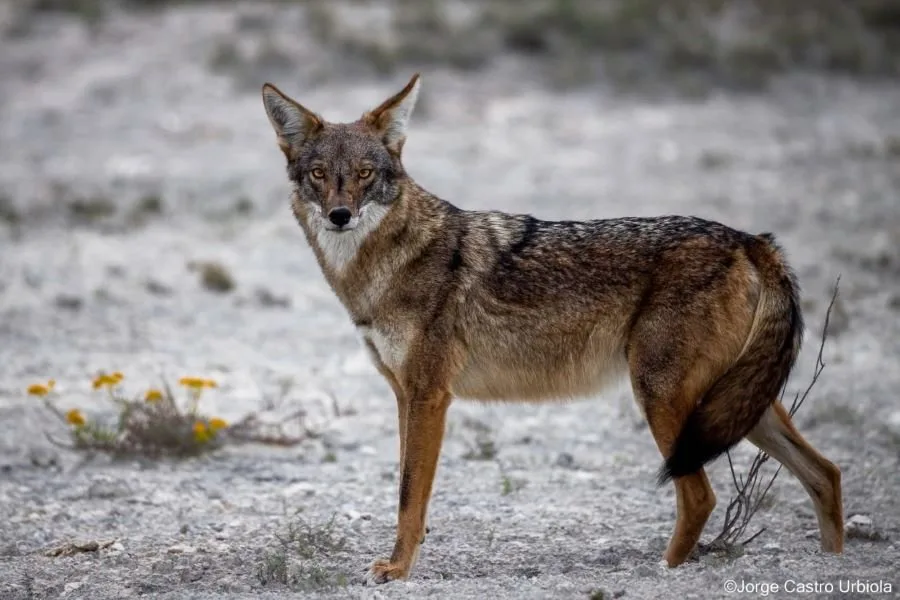
Chetumal, Quintana Roo — A conservation group has launched an active monitoring program for coyotes in the Costa Maya region after receiving multiple reports of recent sightings near communities in southern Quintana Roo.
Project Aak Mahahual, a civil organization, initiated the effort following citizen alerts about coyote (Canis latrans) presence in the area. The group’s representative, Víctor Rosales, said these sightings are not isolated incidents but part of a natural expansion of the species into the Yucatan Peninsula, where they were previously uncommon.
“We are now starting to get reports in Costa Maya, particularly in the southern zone of Quintana Roo, which is relevant because it indicates the species is already exploring new coastal territories,” Rosales explained.
According to the specialist, coyote populations have been documented in recent years in states like Campeche and areas near Mérida, suggesting a progressive movement toward the country’s southeast.
The monitoring involves installing camera traps, conducting field verification tours, and collecting testimonies from residents. The goal is to confirm coyote presence, identify behavioral patterns, and assess potential interactions with other species or human activities.
Rosales emphasized that coyotes are highly adaptable animals capable of surviving in various ecosystems, from arid zones to tropical forests, which facilitates their territorial expansion. However, he warned that their arrival in new regions could alter ecological balance, especially in areas lacking such predators.
He urged local residents and tourism service providers to report any sightings responsibly, avoiding pursuit or capture attempts.
“It’s important to remain calm, not feed them or approach them, as they are wild animals that should remain in their natural habitat,” he stated.
The organization noted that this monitoring will generate scientific information to support conservation and biodiversity management decisions in the region, which is considered one of Mexico’s most important natural areas.
Discover more from Riviera Maya News & Events
Subscribe to get the latest posts sent to your email.