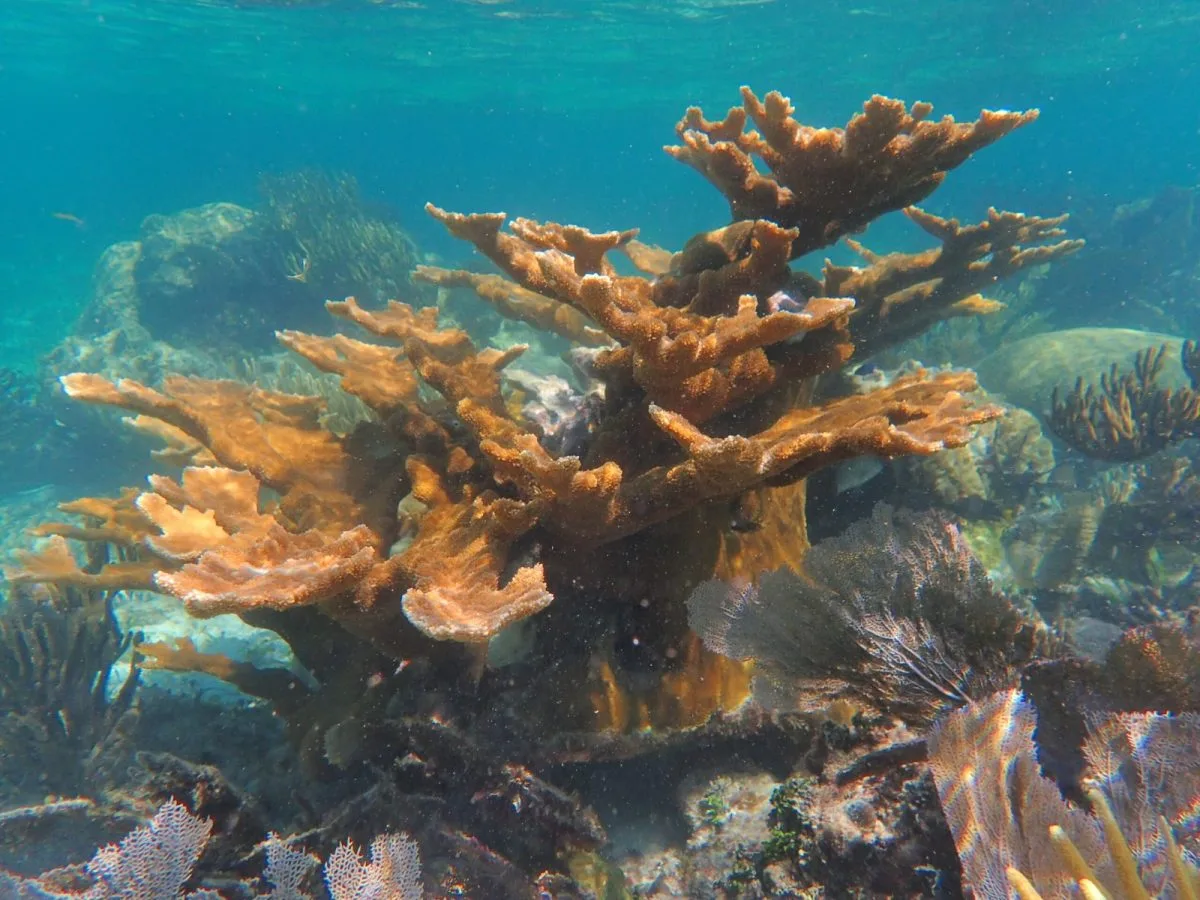
Cozumel, Quintana Roo — An eight-year study led by researcher Johanna Calle Triviño has found that elkhorn coral, a critically endangered species vital to Cozumel’s reef, has ceased synchronized reproduction. The coral colonies mature internally but no longer spawn simultaneously, a process essential for fertilization, pushing the reef toward silent aging as energy shifts to survival.
The reproductive collapse stems from a “cocktail of stress” combining global and local factors. Sea temperatures in the area have risen up to four degrees over three decades, with peaks of 33°C disrupting biological signals. Light pollution from hotels and piers confuses the corals’ circadian rhythms, preventing them from identifying the correct lunar phase to release gametes.
Mass tourism adds pressure, with over 1,300 cruise ships arriving annually, overwhelming infrastructure and leading to sewage runoff and hydrocarbon contamination. Biologist Germán Méndez notes that these ships also cause sedimentation and have introduced aggressive diseases, reducing the species’ historical population in the Caribbean by up to 95%.
Losing this “reef architect” has severe implications for human safety. Elkhorn coral builds crests that act as natural breakwaters; without them, coastal communities become vulnerable to direct hurricane impacts. Surviving colonies in Cozumel are now so dispersed that gametes rarely meet at the surface, a phenomenon known as the Allee effect, reducing reproductive success to near zero.
Scientists urge immediate local measures, such as mitigating artificial night light and improving water treatment, along with assisted “sexual restoration” to increase colony density. They warn that protecting isolated specimens is insufficient—restoring environmental conditions is crucial to revive the coral’s life cycle before the island’s natural barrier collapses entirely.
Discover more from Riviera Maya News & Events
Subscribe to get the latest posts sent to your email.