Quintana Roo, Mexico — The reef ecosystem of the Mexican Caribbean, a pillar of coastal protection, sand production, and economic driver of tourism, faces an existential crisis. Hard coral coverage has fallen drastically, dropping below 15% in certain areas of the state, a constant decline documented since the 1980s.
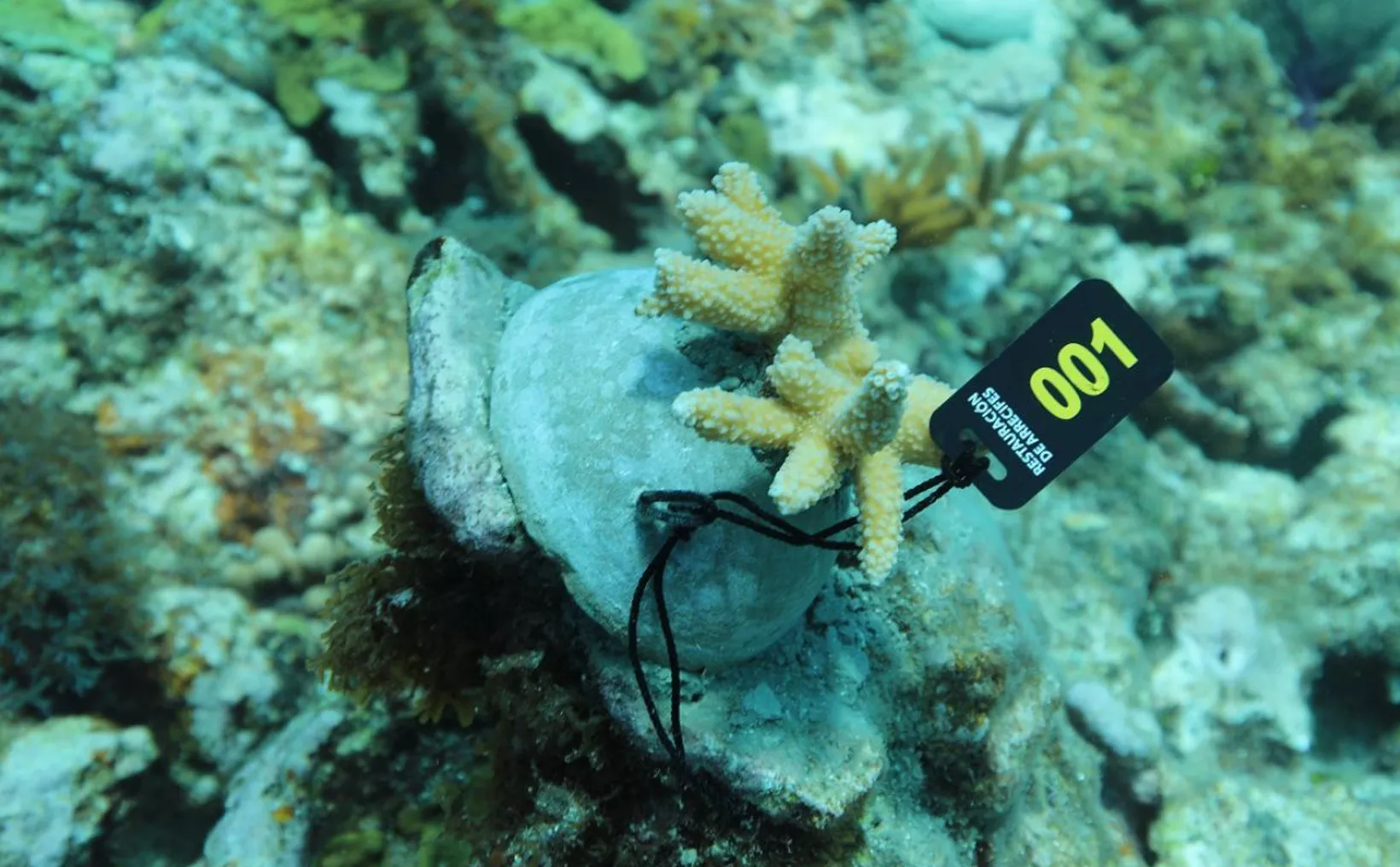
In response to this situation, the local brigade Centinelas del Arrecife, co-founded by Nuria Estrada Saldívar, has intensified its restoration efforts to halt this trend and restore vitality to the reefs.
The decline is due to a dangerous synergy of factors that have impacted the reef, altering its composition and functionality, including the so-called White Syndrome, which since its appearance in Mexico in 2018 has rapidly decimated massive coral species, even impacting key sites like Banco Chinchorro in 2023 and causing a disastrous drop in calcification.
Additionally, the climatic impact of the 2020 hurricanes (Gamma, Delta, and Zeta) caused fragmentation and disorder in branching colonies, although the reef insurance activated funds for immediate repair.
The 2023 Heat Wave elevated thermal stress indices to catastrophic levels, provoking massive bleaching and significant losses, even in already established restoration efforts. Excessive coastal development and the massive arrival of sargassum complete the list of stressors.
The researcher detailed that the direct consequence is the homogenization of the reef: builder species like Acropora palmata (elkhorn coral) and Orbicella are being replaced by non-builder corals (Porites or Agaricia), which reduces the complexity and the reef’s capacity to produce the essential carbonates for its own survival and coastal protection. The loss of reef roughness and complexity directly compromises its role as a natural barrier against hurricanes and as a source of sand.
The planted microfragments are achieving fusion after several years, demonstrating that restoration techniques can indeed be effective long-term.
The collaboration of community brigades like Centinelas del Arrecife with support from the National Commission of Natural Protected Areas becomes crucial for monitoring and informed decision-making.
The environmentalist detailed that the fight for the survival of the Mexican Caribbean reef is critical, but the intensive action of groups like Centinelas del Arrecife, combined with a governance strategy and the study of the most resilient corals, offers a path for the restoration and protection of this valuable ecosystem.
Discover more from Riviera Maya News & Events
Subscribe to get the latest posts sent to your email.