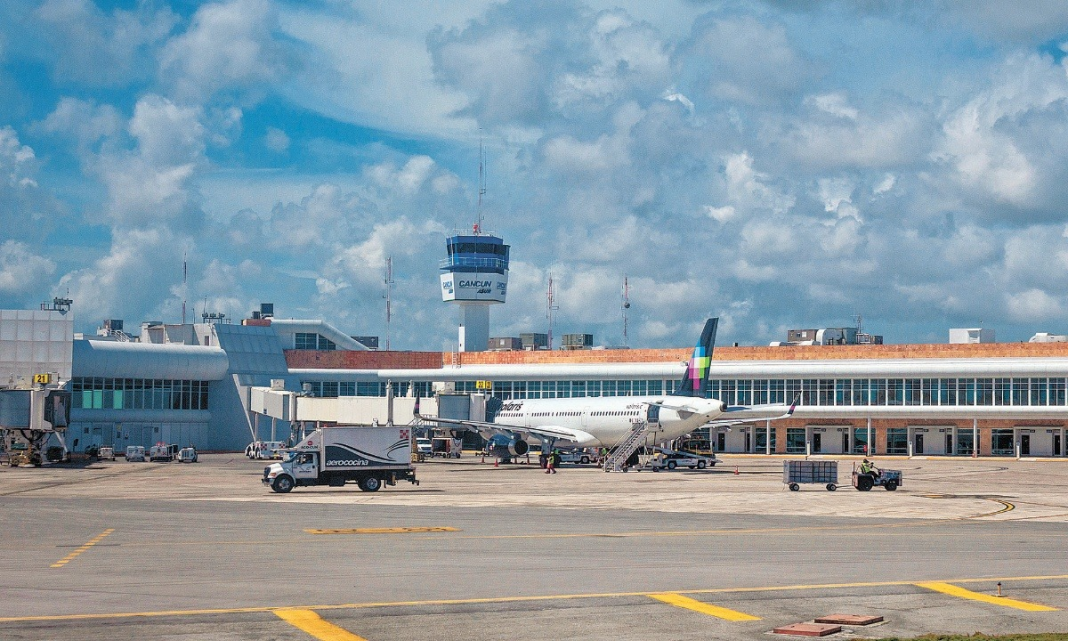
Cancún, Quintana Roo — The recent financial penalty against the Bhardwaj Human Smuggling Organization, a network dedicated to trafficking migrants from Europe, Asia, South America, and the Middle East, has exposed a reality that, until recently, authorities had attempted to minimize: the Cancún International Airport is a nerve center in the illicit trafficking of people.
This operational hub not only facilitates illegal transit toward Mexico's northern border but also connects migrants with routes involving yachts, marinas, and hotels, all under the facade of a system that should be monitored with more rigor.
Due to the magnitude of the dismantled trafficking network, authorities could no longer ignore the gravity of the problem. In their most recent statement, they have recognized that this type of transnational organization is operating with a level of sophistication and international coverage that makes its eradication difficult. Cooperation between governments of different countries is essential, but the question is whether the actions taken so far are sufficient to stop the growing infiltration of these networks in transit points like Cancún.
The Cancún International Airport, one of the busiest in Latin America, has proven to be a vulnerable location for these human trafficking networks. The air connections, along with the region's maritime and land transport infrastructure, allow traffickers to operate with relative ease, evading border controls. This situation not only puts the safety of migrants at risk, who are often exploited and subjected to inhumane conditions, but also undermines the reputation of one of Mexico's most important tourist destinations.
The sanction imposed by the Office of Foreign Assets Control (OFAC) on the individuals and entities involved in migrant trafficking, by blocking their goods and assets, is an important step, but far from a definitive solution. The Bhardwaj network, which has operated for years, illustrates how money and transnational power can infiltrate legal and security systems. Authorities admit the existence of these illegal routes, but the speed with which trafficking organizations adapt and the lack of long-term preventive measures demonstrate that the fight against this crime is uneven.
This type of human trafficking is a reflection of a complex reality that goes beyond economic sanctions or the capture of network leaders. Authorities must face the challenge of dismantling not only the criminal organizations but also the infrastructures that facilitate their operation. Without more effective intervention at critical points like Cancún, migrant trafficking will remain a persistent problem, with devastating consequences for thousands of people caught in this cycle of exploitation.
Discover more from Riviera Maya News & Events
Subscribe to get the latest posts sent to your email.