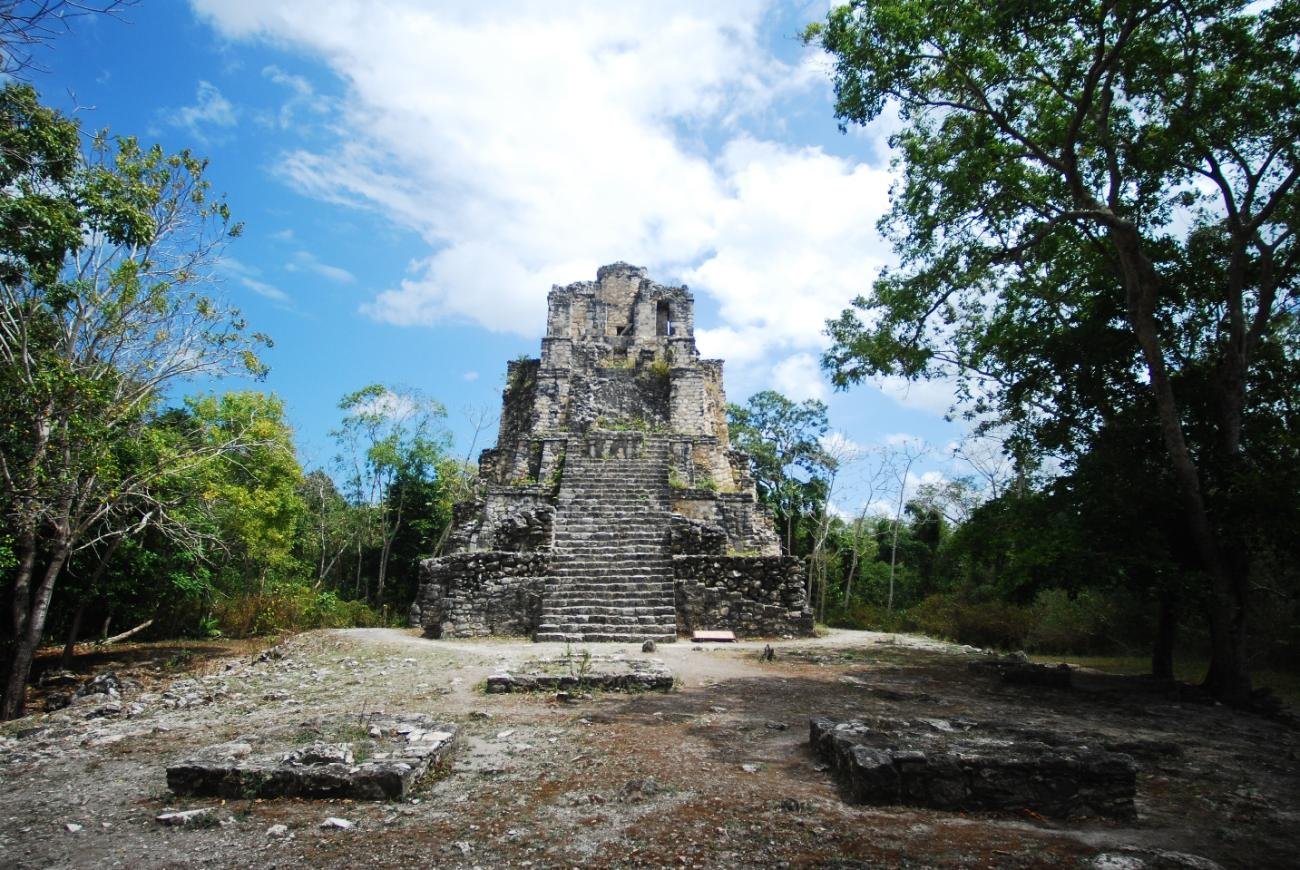
Tulum, Quintana Roo — The National Institute of Anthropology and History (INAH) announced the reopening of the Muyil Archaeological Zone on Tuesday, February 10, following restoration and research work linked to the Maya Train project. The site lies within the heart of the Sian Ka’an Biosphere Reserve, one of Mexico’s most ecologically and culturally significant protected areas.
A ceremonial reopening event will begin at 10:30 a.m., with Quintana Roo Governor Mara Lezama Espinosa in attendance. Other officials expected include INAH Technical Secretary José Luis Perea; Felipe Carrillo Puerto Mayor Maricarmen Hernández Solís; INAH Quintana Roo Center Director Margarito Molina Rendón; Chunyaxhé ejido commissioner Arsenio Chan González; and academic project lead Enrique Alcalá Castañeda.
In promotional material, INAH describes Muyil as one of the oldest and most continuously occupied Maya settlements on the Caribbean coast. Archaeological evidence places its occupation from the Late Preclassic period (around 300 B.C.) through the Late Postclassic, making it a rare example of long-term continuity in the region. Its architectural layout shows strong influences from the Petén region of present-day Guatemala, reflecting political and cultural ties across the Maya world.
Muyil’s strategic importance stemmed from its role in regional trade networks. The city was connected by sacbés—raised stone roads—to inland communities and to the nearby coastal lagoon system, which provided access to maritime routes. This position allowed Muyil to function as an exchange point for goods such as salt, jade, obsidian, cacao, marine products, and ceramics moving between the coast and the interior of the Yucatán Peninsula.
“This unique site is immersed in the Sian Ka’an Biosphere Reserve, where nature and archaeology intertwine,” INAH stated. “Here you can explore architectural vestiges, such as platforms, temples, and sacbés, and feel the history these stones tell.”
The archaeological zone was closed as part of broader regional works associated with the Maya Train project, which required extensive surveys, conservation measures, and infrastructure adjustments to protect cultural heritage. INAH has emphasized that closures like Muyil’s are preventive, allowing researchers to document structures, stabilize vulnerable architecture, and ensure long-term preservation before reopening sites to the public.
The restoration process included the construction of a new service area with a ticket booth, parking, and restrooms, as well as updated interpretive signage. Visitors will now have access to two architectural complexes that were excavated and studied beginning in late 2024.
Muyil is accessible from the Chetumal–Cancún highway at kilometer 211. It is located approximately 20 minutes from Tulum International Airport and the Maya Train station, within the Chunyaxché ejido in the municipality of Felipe Carrillo Puerto. The site lies 73 kilometers north of Felipe Carrillo Puerto city and 23 kilometers south of Tulum.
The reopening was originally expected in February 2025 but was delayed by a year to allow for additional research and conservation work. The site comprises two main building groups—one ceremonial and one civic-administrative or domestic—which can be toured in approximately 30 to 45 minutes.
Recent archaeological excavations revealed a well-preserved temazcal, or sweat bath, containing ritual offerings including a complete ceramic cup depicting a deity with a headdress, diadem, and ear flares, as well as a necklace featuring a carved marine shell pectoral with jade end pieces. To the north, researchers uncovered a large platform complex believed to have served as both an administrative center and elite residence. The structure features an 18-meter-long base with walls more than two meters wide and internal storage spaces used to manage food supplies.
Beyond its architectural value, Muyil offers insight into how ancient Maya communities adapted to wetland environments while balancing trade, ritual life, and political organization—an especially fitting example within a biosphere reserve dedicated to conservation.
“Come rediscover a millennia-old place that speaks of trade, identity, and relationships between ancient communities, and which now reopens its doors to the public,” INAH invited.
Discover more from Riviera Maya News & Events
Subscribe to get the latest posts sent to your email.