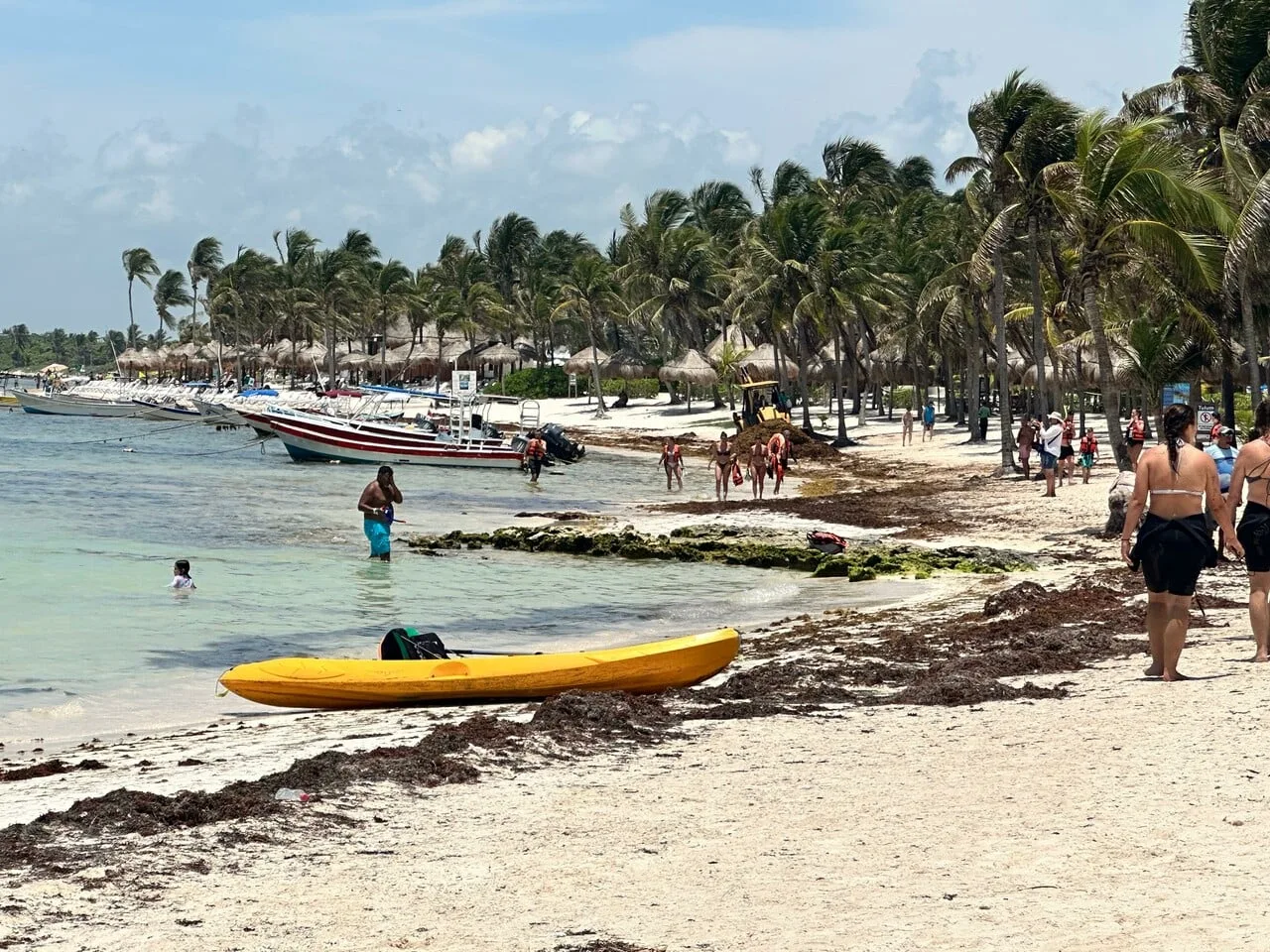
Tulum, Quintana Roo — Tourism operators in Akumal are preparing for the upcoming Easter holiday season with positive expectations, forecasting 90 to 100 percent booking rates for tourist activities.
Manuel Jiménez, owner of the company H2O Adventures, said this period represents the best season of the year for the destination, even surpassing the December holiday period. “We expect it to be full, and we’re preparing for that. It’s the best season, even better than December, because we get a lot of domestic and foreign tourism, and we do better during that time,” he said.
According to the service provider, Akumal benefits from significant repeat tourism, which strengthens the local economy. “Akumal has repeat tourism; it’s a very well-known place, I dare say more than Tulum. People come here every year,” he stated.
However, he explained that tourist operations in the area are subject to environmental regulations for sea turtle conservation. Therefore, swimming with turtles is suspended during February and September, and operations are also not permitted on Mondays.
Facing these restrictions, service providers have had to diversify their activities to maintain income. “We have other options, like fishing trips and snorkeling tours on reefs with boats, which allows us to stay busy,” he indicated.
Jiménez noted that some cooperatives only have permits for swimming with turtles, so during the suspension periods they face greater economic difficulties and must seek other work to survive. He said each cooperative can lose between 3,000 and 4,000 pesos daily during these inactive periods. Currently, 22 active providers operate in Akumal, though there are 32 in total.
Despite these impacts, he emphasized that the measures respond to carrying capacity studies aimed at ensuring ecosystem conservation. “There are losses, but we also have to consider the environment. Permits are granted according to studies that establish that the area needs time to be conserved,” he explained.
Regarding current tourism activity, he said it remains between 50 and 60 percent, a figure considered low for the area.
On the presence of sargassum, he commented that the situation remains under control so far. “Fortunately, the sargassum has been arriving for two or three days, and that gives us time to clean it,” he said.
To address the problem, service providers, hoteliers, authorities from the Federal Maritime Terrestrial Zone (Zofemat), and the Akumal Ecological Center work together on beach cleaning. Regarding the installation of barriers to contain sargassum, the interviewee said it is not considered due to high costs and previous ineffective experiences.
“We know some hotels placed barriers, but they don’t work well. What we do here is clean it every day; sometimes the quantity overwhelms us, but in two or three days, with machinery help, we manage to remove the sargassum,” he concluded.
Discover more from Riviera Maya News & Events
Subscribe to get the latest posts sent to your email.