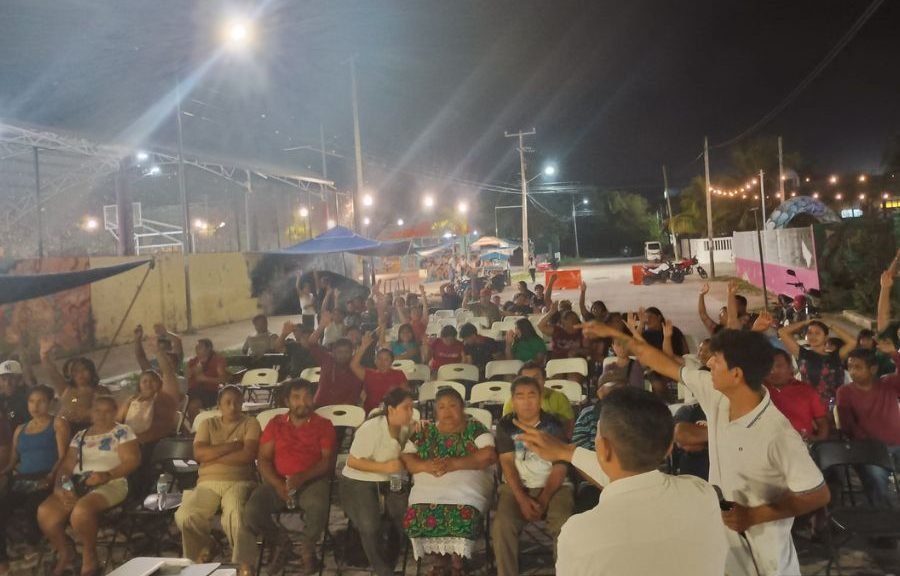
Akumal, Quintana Roo — Residents of Akumal have formed a citizen committee to represent the community on issues related to natural resources, public access, and local infrastructure, reflecting growing concern over development pressures in the area.
The decision was made during a general assembly held on April 9, attended by approximately 120 residents, many of them long-term community members and families with deep ties to the region. The newly formed committee will serve as a collective voice in ongoing discussions with authorities and private stakeholders.
At the center of the effort is a long-standing concern over access to cenotes and coastal water systems, which have historically been used by local residents but are increasingly subject to restriction due to private development and tourism activity. Across the Riviera Maya, cenotes—natural freshwater sinkholes connected to the region’s vast underground river system—are protected under federal environmental law, yet access points are often controlled by private landowners or concession holders.
Community members say that, in practice, this has led to reduced access for locals, particularly in areas like Akumal, where rapid tourism growth and real estate expansion have intensified competition for land and water resources.
The committee also plans to monitor public works and infrastructure projects, aiming to ensure transparency and community participation. This comes at a time when development in the region is accelerating, driven by broader initiatives such as the Tren Maya and continued investment in tourism-related construction along the coast.
During the assembly, residents elected the committee’s leadership: Juan José Mastah U as president, Santos Diego Pech Pech as secretary, and Antonio de Jesús Moreno Vázquez as treasurer.
In addition to environmental concerns, the group is advocating for improved local services, including education. One of its priorities is securing a donated plot of land to build a proper high school facility. The current Telebachillerato—a public distance-learning high school model used in rural communities—operates with limited infrastructure, highlighting gaps in public investment despite the area’s economic growth.
The formation of the committee follows recent meetings between Akumal residents and state authorities regarding the future management of cenotes and other local resources. These discussions are part of a broader regional debate over how to balance economic development with environmental protection and community rights.
For many residents, the committee represents an attempt to formalize their role in that conversation—ensuring that those who live in Akumal have a say in how its natural and public spaces are managed going forward.
Discover more from Riviera Maya News & Events
Subscribe to get the latest posts sent to your email.