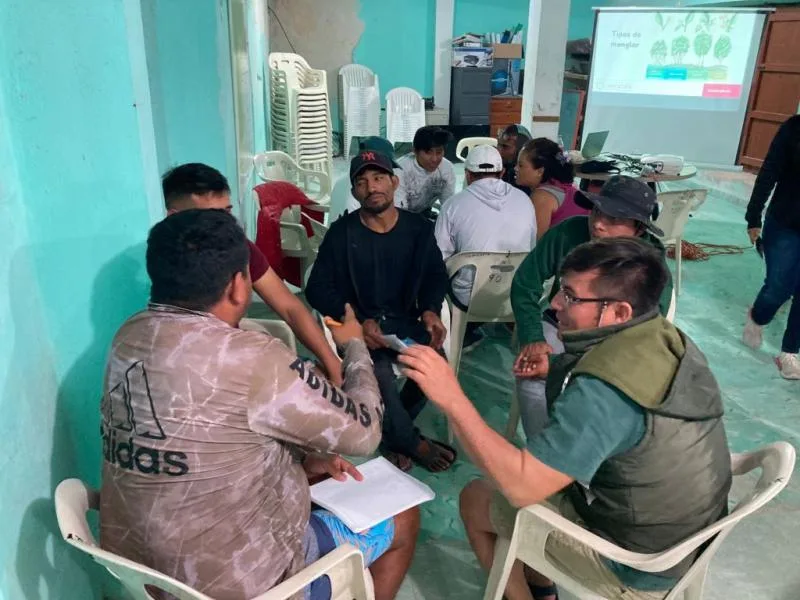
Dzilam de Bravo, Yucatan — The Yucatan state government has trained 77 tour guides in mangrove ecology to strengthen ecotourism and protect coastal ecosystems in the region.
The training sessions, organized by the state’s Sustainable Development Secretariat (SDS), targeted service providers in Dzilam de Bravo and Sisal as part of efforts to promote sustainable tourism. Officials held the first session on February 23 for 17 members of the Elepetén and Lancheros cooperatives in Dzilam de Bravo, followed by a second session on February 25 for 60 participants in Sisal.
In Sisal, the training included groups such as Grupo Ziz Ha, Descubriendo Manglares, Shark Tour Sisal, Descubre Sisal, Yaxché Tours, Lol-Ha Tours, Sisal Mágico Tours, Motoventurs, and Ecotours Sisal.
The program focused on identifying mangrove species native to the Yucatan Peninsula and understanding their biological functions, including unique adaptations like viviparity, where seeds germinate while still attached to the tree. Guides also learned about tannins, natural chemicals produced by mangroves that repel insects and prevent fungal growth.
Participants strengthened their ability to explain to visitors the mangrove’s role as a natural barrier against hurricanes, its function in purifying aquifers, and its value as a habitat for emblematic and threatened species, notably the American flamingo (Phoenicopterus ruber ruber).
Jorge Armando Novelo López, head of the SDS Environmental Conservation Department, emphasized the importance of professionalizing tourism workers. “By sharing details about the mangrove’s anatomical adaptations, such as leaf shape, the location of salt-excreting glands, or the pores through which roots breathe, we inspire deep admiration in visitors,” he said.
Fátima Soledad Puc Esquivel, a member of the Servicios Turísticos Arias cooperative in Sisal, highlighted the training’s practical benefits. “These workshops on the importance of mangroves are relevant for our ecotourism activities because they give us better tools to explain to visitors how these coastal ecosystems develop,” she said. “They also allow us to share this knowledge with others interested in joining the sector, strengthening the care of our local resources.”
Novelo López added that the training fosters comprehensive awareness of the ecosystem’s importance for the regional economy, noting that improved technical knowledge translates directly into higher-quality tourism services and better economic returns for cooperatives.
Discover more from Riviera Maya News & Events
Subscribe to get the latest posts sent to your email.