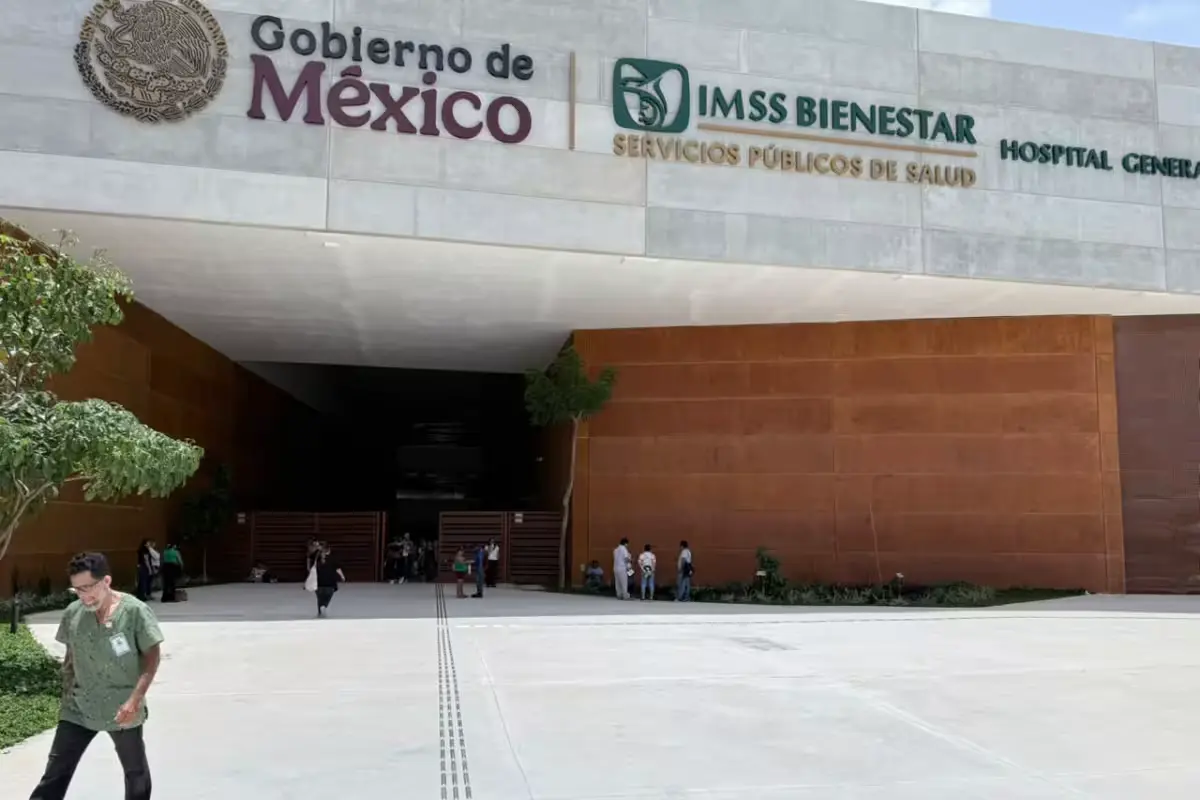
Mérida, Yucatán — The new Agustín O’Horán General Hospital is facing a staffing crunch just weeks after opening, prompting Governor Joaquín Díaz Mena to announce plans to bring in more than 600 additional health workers.
The move follows a protest last Tuesday in which nursing staff said that on some shifts, a single nurse was responsible for eight to 15 patients, and that certain teams operated with only about half the personnel they considered necessary.
Díaz Mena said his administration is working to add specialist doctors, nurses, radiology and inhalation therapy technicians, and paramedics. “These efforts are advancing,” he said at a press conference in the Government Palace. “In due course, we will announce with facts what we intend for future hires.”
The governor attributed part of the overload to vacation periods authorized before the hospital opened, as well as to absences among other staff members. He confirmed an investigation into the absences but did not specify how many employees were involved, which areas were affected, or how long the shortage lasted.
He also stressed that participants in the protest would not face consequences. “The right to protest is respected,” he said. “Absolutely no administrative sanction has been issued against anyone.”
The staffing shortage stands in contrast to the hospital’s scale. Officials promoted 600 beds, 16 operating rooms, dozens of consultation offices, more than 40 specialties, and services including intensive care, oncology, hemodialysis and high-specialty care before the opening. In May, more than 800 doctors, nurses and other health workers were welcomed as part of the new unit.
Since Yucatán joined the federal IMSS-Bienestar program, the hospital’s operations and hiring have been overseen by that agency, not the state government. Díaz Mena said he has been pressing federal officials, including Deputy Finance Minister Berta Gómez and IMSS-Bienestar Director General Alejandro Svarch Pérez, to speed up the staffing reinforcement.
The shortage extends beyond nursing. The state has also struggled to fill some medical specialties, a problem acknowledged during the broader reorganization of the hospital system. In July, Díaz Mena said a lack of specialists had limited the Hospital Materno Infantil to about 30 percent of its installed capacity.
To fill the gap, the state is considering paying private specialists on a per-procedure basis to work at O’Horán without requiring them to join the public system full time. Díaz Mena cited an example of an angiologist who could be called in for a specific surgery and then return to private practice.
“Because there are not enough doctors, we are trying to find creative ways to solve each of these problems,” he said.
The proposal is still under analysis, with no details yet on payment rates, eligible specialties or selection criteria. Svarch is expected to return to Yucatán in the coming weeks to discuss both the hospital’s needs and the consolidation of clinics and health centers under IMSS-Bienestar.
More Government
- Sheinbaum Acknowledges Little Progress in Talks With Vulcan Over Calica
- Fitch Downgrades, Then Upgrades Playa del Carmen Credit Rating Over Missed Payment
- Quintana Roo Port Authority Reports 254 Million Peso Budget Underspend
- Mexico’s Senate Votes 96-0 to Curb Telemarketing Harassment With New Do-Not-Call Registry
- Tulum Airport Operating Normally Despite Flight Cuts, Grupo Mundo Maya Says