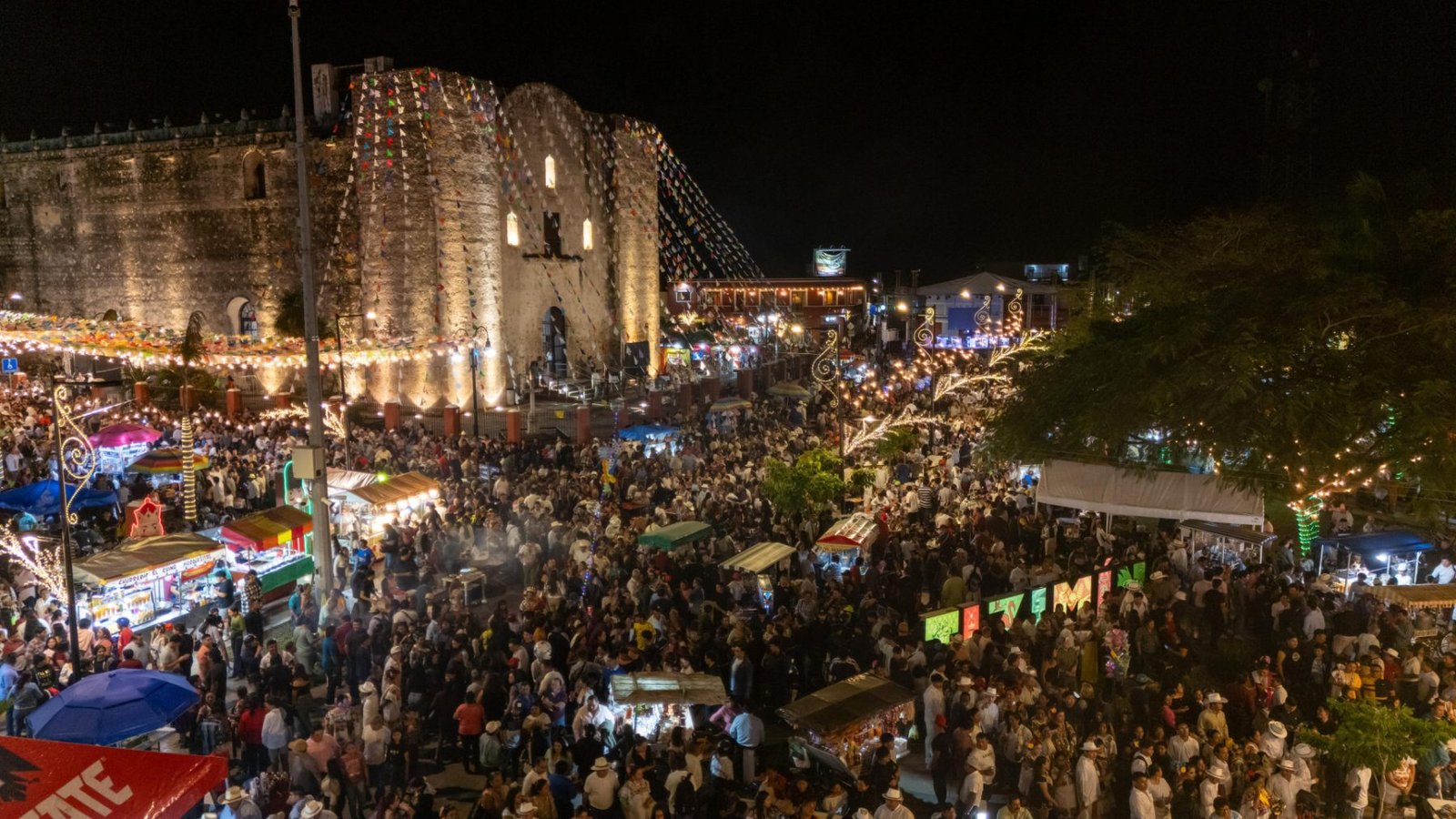
The Yucatán State Congress has approved the declaration of the Three Kings Festival of Tizimín as Intangible Cultural Heritage, a recognition that consolidates this celebration as one of the deepest pillars of the historical, cultural, and spiritual identity of the eastern part of the state.
The initiative to declare the festivities in honor of the Three Kings of Tizimín as Intangible Cultural Heritage of Yucatán, promoted by Deputy Wilmer Monforte Marfil, was presented before the full Congress on December 11, 2024.
Just days ago, Tizimín celebrated its 44th anniversary, remembering that in cities with deep roots like this one, culture and tradition continue to be the axis of community life. In that same context, the Yucatán State Congress approved the declaration of the Three Kings Festival as Intangible Cultural Heritage, a recognition that consolidates this celebration as one of the most important historical, spiritual, and cultural pillars of the eastern part of the state and as a living heritage that gives identity and a sense of belonging to its people.
The Tizimín Festival in honor of the Three Kings is considered the oldest fair and one of the most important in southeastern Mexico, with origins dating back to the colonial period, but with roots that may even be pre-Hispanic.
What is Intangible Cultural Heritage?
Intangible Cultural Heritage (ICH) is the “Living Heritage” of a country, recognized and protected worldwide by UNESCO.
What is ICH?
It is not buildings or objects, but the practices, expressions, knowledge, and techniques that a community considers part of its cultural heritage.
- Performing Arts: The Dance of the Voladores de Papantla
- Social Uses and Rituals: The Indigenous Festival Dedicated to the Dead (Day of the Dead)
- Artisanal Techniques: Talavera or traditional textiles
- Knowledge About Nature: Knowledge and techniques of traditional Mexican cuisine
Devotion to Melchior, Gaspar, and Balthasar in Tizimín has roots dating back to the 16th century, when Franciscan friars established evangelization in the region.
Pre-Hispanic Origins (Root of the Pilgrimage)
- Period: Pre-Columbian
- Record: Documents from friar Andrés Avendaño y Loyola indicate that the site where the church stands today was an annual pilgrimage center for the Maya population
- Worship: Worship was given to three Maya deities related to agriculture and life: Yum Chaak (rain god), Yum K’aax (god of agriculture and forests), and Yum Ik (wind god)
The tradition not only imposed itself on pre-Hispanic Maya culture but fused with it, finding parallels in the ancestral veneration of three Maya deities related to rain, fields, and wind, which allowed the figure of the Three Kings to integrate deeply into the local worldview.
Colonial and Religious Establishment (16th Century)
- Period: Mid-16th Century
- Milestone: Franciscan friars founded the convent and parish, dedicating it to the Three Kings. This forms part of a process of deity substitution to facilitate the evangelization of the Maya
- Key Date: Between 1563 and 1666, the convent was built. Since then, popular festivities began to take place around the temple, culminating on January 6
- Images: There is a record that the images of the Three Kings enthroned in the parish were brought from Guatemala since the late 16th century, consolidating the worship
In summary, the tradition of pilgrimage and celebration in Tizimín has very ancient roots, but the current festival, with its character as a livestock, industrial, and artisanal fair, was formalized during the 19th century, based on the colonial worship of the Three Kings that replaced the Maya deities.
Each year, thousands of pilgrims from communities in Yucatán, Quintana Roo, Campeche, and other states of the country arrive in Tizimín during the first days of January to visit the sanctuary of the Three Kings.
The central date, January 6, gathers long lines of parishioners who come to ask for favors, thank for miracles, and fulfill promises, strengthening a tradition that has been transmitted from generation to generation.
The images of the Three Kings, carved in wood and safeguarded in the main parish, are considered by many believers as miraculous intercessors.
In the oral tradition of the region, stories of healings, granted favors, and fulfilled promises persist, which has made Tizimín one of the most important pilgrimage points in southeastern Mexico.
This declaration not only recognizes a religious festival but a living heritage that has shaped community life, the festive calendar, and the collective identity of thousands of families.
The Three Kings Festival represents a spiritual heritage that is now protected for future generations as a symbol of faith, history, and belonging.
Discover more from Riviera Maya News & Events
Subscribe to get the latest posts sent to your email.