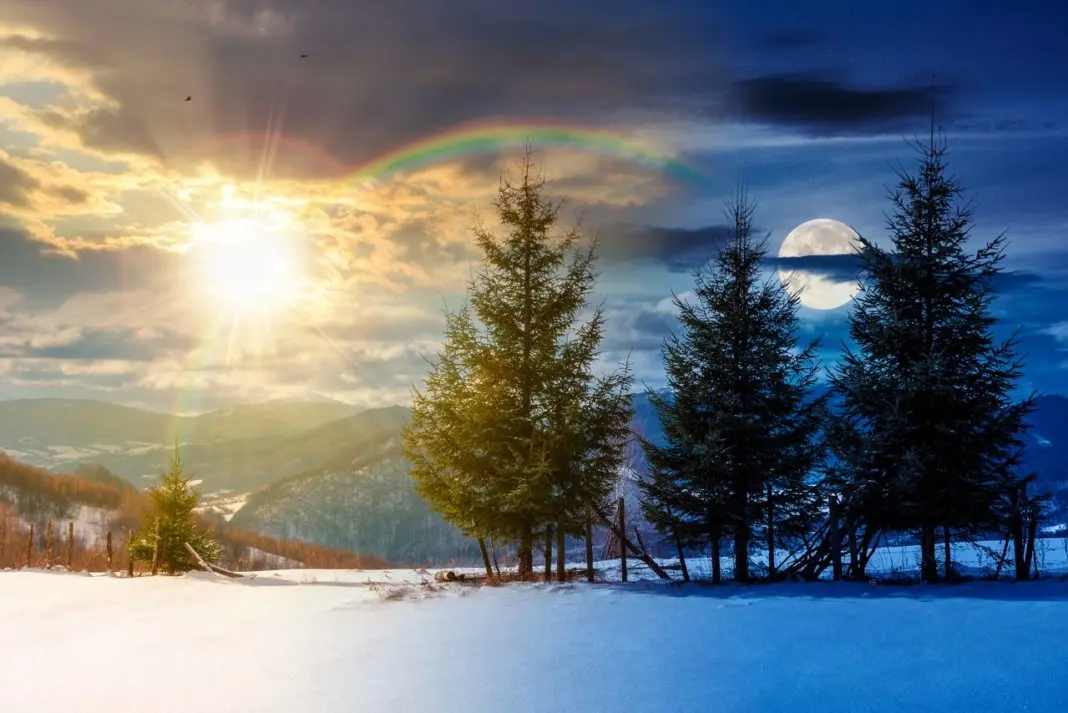
Mexico City — The winter solstice, one of the most significant astronomical events of the annual calendar, occurred on Sunday, December 21, 2025, at 09:03 Central Mexico Time, marking the official start of winter in the northern hemisphere. UNAM Global detailed that this event represents the day with the least amount of sunlight for Mexico City and much of the country.
During the winter solstice, the northern hemisphere receives the least solar radiation due to the Earth’s axial tilt of approximately 23.5 degrees. This condition causes the sun to reach its lowest point at noon and nights to lengthen, while temperatures begin to drop more noticeably in different regions of the country.
Specialists explain that the term solstice comes from the Latin solstitium, meaning “sun standing still,” since during this period the sun’s apparent position changes very little in the sky. This phenomenon can be observed through the solar trajectory known as an analemma, a figure-eight shape that reflects the sun’s annual movement.
The winter solstice not only represents the shortest day of the year but also opens a favorable period for astronomical observation. With extended nights, the sky becomes ideal for appreciating constellations, planets, and other celestial bodies, especially in areas far from light pollution. Science communicators have highlighted this aspect as an opportunity to foster interest in astronomy.
Winter Solstice: An Astronomical Event with Millennial Roots
From a historical perspective, the winter solstice has been observed and celebrated by various ancient civilizations, which associated it with the rebirth of light and the beginning of a new cycle. Today, its importance remains both in scientific and cultural spheres, allowing for better understanding of the relationship between Earth and the sun.
With the winter solstice, the winter season officially begins in Mexico, extending until the spring equinox, scheduled for March 20, 2026. Although days will be cold and nights longer, starting December 21, daylight duration will gradually increase.
In parallel, specialized portals like Vogue have noted that interest in astronomical events typically increases during these dates, coinciding with holiday periods and greater consumption of digital content related to science and popularization.
This year’s astronomical phenomenon reinforces the importance of scientific dissemination in Mexico. The work of academic institutions and specialized media continues to be key to explaining events like the winter solstice, which, beyond its symbolic value, is fundamental for understanding the planet’s natural cycles.
Discover more from Riviera Maya News & Events
Subscribe to get the latest posts sent to your email.