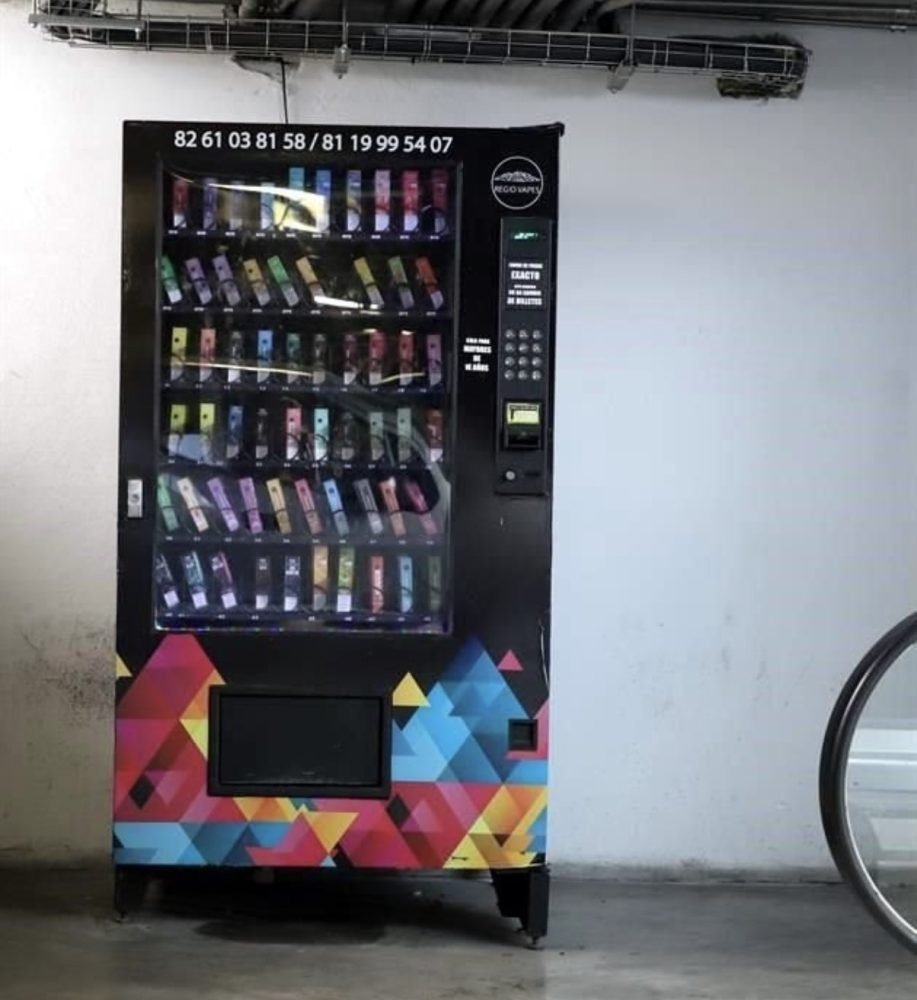
Mexico City — Three weeks after a constitutional ban on vaping devices took effect, their sale continues openly on social media platforms and in street markets. The products are offered in broad daylight, despite criminal and economic penalties established under the reformed General Health Law.
Widespread Availability in Street Markets
The ban on the use and purchase of vapes has not removed the devices from the market, where they remain available illegally. At the San Juan market, one of the largest open-air markets in the metropolitan area stretching along Texcoco Avenue and connecting Iztapalapa with Ciudad Nezahualcóyotl, multiple vendors continue to offer vapes with prices ranging from 100 to 1,000 pesos.
Near a main entrance on López Mateos Avenue, various models of electronic cigarettes from brands advertised as "original," such as Waka and Flonq, are available for purchase. Vendors promote them with descriptions like, "Blueberry with blueberry, watermelon with peach and mango, strawberry with watermelon, watermelon with strawberry and grape, and banana with strawberry, all turn into ice when you press the button, the whole screen lights up."
Prices and flavors vary by brand. Vendors also offer "Waxes," a vaporizer designed for high-concentration cannabis, available as indica or sativa strains with specified gram quantities. During a recent tour, at least five vape stands were identified, some offering promotions like one device for 120 pesos or three for 300 pesos. Most products are of foreign origin.
Despite the legal reform, sales continue openly without supervision. Some vendors advertise the devices as the "last ones left," while others offer them "by special order only."
The Legal Framework and Penalties
On December 9, 2025, the Chamber of Deputies approved constitutional reforms to completely prohibit the use of vapes and electronic cigarettes, with 324 votes in favor and 129 against the proposal sent by President Claudia Sheinbaum Pardo.
The initiative, which modifies the General Health Law, establishes penalties of one to eight years in prison for the sale of these devices. It also imposes fines ranging from 100 to 2,000 times the daily value of the Unit of Measurement and Update (UMA), equivalent to between 11,314 pesos and 226,280 pesos.
The law prohibits throughout the national territory the acquisition, production, manufacture, transport for commercial purposes, storage, import, export, distribution, sale, and supply of these devices, as well as "all acts of advertising or propaganda" for their consumption. Legislators classified vaping as "a threat to public health" and stated the reform seeks to implement policies to reduce consumption dependence and protect vulnerable groups.
Sales Migrate to Social Media
Physical markets are not the only sales channels; the products are also sold through social networks, in specific vaping groups, and on platforms like Facebook Marketplace. Advertisements often state, "$100 each or wholesale price." Similar to physical stores, they are sold based on puff count, with a variety of flavors and promises of a "good price." They are advertised as refillable and available for delivery across Mexico City.
Offers cater to wholesale buyers and include references guaranteeing product quality, along with catalogs containing purchase information. According to some users, prices have remained stable with no increase following the ban, and some claim to be unaware of the prohibiting reform.
An investigation titled "Smoke, vaping and power: the new business of organized crime," conducted by Defensorxs, indicates that criminal organizations now see significant business in tobacco smuggling, vaping device trafficking, and extortion for the sale of counterfeit cigarettes. The report also suggests that the ban on electronic cigarettes fuels criminal activity, turning vaping into another product controlled by organized crime due to prohibitionist policy.
Documented Health Risks
Vaping devices initially emerged as a seemingly healthy alternative to tobacco and a smoking cessation aid, leading to their popularity, particularly among youth. However, their effectiveness in overcoming tobacco addiction remains questionable.
In 2021, the Federal Commission for Protection against Sanitary Risks (Cofepris) and the National Commission against Addictions (Conadic) issued a health alert for vapes, electronic cigarettes, and any emerging tobacco product due to serious potential health damage. These are categorized as Electronic Nicotine Delivery Systems (ENDS), Similar Systems Without Nicotine (SSSN), and Alternative Nicotine Consumption Systems (ANCS).
After a technical review, Cofepris and Conadic concluded that scientific evidence shows these products are dangerous for lung health and are highly addictive. Authorities emphasized that no vape or tobacco heater has sanitary authorization from Cofepris, nor recognition from the Ministry of Health as a reduced-risk or alternative product.
Health authorities indicated these products contain carcinogens, substances that can cause or promote cancer and uncontrolled cell growth. Other substances found include metals such as cadmium, nickel, and lead. A major risk is that one cartridge containing 5 percent nicotine salt is equivalent to one to three packs of cigarettes, with long-term effects on the brain development of children, adolescents, and developing fetuses.
Reported health problems include respiratory damage from lung tissue inflammation, leading to chronic obstructive pulmonary disease (COPD), asthma, and cancer; cardiovascular damage from circulatory changes causing arteriosclerosis and heart attacks; and mutagenic effects increasing cancer risk or reproductive problems like erectile dysfunction. Secondary problems, such as device explosions resulting in lost fingers and jaw fractures, have also been documented.
Political Debate: Health Measure or Illegal Market Boost?
Nearly a month after the Senate approved the ban, these products continue to circulate illegally. The opposition in the Senate had warned of this scenario, while the ruling bloc defends the measure approved on December 10.
Senator Margarita Valdez Martínez of the Morena party argues that preventing minors from accessing these products is an act of social awareness and protection. "Our goal is not to criminalize, but to ensure that young people do not face unnecessary risks of addiction," she says.
Rocío Corona Nakamura of the Green Party states, "The health of Mexicans is above any commercial interest. This measure protects those who have not yet developed addictions and reinforces the State's responsibility for public health."
Maki Esther Ortiz Domínguez, also from the PVEM, emphasizes that the reform's scope extends beyond vaping to include the consolidated purchase of medicines and supplies, infrastructure improvements, and implementing an electronic record to advance health sector integration.
Claudia Anaya of the Institutional Revolutionary Party warns that the measure faces multiple problems that risk public health and limit the law's effectiveness. She warns of economic and social consequences: the shift to the clandestine market implies lost tax revenue and exposes consumers to illegal products, often sold alongside narcotics. Claudia Anaya believes the ban is largely a "dead letter," as effective operations to punish illegal possession or sale have not yet been implemented.
Similarly, Mayuli Latifa Martínez Simón of the National Action Party (PAN) warns that closing the legal market leaves the business in the hands of organized crime, adding that "prohibiting without regulating does not eliminate consumption, it simply pushes young people and the population towards clandestine channels without any guarantee of quality or safety."
Luis Donaldo Colosio Riojas of the Citizens' Movement party criticizes the ruling, stating it "opted for punishment rather than prevention." He argues the strategy represents "a renunciation by the State of its responsibility to protect public health through education, regulation, and effective supervision." He insists, "Without information programs and without safe alternatives for those who consume, the reform does not solve the problem; it only displaces it into illegality."
Calls for Strengthened Surveillance
Federal deputies from the PAN and Morena parties have called on health authorities, specifically Cofepris, to strengthen surveillance to prevent the illegal sale of vapes in street markets and online.
The Speaker of the House of Representatives, Kenia López Rabadán, stated it is necessary for health authorities to simultaneously launch an intensive media campaign to alert the public that the sale of vapes and similar devices is prohibited. "We need inspectors and follow-up in the places where they are being sold illegally; we need the authorities to carry out the inspections and apply the sanctions," she said.
The secretary of the Health Commission, Morena party deputy Guillermo Rendón, stated that it falls to the authorities to strengthen surveillance and inspection actions to prevent sales. He stressed that ruling party deputies will not allow practices that endanger public health to become normalized.
Discover more from Riviera Maya News & Events
Subscribe to get the latest posts sent to your email.