
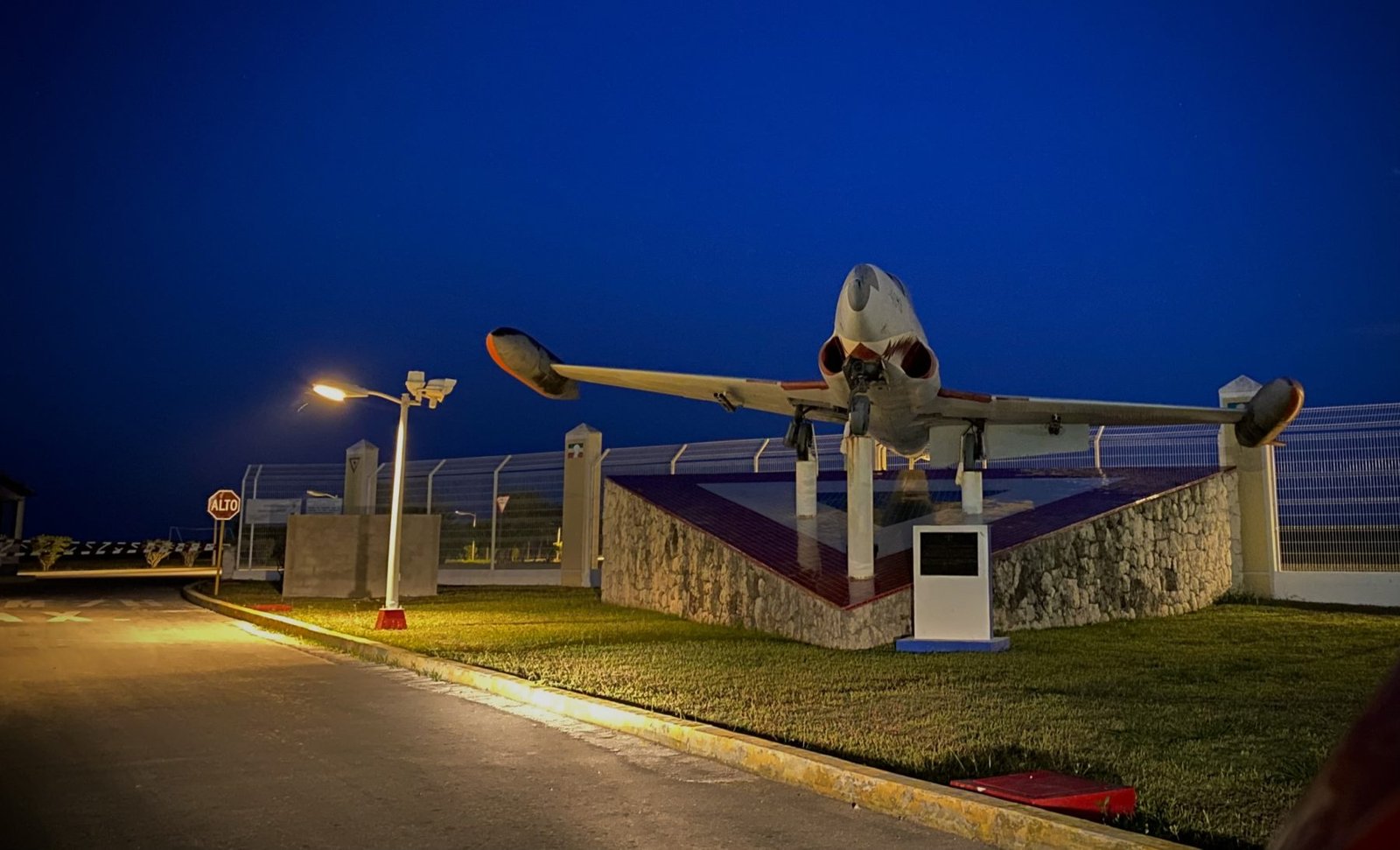
Cozumel, Quintana Roo — The Mexican Senate has authorized the temporary entry of 12 U.S. Special Forces personnel for joint military training at Cozumel’s Military Air Base No. 4, placing Quintana Roo at the center of bilateral security cooperation amid ongoing cartel violence in the state.
The authorization permits members of the U.S. Army’s 7th Special Forces Group (Airborne) to participate in the “MEXSOF (Defense) Training” exercise from February 27 to July 15, 2026. The personnel will arrive aboard a U.S. Air Force aircraft with weapons and equipment designated strictly for training purposes. In addition to Cozumel, exercises will be conducted at military installations in Temamatla and San Miguel de los Jagüeyes in the State of Mexico.
According to official documentation, the program is described as educational in nature and does not authorize participation in public security operations or missions within Mexican territory.
What Is the 7th Special Forces Group?
The 7th Special Forces Group (Airborne) is one of the Army’s most experienced units specializing in foreign internal defense, counterinsurgency training, and partnership operations throughout Latin America. The group has decades of history working alongside regional militaries in joint training and advisory roles.
The fact that the group focuses heavily on Latin American engagement makes its participation less surprising from a strategic standpoint. Still, the specialized nature of the unit has prompted questions locally about the scope of the curriculum and oversight mechanisms. Publicly released materials do not detail the specific capabilities being trained or evaluated.
Why Cozumel?
Cozumel’s selection is strategic. While best known internationally as a cruise destination and diving hub, the island also sits along important maritime and aerial corridors in the Caribbean.
Military Air Base No. 4 has historically played a supporting role in disaster response and surveillance operations. Recent reports indicate Mexico’s Defense Department is restructuring the base to expand aerial surveillance and coordination capacity in Quintana Roo — a state that combines high tourist traffic with maritime routes long exploited for smuggling.
From a logistical perspective, Cozumel offers secure infrastructure, international connectivity, and controlled access points, making it suitable for joint exercises without disrupting civilian operations.
Broader Security Context
The authorization comes amid heightened federal efforts to address organized crime activity in Quintana Roo. Since 2025, the state prosecutor’s office reports 248 arrests linked to the Jalisco New Generation Cartel (CJNG) across municipalities including Benito Juárez (Cancún), Playa del Carmen, Cozumel, Tulum, Puerto Morelos, and Felipe Carrillo Puerto.
Federal authorities have also conducted operations targeting drug sales points in tourist-heavy areas such as Holbox and Cozumel. Meanwhile, journalistic investigations — though not officially confirmed — suggest that the Caborca Cartel may be attempting to establish a presence in parts of southern Quintana Roo, including Bacalar and Othón P. Blanco.
For expats and visitors, it is important to note that the joint training does not signal U.S. military operations in civilian areas. Under Mexico’s Constitution, any foreign military presence must be approved by the Senate and strictly limited in scope and duration — which has occurred in this case.
What Remains Unclear
While the framework is confirmed — 12 personnel, temporary stay, weapons authorized for training, three designated locations, and specific dates — details about the exact curriculum, operational simulations, reporting requirements, and transparency measures have not been publicly disclosed.
For now, the exercise represents a continuation of long-standing U.S.–Mexico military cooperation, unfolding quietly on an island better known for coral reefs than counter-narcotics strategy.
More Cozumel
- Cozumel’s Reefs Get a 3D Map Divers Can Explore Before Entering the Water
- Canada Drives Mexican Caribbean Demand for Final Quarter of 2026
- Crocodile Surprises Tourists Swimming at Cozumel’s El Cielo Sandbar
- Quintana Roo Opens Addiction Rehabilitation Center in Cozumel
- Five Cozumel Firefighters to Receive Training in Houston
