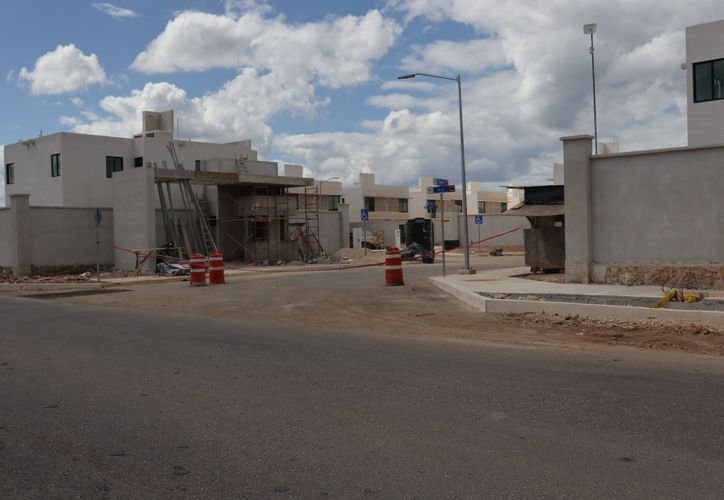
Quintana Roo — Up to one in five real estate developments in Quintana Roo’s northern zone may be operating without the required state and municipal permits, according to official data and industry reports.
The Quintana Roo Association of Real Estate Developers reports 531 subdivisions are currently under construction or being marketed in the state’s northern region. Meanwhile, the state’s Territorial and Sustainable Urban Development Department (Sedetus) has flagged 118 developments that lack the necessary construction permits.
Sedetus issues bulletins exposing projects that do not have the mandatory certificates, permits, and authorizations required under state laws governing human settlements, territorial planning, urban development, urban planning actions, condominium property, and municipal regulations.
According to Sedetus data from the end of 2025, officials flagged 116 developments lacking housing construction permits. Authorities also conducted 125 inspection verifications at construction sites across the state to identify more irregular subdivisions.
These operations resulted in 28 preventive closures, 29 financial penalties, and 15 closures after compliance with regulations. Another 72 cases remained in sanctioning processes. The municipalities with the highest number of active procedures through the first two months of 2026 are Benito Juárez with 26, Isla Mujeres with 31, and Tulum with 30. The remaining cases are distributed across Bacalar, Othón P. Blanco, and Puerto Morelos.
The environmental organization Defending the Right to a Healthy Environment (DMAS) has publicly denounced serious flaws in Quintana Roo’s environmental legislation, arguing it allows developers to “regularize” projects even after starting construction without any permits, violating the precautionary principle of environmental impact authorizations.
DMAS has specifically challenged Article 39 of the State Law of Ecological Balance and Environmental Protection, which states that the state institute “may regularize” works started without environmental impact authorization.
The organization claims that allowing regularization of projects that began without permits violates the human right to a healthy environment and undermines preventive principles. The law requires an environmental impact assessment before starting any project to anticipate damage to the environment.
“Subsequent regularization nullifies this principle, allowing impacts to occur without prior evaluation,” DMAS stated.
Discover more from Riviera Maya News & Events
Subscribe to get the latest posts sent to your email.