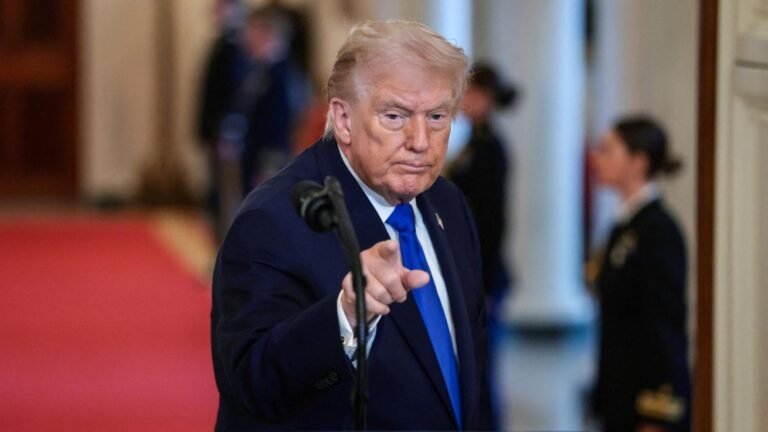
Mexico City — Former U.S. President Donald Trump is urging Mexico to significantly intensify its strategies against drug cartels, warning of potential repercussions if greater progress isn’t observed. This stance highlights growing bilateral pressure on security and narcotics trafficking, framed within a strategy of “pressure diplomacy” to force greater alignment between Mexico and Washington.
Impact on Mexican Sovereignty and Security Strategy
Trump’s warnings, which include the possibility of unilateral military actions and designating cartels as terrorist organizations, pose direct challenges to Mexico’s sovereignty and national security strategy. Since January 2025, Trump has designated Mexican cartels as terrorist organizations, and in November 2025, the U.S. government was preparing CIA personnel and special forces troops to attack cartels within Mexico.
Mexican President Claudia Sheinbaum has repeatedly rejected foreign military intervention, emphasizing that Mexico operates on its own territory and doesn’t accept intervention from any foreign government.
Mexico’s security strategy under the Sheinbaum administration has sought to strengthen national security institutions and address social problems, achieving a 37% reduction in homicide rates between October 2024 and November 2025. However, U.S. pressure has led Mexico to take extraordinary measures, including transferring 92 cartel members to the United States in less than a year, with 37 transferred in January 2026 alone.
These actions, while seeking to appease U.S. demands, create a delicate balance between cooperation and defense of national autonomy. Trump’s rhetoric, which frames fentanyl and cartel violence as an existential national security problem, justifies the use of military tools and seeks to force Mexico into deeper security integration.
Bilateral Cooperation Mechanisms
Amid escalating rhetoric and threats, strengthening bilateral cooperation mechanisms presents a crucial path for managing tensions and addressing shared challenges. Despite frictions, the relationship between the United States and Mexico remains fundamental to both countries’ security and prosperity.
Intelligence cooperation has proven effective, as demonstrated in the February 2026 operation that resulted in the death of Nemesio “El Mencho” Oseguera Cervantes, leader of the Jalisco New Generation Cartel (CJNG), where Mexican security forces coordinated with the U.S. Joint Interagency Task Force Against Cartels (JITC-CC).
The Bilateral Security Implementation Group, with scheduled meetings, seeks to deliver tangible actions to strengthen cooperation and obtain significant results against cartels and the illicit flow of fentanyl and weapons. The Sheinbaum administration has deepened cooperation with Washington despite critical rhetoric, leading to increased intelligence sharing and coordination with U.S. counterparts.
Mexico has provided financial intelligence used by the U.S. Treasury Department to impose sanctions on individuals and entities involved in money laundering. Collaboration also extends to transferring cartel members to U.S. custody for prosecution, with two large-scale transfers occurring in August 2025.
Economic and Political Implications
An escalation in anti-drug rhetoric and threats of unilateral actions by the United States carry significant economic and political implications for Mexico. The imposition or threat of tariffs on Mexican products has been a tool used by the Trump administration to pressure Mexico on migration and narcotics issues.
In June 2025, general tariffs of 25% were imposed on goods not covered by the USMCA, and up to 50% on steel, aluminum, and copper, directly affecting the Mexican economy and reconfiguring production chains. The Bank of Mexico revised its 2025 growth forecast downward from 0.6% to 0.3% due to these risks.
Politically, U.S. pressure may limit the Mexican government’s room for maneuver and generate perceptions of subordination. Designating cartels as terrorist organizations could have serious consequences for financial transactions between both countries, damaging the Mexican economy.
The 2026 review of the USMCA is a point of attention, as Trump has threatened to impose significant tariffs on Mexico if it doesn’t do more to control drug flows, and renegotiation could occur under less favorable conditions for Mexico. The “decapitation” strategy of cartel leaders, while applauded by the United States, often leads to more violence and fragmentation, potentially exacerbating instability in Mexico. Cartel infiltration of Mexican political and judicial institutions also represents a persistent challenge.
Discover more from Riviera Maya News & Events
Subscribe to get the latest posts sent to your email.