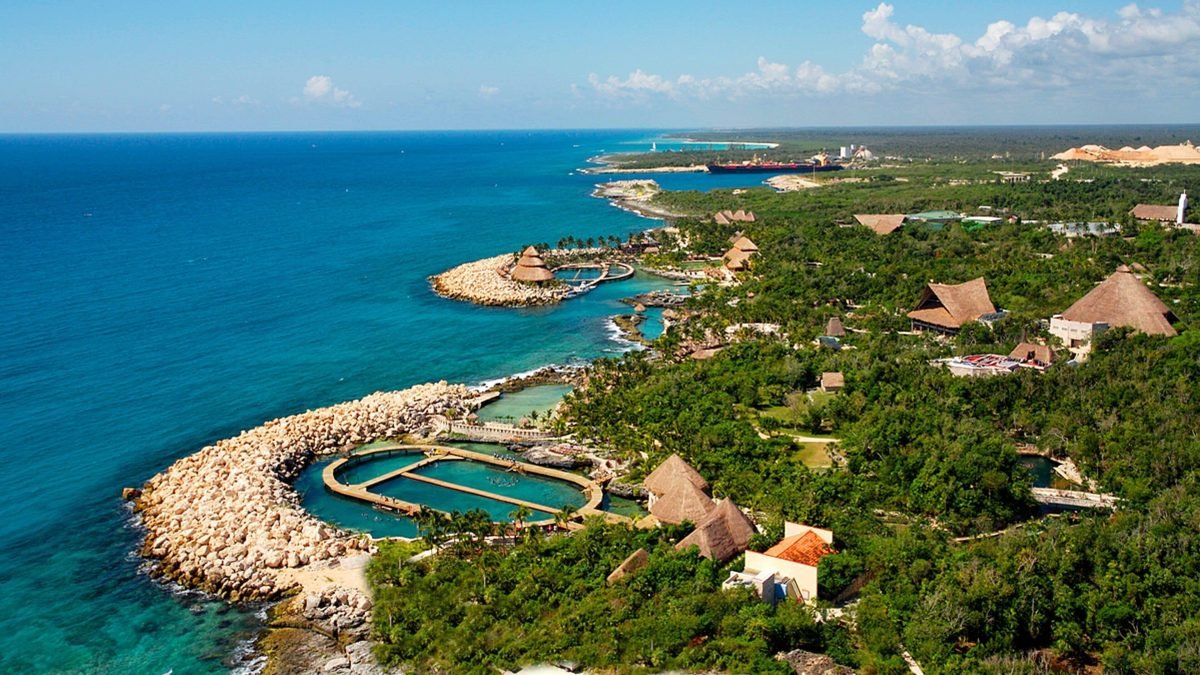
Playa del Carmen, Quintana Roo — Mexico’s Supreme Court of Justice of the Nation (SCJN) has formally begun reviewing a high-profile legal dispute over alleged cultural appropriation, assigning Justice María Estela Ríos González to draft the proposed ruling that will shape the outcome of a case brought by Maya communities against tourism giant Xcaret.
The move follows the Court’s decision to exercise its constitutional power of attraction, pulling the case from lower courts to examine a central question: whether the commercial use of Maya symbols by a private company is lawful under Mexico’s legal framework for intellectual property and Indigenous rights.
The transfer was recorded in a judicial agreement issued on January 2 by the Tenth Collegiate Court in Administrative Matters in Mexico City, which confirmed that the General Secretariat of Court Agreements forwarded the full case file to the SCJN for analysis.
The matter reached the Supreme Court after an attraction request promoted by Chief Justice Hugo Aguilar Ortiz, who since taking office following the extraordinary judicial elections of 2025 has publicly emphasized the Court’s role in safeguarding Indigenous peoples’ rights.
Origins of the dispute
The conflict dates back to 2022, when members of Maya communities in Quintana Roo filed a complaint with National Institute of Copyright (Indautor). They alleged that Maya symbols and cultural elements were being used commercially without authorization, recognition, or benefit-sharing with the communities from which they originate.
Judicial records indicate the complaint targets Experiencias Xcaret Parques S.A.P.I. de C.V., part of the Xcaret Group that operates several ecotourism parks in the Mexican Caribbean. In 2024, Indautor confirmed that the company continued using the disputed symbols despite a temporary restriction previously imposed by the authority.
The company’s position
Xcaret responded by filing an amparo lawsuit, arguing that the restrictions affected its legal certainty and commercial operations. Courts granted definitive suspensions allowing the continued use of the images while the case proceeds. The legality of those suspensions—whether they were correctly issued and consistent with Indigenous rights protections—is now at the center of the Supreme Court’s review.
What’s at stake
The SCJN’s eventual ruling, expected to be debated sometime in 2026, could set an important precedent nearly four years after the controversy began. For Maya communities, the case represents a test of recognition and protection of cultural heritage in the face of commercial tourism. For Xcaret and the broader tourism sector, it raises questions about legal boundaries, intellectual property, and how Indigenous symbols can be used in branding and experiences tied to Mexico’s cultural identity.
Discover more from Riviera Maya News & Events
Subscribe to get the latest posts sent to your email.