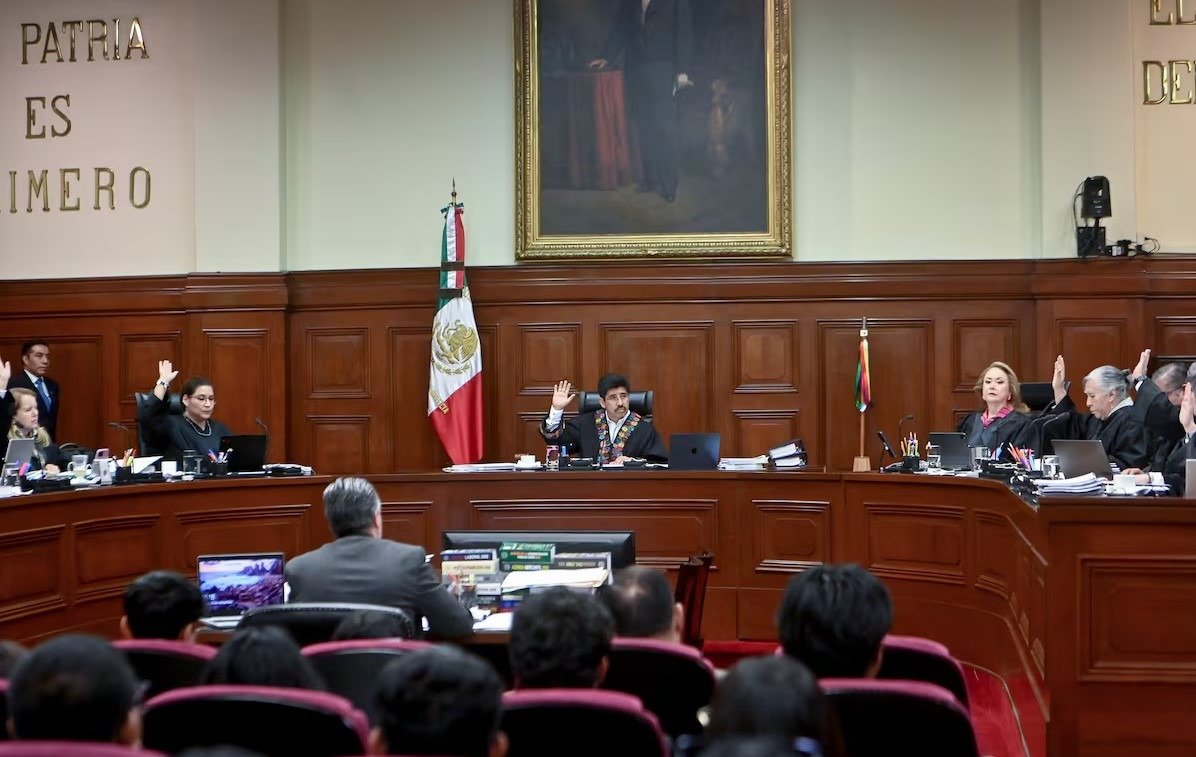
Chetumal, Quintana Roo — The Supreme Court of Justice of the Nation (SCJN) is reviewing a draft ruling that challenges various articles of the Organic Law of Quintana Roo for granting excessive and imprecisely regulated surveillance powers. The draft warns that these provisions allow for the real-time location of citizens and the interception of private communications without specifying serious crimes or conditions of urgency, leaving a wide margin for discretion.
The action of unconstitutionality, promoted by the National Human Rights Commission (CNDH), states that the local law violates fundamental rights such as legal certainty, intimacy, and privacy. Among the critical points is the possibility of applying these measures even for minor crimes or situations that do not represent an immediate risk to life or personal safety.
The draft also questions that the law allows these powers to be delegated without adequate supervision, as well as the regulation of means of coercion and administrative offenses that exceed the competence of the local Congress and fall under the federal domain. According to specialists, this creates a scenario where discretion could lead to abuses and systematic violations of rights.
Human rights defenders have warned that the law, as it stands, opens the door to a system of mass surveillance over the population, without clear controls or accountability mechanisms. "This is a concentrated power without limits, which could be applied arbitrarily and affect the privacy of any citizen," they state.
The SCJN must decide whether to validate the draft, which seeks to establish strict limits and protect the fundamental rights of individuals against the law. The decision will set a precedent on how to balance security and legal control with the protection of privacy and individual liberties.
Discover more from Riviera Maya News & Events
Subscribe to get the latest posts sent to your email.