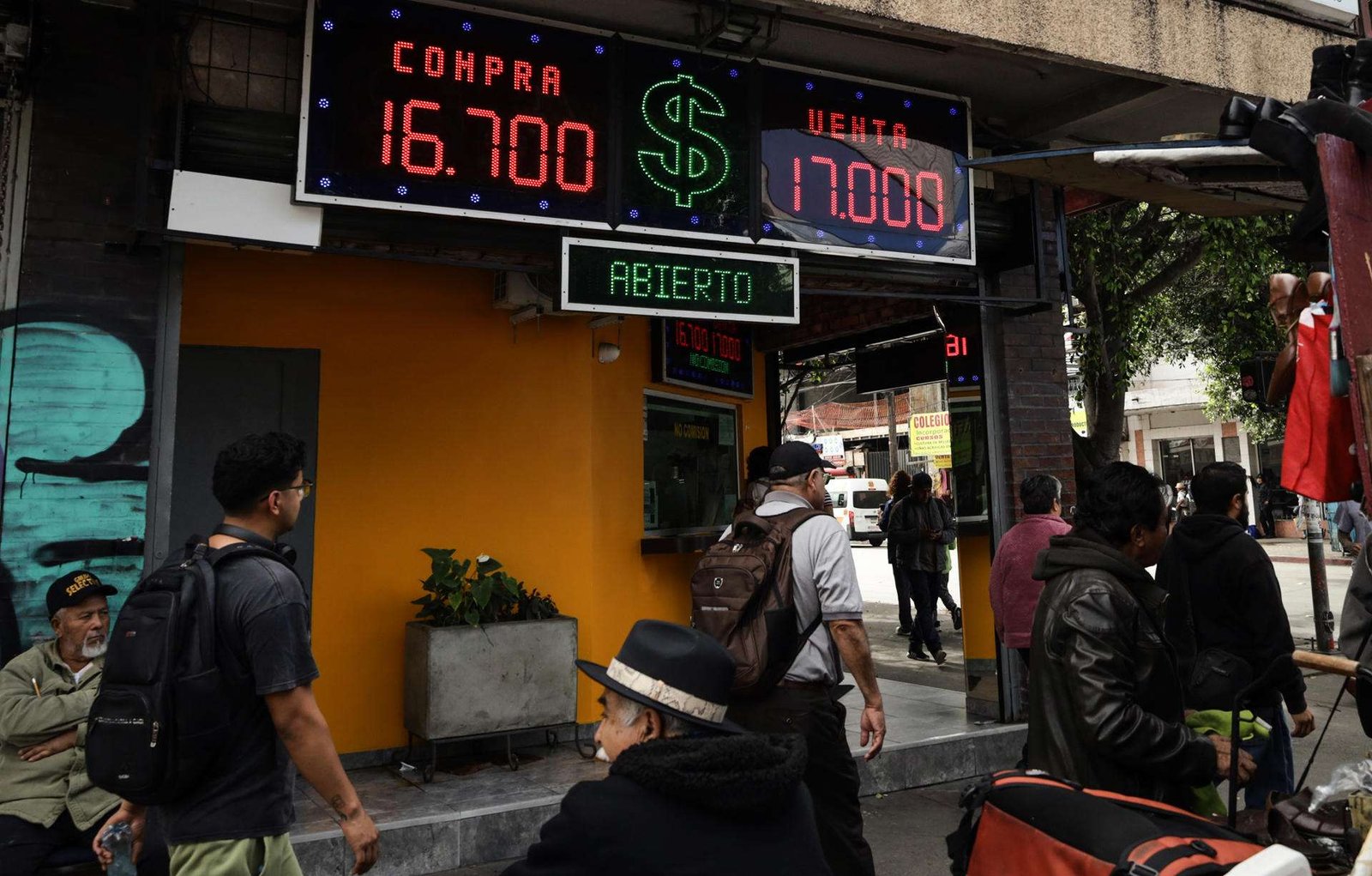
Tijuana, Baja California — Business leaders in northern Mexico warned Saturday that the peso’s strength against the U.S. dollar has reduced the competitiveness of export industries, leading to job losses, manufacturing production adjustments, and delayed investments in border regions like Tijuana, where the economy heavily depends on trade with the United States.
The U.S. dollar currently exchanges at 17.14 Mexican pesos, the strongest level for the Mexican currency since mid-2024.
Ismael Plasencia López, a research professor at CETYS University, said the impact is already visible in the labor market. “During 2025, Baja California lost almost 18,000 jobs, of which around 10,000 were in Tijuana,” he said, emphasizing that one of the main factors is the exchange rate’s effect on exports.
This impact is compounded by increased tariffs. “Tariffs have increased by an average of 10%, but if you add currency depreciation to that, we’re talking about things becoming 20% more expensive in a single year.”
This situation has caused a reduction in exports and, consequently, production cuts and layoffs. “When exports fall, companies must reduce their production and therefore dismiss people,” Plasencia López stated.
Tijuana, located just kilometers from San Diego, California, has become a key location for automotive, aerospace, electronics, and medical products industries on both sides of the border.
Nearly half of the industrial employment in this city of over two million inhabitants in northwestern Mexico is directly linked to foreign trade, and more than 85% of companies exporting products to the northern neighbor are of U.S. origin, according to official data.
Uncertainty for 2026
Regarding investment, Plasencia López noted that the dollar’s behavior combines with an environment of uncertainty. “What characterizes 2025 and 2026 is uncertainty. So all business owners say: I’ll wait to see what happens and therefore don’t invest,” he explained, referring to ongoing talks about revising the United States-Mexico-Canada Agreement (USMCA).
From the business sector, Roberto Lyle Fritch, president of the Business Coordinating Council (CCE), agreed that the exchange rate has had differentiated effects. “We’ve had a very stable dollar, especially very low, which makes things very cheap for us,” he said, noting that this benefits citizens crossing into the United States.
However, he warned that “the export industry is the most important in this case,” as it’s a region highly dependent on foreign sales. Lyle Fritch highlighted that “practically everything in the border zone involves significant exports” and that this exchange rate environment “is what’s affecting” the manufacturing industry.
In this context, he warned that the exchange rate behavior has reduced profit margins for export industries based in northern Mexico’s border region, where companies face higher costs and lower external demand.
Discover more from Riviera Maya News & Events
Subscribe to get the latest posts sent to your email.