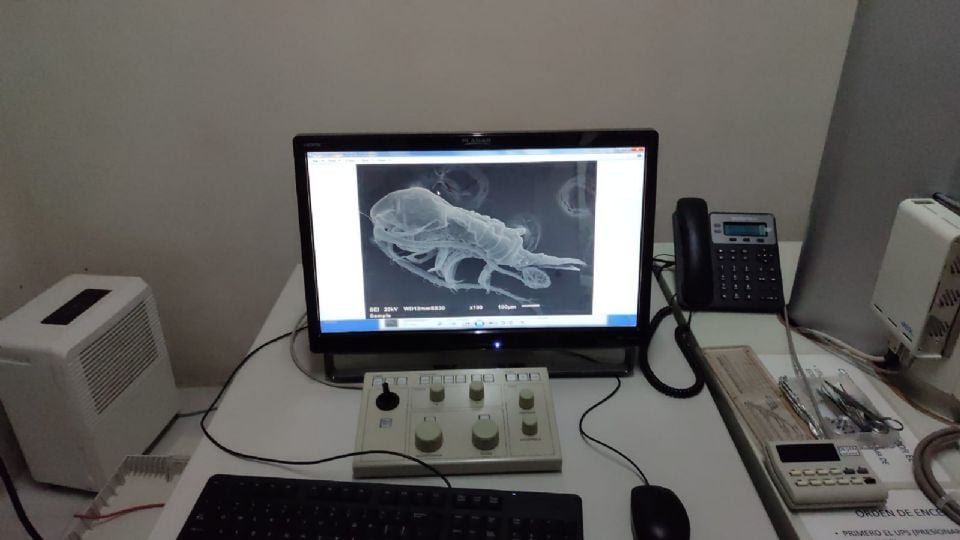
Scientific Research Reveals High Diversity and Endemic Species of Zooplankton in Southern Quintana Roo
The richness of zooplankton inhabiting southern Quintana Roo has once again gained scientific attention thanks to studies led by Dr. Manuel Elías Gutiérrez, a specialist in Sciences and one of the most recognized researchers in the field of microscopic aquatic fauna. His recent observations in Cenote Azul and the Bacalar lagoon strengthen the theory that this region possesses unique species, many of them endemic, that only inhabit these water bodies.
Through the Quintanarroense Council of Humanities, Science and Technology (Coqhcyt), the researcher reported that Quintana Roo has one of the most important zooplankton laboratories in the world, a space that has allowed expanding knowledge about the microscopic organisms that sustain life in aquatic ecosystems. As he explained, zooplankton is the base of the trophic chain, as it feeds larger organisms and ensures ecological balance.
Researchers Detect Independent Ecosystem in Cenote Azul
Dr. Elías Gutiérrez indicated that he worked for years on species identification, first with traditional tools and then with modern techniques based on DNA. He explained that the use of this molecule allowed precise recognition of hundreds of organisms that previously couldn’t be classified.
These techniques led to the conclusion that Bacalar hosts dozens of unique species and that some of them also appear in Chetumal Bay, indicating an underground connection between both systems.
However, the case of Cenote Azul offers a different scenario. Recent analyses reveal a diversity independent from Bacalar, suggesting the existence of an autonomous ecosystem that doesn’t share underground connection with the lagoon. According to the specialist, water chemistry supports this hypothesis, but zooplankton studies confirmed deeper differences.
Zooplankton, Base of the Food Chain in Aquatic Ecosystems
With new sampling devices, the team obtained an impressive quantity of organisms, of which approximately 80 percent had no previous record.
The doctor highlighted that changes in land use on the Yucatán Peninsula affect these systems, even though they’re distant from each other. When large volumes of rainwater filter through deforested areas or areas with intensive agricultural activity, they carry nutrients and contaminants that enter underground aquifers. This causes alterations that modify conditions of water bodies like Bacalar, which explains sudden changes in coloration or biological composition.
The researcher recalled that formal studies began in 2020, after Tropical Storm Cristóbal, which flooded large areas of the southeast. The Bacalar lagoon took on a brown tone due to sediment and fertilizer runoff, a situation that alerted specialists. One month later, the team began monthly sampling and observed a radical change: about 37 of the known species disappeared.
Environmental Changes Threaten Microscopic Biodiversity of Southern Quintana Roo
During his explanation, the researcher affirmed that zooplankton is essential for understanding ecosystem health. The organisms that comprise it move vertically during day and night, avoid predators, and feed on phytoplankton, which is responsible for photosynthesis in aquatic environments.
By transferring energy toward higher levels of the food chain, they enable the existence of small fish, larger species, and finally predators like sharks.
Dr. Elías Gutiérrez recalled that most water available for terrestrial life is less than one percent of the planet’s total, so studying freshwater systems is a priority. He indicated that zooplankton inhabiting these environments “is vital and sustains the life of all organisms that depend on lakes, cenotes, and lagoons.”
With their discoveries in Bacalar and Cenote Azul, the research team strengthens the importance of conserving these water bodies and studying their dynamics. The new species found represent an opportunity to expand global scientific knowledge and also a warning about ecosystem fragility.
“Zooplankton is the foundation of life,” affirmed the researcher. “If its conditions change, the entire ecosystem feels it.”
His work continues and new studies are expected to confirm the uniqueness of Cenote Azul and reveal more data about the microscopic diversity of southern Quintana Roo.
Discover more from Riviera Maya News & Events
Subscribe to get the latest posts sent to your email.