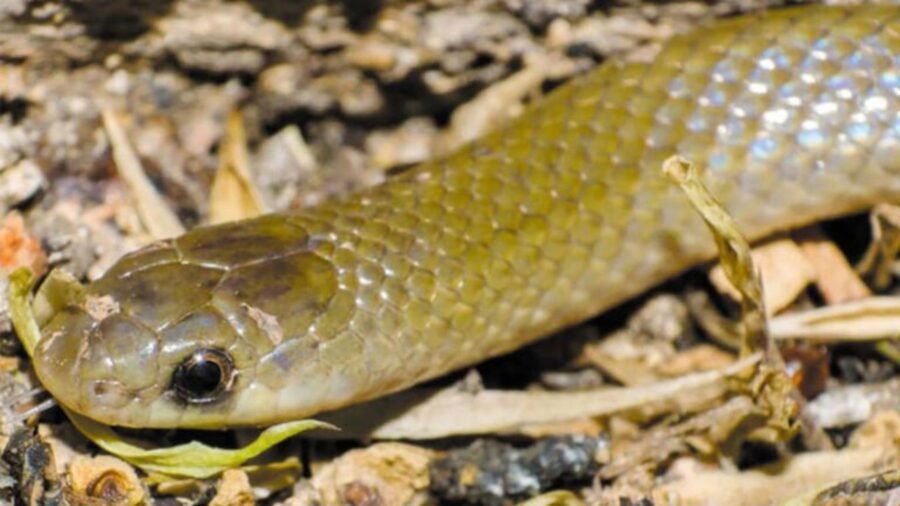
Puebla, Mexico — Researchers have confirmed the discovery of a new snake species living underground in the Mexican state of Puebla. Named Yakacoatl tlalli, the snake belongs to the Sonorini tribe, a group of small, non-venomous vipers with mostly subterranean habits.
While Sonorini tribe members primarily inhabit northern Mexico and the southern United States, this particular species has only been recorded in the Balsas River basin, a region of high biological significance in Mexico.
The National Autonomous University of Mexico (UNAM) reported that researchers located three specimens of the snake. They found two dead and observed one alive, documenting it with photographs before releasing it back into its natural habitat.
Scientists said the discovery occurred by chance, indicating this is a rare species that’s difficult to detect. Its underground lifestyle complicates observation and explains why it had gone unnoticed until now.
The Yakacoatl tlalli shows clear adaptations to its subterranean environment, including reduced head scales and a modified cranial structure that facilitates digging. It also features a shovel-shaped scale that allows more efficient movement through soil.
Unlike other snakes with similar habits, this species retains relatively large eyes, an uncommon trait within its group. Analysis of its reproductive organs also showed notable differences from other known species, reinforcing its classification as a new genus.
The Balsas River basin where researchers found the snake features xerophilic environments with dry climates and limited rainfall, surrounded by mountainous areas. Specialists note this region hosts numerous endemic species.
Information about the snake’s diet remains limited. However, researchers found scorpion remains in one specimen’s stomach, suggesting it might feed on arthropods, soil insects, or earthworms.
The discovery resulted from collaborative work by specialists from the Benemérita Autonomous University of Puebla, the University of Texas at Arlington, and the National Scientific and Technical Research Council. Experts said more studies are needed to understand its distribution, behavior, and potential conservation risks.
Discover more from Riviera Maya News & Events
Subscribe to get the latest posts sent to your email.