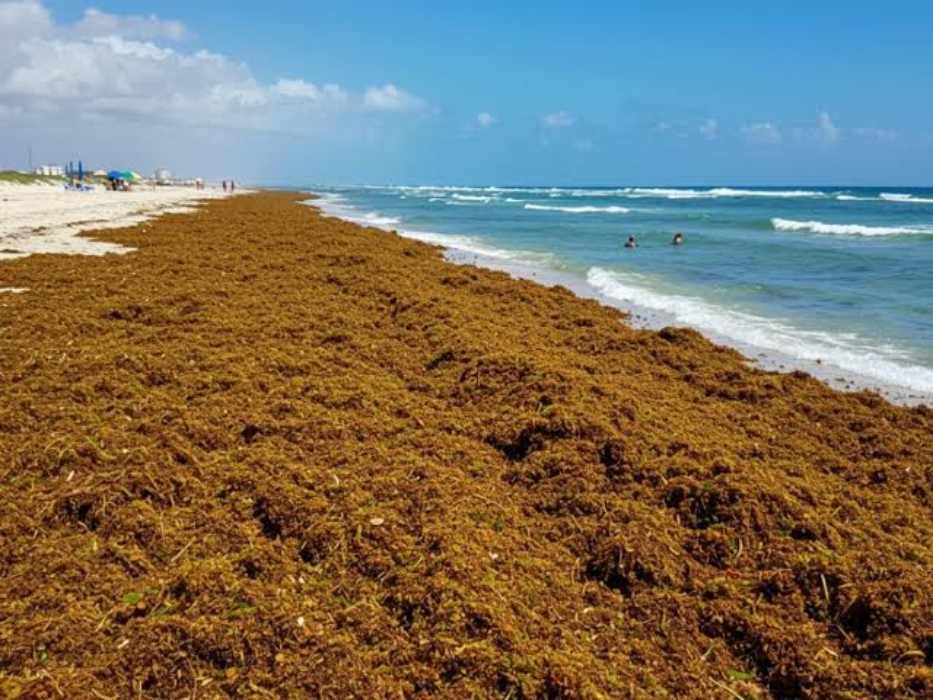
Puerto Morelos, Quintana Roo — A project to transform sargassum into valuable resources from Puerto Morelos is advancing and could enter its formal phase within months, coinciding with the peak seaweed season. The Polo de Desarrollo de Economía Circular para el Bienestar (PODECIBIS) aims to convert the invasive algae into useful products.
Óscar Rébora Aguilera, Quintana Roo’s Secretary of Environment, explained that the project, coordinated with the federal Ministry of Environment and Natural Resources (SEMARNAT), is at a critical stage. Authorities have secured a letter from the local ejido and only need to ratify it with the National Agrarian Registry before submitting documentation to SEMARNAT to advance toward a formal decree.
Once the decree is issued, the project can go to tender for developers and begin operational processes. Rébora Aguilera noted that timelines depend on the registry process but estimated they could be ready to formalize with federal authorities in one to two months.
Regarding the current sargassum outlook, the secretary recalled early influxes this year and reported that over 60 million tons of biomass are floating in the Atlantic, up from approximately 50 million last year. He emphasized a correlation with ocean warming and climate change, which could intensify the phenomenon.
However, he clarified that large sargassum volumes in the Atlantic do not necessarily mean all will wash ashore in Quintana Roo, as factors like ocean currents, winds, and weather conditions influence landings. He noted that the year with the highest volume in Mexico’s exclusive economic zone did not see the most beach accumulations in the state.
In response, the state government has bolstered containment capacity. Officials have installed 6,600 meters of anti-sargassum barriers in strategic destinations like Puerto Morelos, Tulum, Mahahual, and Playa del Carmen. They also acquired an additional 7,500 meters, with 2.5 kilometers already delivered and the rest in transit to expand coverage.
For Cancún, Rébora Aguilera explained technical complications due to marine currents that hinder traditional barrier installation, though authorities are considering placing one to 1.5 kilometers in the Playa Coral area, a public beach with frequent influxes.
He added that monitoring remains active, with no issues in tracking systems or current containment capacity. The tourism destination is prepared for the season, and he asserted that sargassum presence does not automatically reduce hotel occupancy, as Quintana Roo offers experiences beyond sun and beach, including cenotes, jungle, and cultural tourism.
Discover more from Riviera Maya News & Events
Subscribe to get the latest posts sent to your email.