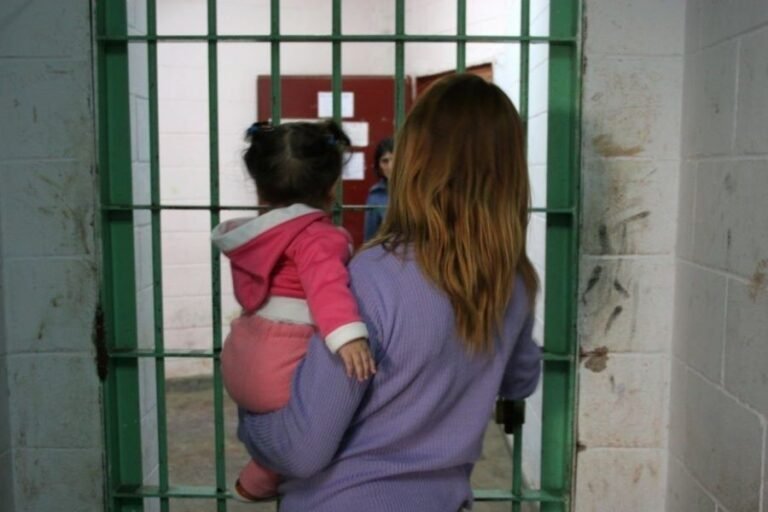
Chetumal, Quintana Roo — Legislators of the XVIII Legislature of the State Congress are analyzing a reform initiative that seeks to install dignified spaces for children in prisons whose mothers are serving a sentence or undergoing a criminal process while incarcerated.
The National Law on Criminal Enforcement in its Article 10, titled “Rights of Women Deprived of Liberty in a Penitentiary Center,” establishes that children under three years old can remain in prisons with their mother, but it does not indicate what happens after that.
In Quintana Roo, official statistics indicate that between eight and twelve minors live with their mothers in the state’s penitentiary centers.
The initiative is part of the harmonization of the National Law on Criminal Enforcement in its Article 10, in favor of women who are deprived of their liberty and are mothers.
Therefore, special norms in the state that safeguard the best interests of children are necessary, such as the Law on the Rights of Girls, Boys, and Adolescents of the State of Quintana Roo.
The statement of reasons notes that these children, known as “invisible children” because they are sometimes with their mother in prisons, even having been born in such detention centers, often lack documents, identity, and care for their proper development.
The figure of eight children living in prisons with their mothers reported by the Prison Observatory contrasts with data from the National Institute of Statistics and Geography (Inegi) that reveals there are twelve, also with statistics from 2024.
Due to this situation, it is proposed in Quintana Roo not only spaces, but that these be dignified so that children can remain in dignified conditions with their mothers.
The proposed modifications would be established in Article 20 Bis of the Law on the Rights of Girls, Boys, and Adolescents, which indicates that the minor will remain with their mother until three years old and that separation will be gradual and supervised by a psychologist. Additionally, a visitation regime will be established and the emotional bond between both will be fostered at all times.
After three years, custody of the child will be given to a relative designated by the mother or by a civil association certified by the System for the Integral Development of the Family (DIF).
Meanwhile, Article 20 Ter stipulates that during their stay in prison, the minor must have guaranteed hygiene, recreation, education, medical attention, and adequate and healthy nutrition. Additionally, the Executive Power must guarantee dignified, adequate spaces separate from the general population. That is, in the female prison areas.
Discover more from Riviera Maya News & Events
Subscribe to get the latest posts sent to your email.