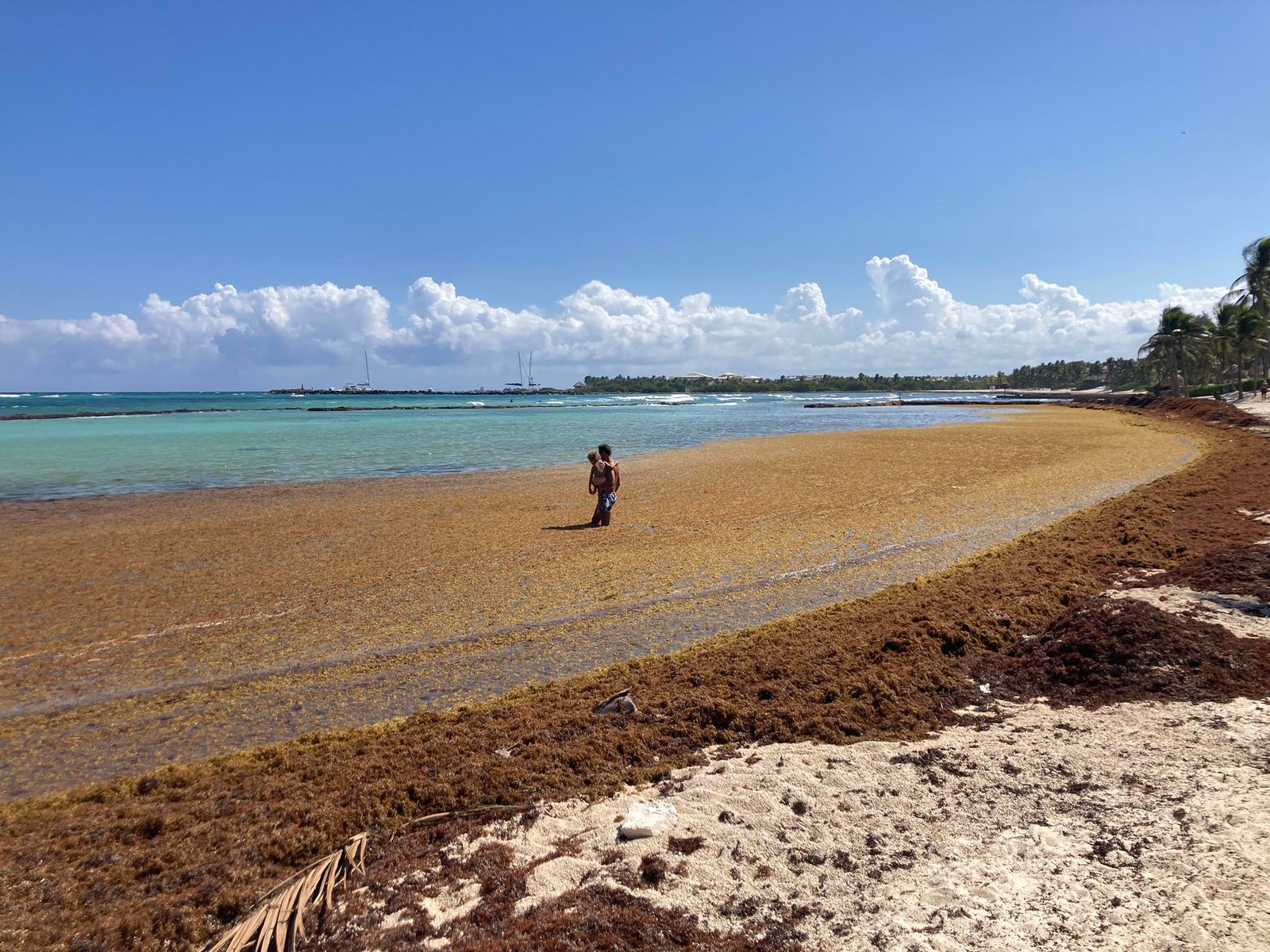
Puerto Aventuras, Quintana Roo — Property owners in Puerto Aventuras voted overwhelmingly this week in favor of installing an offshore sargassum deflection barrier system, a community-driven response to one of the region’s most persistent environmental and economic challenges. Roughly 70% of registered voters supported the measure, which paves the way for early-stage implementation of a barrier network designed to redirect, rather than collect, incoming seaweed before it reaches vulnerable beaches and bays.
The decision comes as scientists and environmental authorities warn that 2026 could be among the worst years on record for sargassum accumulation in the Caribbean and Mexican Caribbean, a trend linked to the massive Great Atlantic Sargassum Belt, ocean warming, shifting currents, and nutrient-rich runoff that fuel macroalgae growth. Satellite data shows sargassum volumes in early 2026 already exceeding historical norms, with the Western Caribbean and Gulf regions expected to see widespread landings in the coming months.
Why the Vote Matters
Sargassum, a free-floating brown seaweed, plays a natural ecological role offshore, providing habitat for marine species. But when vast mats wash ashore, they can rapidly decompose, releasing foul-smelling gases such as hydrogen sulfide and reducing dissolved oxygen in coastal waters, with documented effects on water quality, marine ecosystems, and human wellbeing.
In the Riviera Maya, heavy sargassum seasons have repeatedly disrupted tourism, the region’s economic engine. Beaches buried under rotting seaweed deter sunbathers, affect recreational swimming, and strain local cleanup resources, leading some visitors to shorten stays or change destinations entirely. Studies from the broader Caribbean indicate that large seaweed events reduce beach usage and economic activity, even as operators promote inland attractions.
Marine habitats are also affected. Floating and decomposing sargassum alters light penetration and water chemistry, threatening sensitive coral reefs which have already experienced significant decline in living coral cover due to multiple stressors as well as seagrass beds and mangrove ecosystems integral to coastal biodiversity.
Past Abatement Efforts: Mixed Results
Efforts to manage sargassum have varied widely across the region. In Puerto Morelos, coordinated municipal and stakeholder action in 2025 saw marked improvements on key commercial beaches, illustrating that proactive cleanup and containment can reduce visible accumulation when deployed early and consistently. However, residents outside the central zones reported that seaweed was often diverted toward less serviced areas, underscoring the limitations of localized responses.
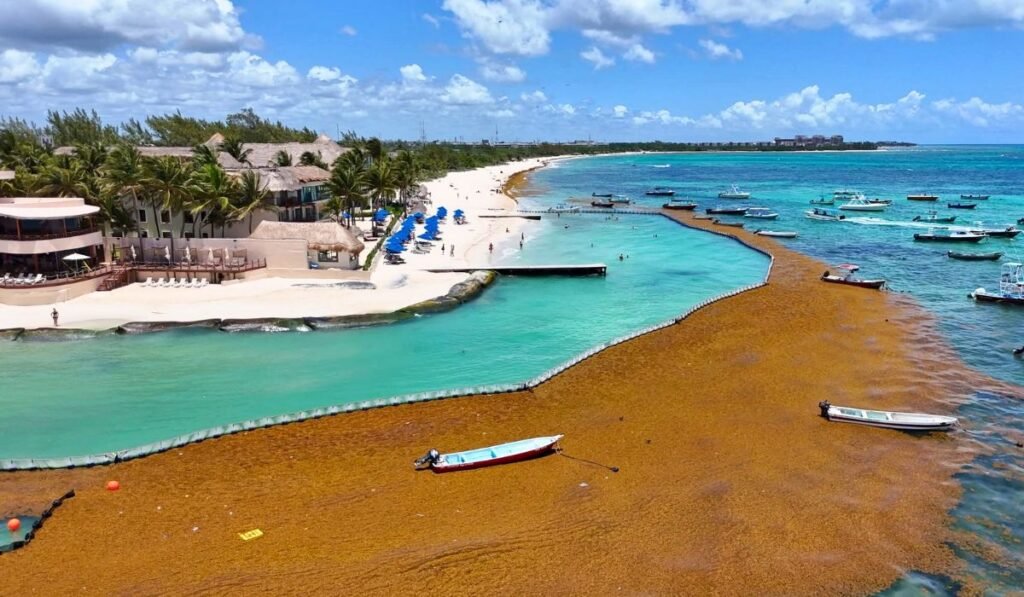
Elsewhere along the Riviera Maya, including Cancún, Playa del Carmen, and Tulum authorities and private resorts have increasingly deployed offshore barriers and expanded mechanical removal, particularly when satellite outlooks forecast heavy arrivals. The Mexican Navy reported collecting hundreds of tons of sargassum in early seasonal operations, and thousands of meters of floating containment systems have been installed, though temporary removal during weather events remains necessary.
Despite these efforts, the scale of the macroalgae bloom has repeatedly overwhelmed cleanup crews. Heavy sargassum seasons, such as those in 2018 and 2022, have blanketed Caribbean beaches with brown algae, drawing national headlines and health alerts in parts of the region due to odors and respiratory irritation associated with decomposition.
A Community-Led Solution
The barrier system approved in Puerto Aventuras was designed by international engineering firm Okeanis and will be locally implemented by Inmar Caribe, a company specializing in sargassum mitigation solutions. Unlike collection-focused strategies, deflection barriers aim to redirect incoming seaweed offshore, enabling vessels to intercept it before it reaches shore an approach that has shown promise even under challenging conditions.
Local advocates and business owners say the plan represents a collaborative, evidence-based response informed by the successes and shortcomings of nearby efforts. Supporters argue that proactive redirection, paired with early deployment, could lessen the volume of sargassum that needs to be mechanically removed on beaches, reducing cleanup costs and maintaining tourism appeal.
Concerns and Reservations Remain
Even with broad support, significant questions remain among residents:
What happens to sargassum that clears the barriers? Heavy currents or unpredictable winds could carry large mats around or past the system, leaving portions of the coastline exposed.
Critics emphasize that no single technology can eliminate sargassum completely and that ecosystems, weather patterns, and ocean dynamics are inherently variable. They argue that comprehensive strategies, including early detection, adaptive barrier placement, expanded research, and regional coordination, are needed alongside local barrier systems.
Looking Ahead: Challenges and Opportunity
Experts caution that even with improved abatement measures, sargassum arrivals will remain a seasonal reality for the Caribbean and the Mexican coast. According to monitoring agencies, seaweed amounts in early 2026 surpassed historical averages, and the Western Caribbean is expected to see continued beaching events as spring and summer advance, particularly if prevailing currents push larger blooms toward the coast.
For Puerto Aventuras, the vote marks a significant milestone in community mobilization and environmental planning. Rather than passively responding to each seasonal influx, residents are betting on a strategy that combines science, engineering, and local stewardship.
Whether barriers will deliver sustained relief and how the community navigates the uncertainties ahead remains to be seen. What is clear is that sargassum is no longer a rare anomaly; it is a defining feature of coastal life in the Caribbean era of climate change.
Discover more from Riviera Maya News & Events
Subscribe to get the latest posts sent to your email.