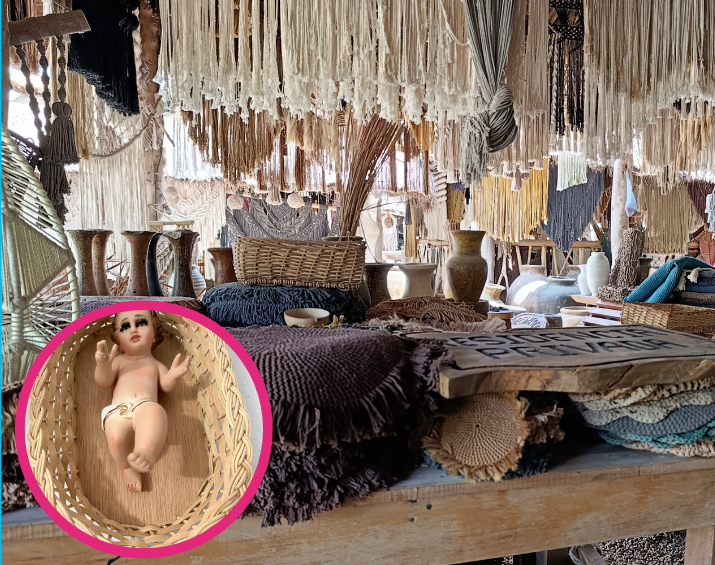
Tulum, Mexico — The tradition of crafting nativity scenes of the Baby Jesus, once a hallmark of artisanal work in the transition zone communities of Francisco Uh May, Macario Gómez and Cobá, is going through one of its most difficult moments. Artisans who for decades produced figures in clay, wood, palm or resin have decided to stop making these Christmas sets due to low demand and the economic risk of investing in pieces that, they assure, “no one buys anymore.”
In workshops and improvised roadside shops, nativity scenes have stopped occupying space. “We used to make them, but now it’s not worth it. They stay stored, gather dust, and the invested money doesn’t return,” comments Don Cecilio May, an artisan with more than thirty years of experience in Francisco Uh May. He explains that producing a complete set can involve days of work and increasing material costs, while sales have been falling year after year.
The situation is not isolated. In Macario Gómez, Juana Xool confirms that many artisans have made the same decision. “People don’t buy nativity scenes anymore. At most, they ask for a single figure to replace one that broke. Making complete sets is risking loss,” she notes. She adds that even during high season, visitors prioritize small, economical souvenirs, not higher-value artisanal pieces.
A Craft Hit by Falling Sales Throughout the Year
Artisans agree that the decline doesn’t only affect nativity scenes: “This year was slow in everything. Not just at Christmas: we sold less all year,” states a vendor from the Tulum-Cobá highway.
The local economic contraction, competition from mass-produced products, and rising material costs have considerably reduced their income.
Many artisans assure that making large pieces is now a luxury they cannot afford. “Wood is expensive, clay too. If it doesn’t sell, the money stays dead. That’s why we prefer to make small crafts that do move a bit more,” specifies Juana Xool.
Insufficient Tourism and Industrial Competition
Although Tulum receives thousands of visitors each month, artisans note that tourism hasn’t meant sustained support. “Foreigners buy keychains or small figures. They don’t take a large nativity scene, and locals don’t spend like before either,” describes Don Cecilio.
To this is added competition from imported products, mainly from Asia, that imitate artisanal designs at much lower prices. “People see a similar one in a store and buy it because it’s cheap. They don’t know that’s not artisanal. That competition knocks down our sales,” says a vendor from Cobá.
Without Support and a Tradition at Risk
Artisans also point to the lack of permanent sales spaces and the absence of programs that strengthen this traditional craft. Although some participate in municipal fairs, they recognize these events aren’t enough to sustain annual production.
The immediate consequence is clear: fewer and fewer workshops teach new generations to work with clay or palm, and nativity scenes have stopped being a habitual production. “Sometimes one wants to teach the children, but if there’s no sale, what future does the craft have?” laments Don Cecilio.
A Tradition Fading for Economic Reasons
Although artisans preserve the knowledge and cultural roots, many accept that nativity scene making is disappearing from their economy. For them, more than a choice, it’s a survival measure in a market that no longer responds.
“The tradition remains in our memories, but not in sales anymore. If there’s no one to buy, we can’t keep producing,” concludes Juana Xool.
On the highways and towns of Tulum’s Maya zone, where nativity scenes once filled shelves every December, a different reality now prevails: a craft that’s shrinking, pushed by low demand and a market that changes faster than artisans’ ability to adapt.
Discover more from Riviera Maya News & Events
Subscribe to get the latest posts sent to your email.